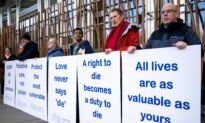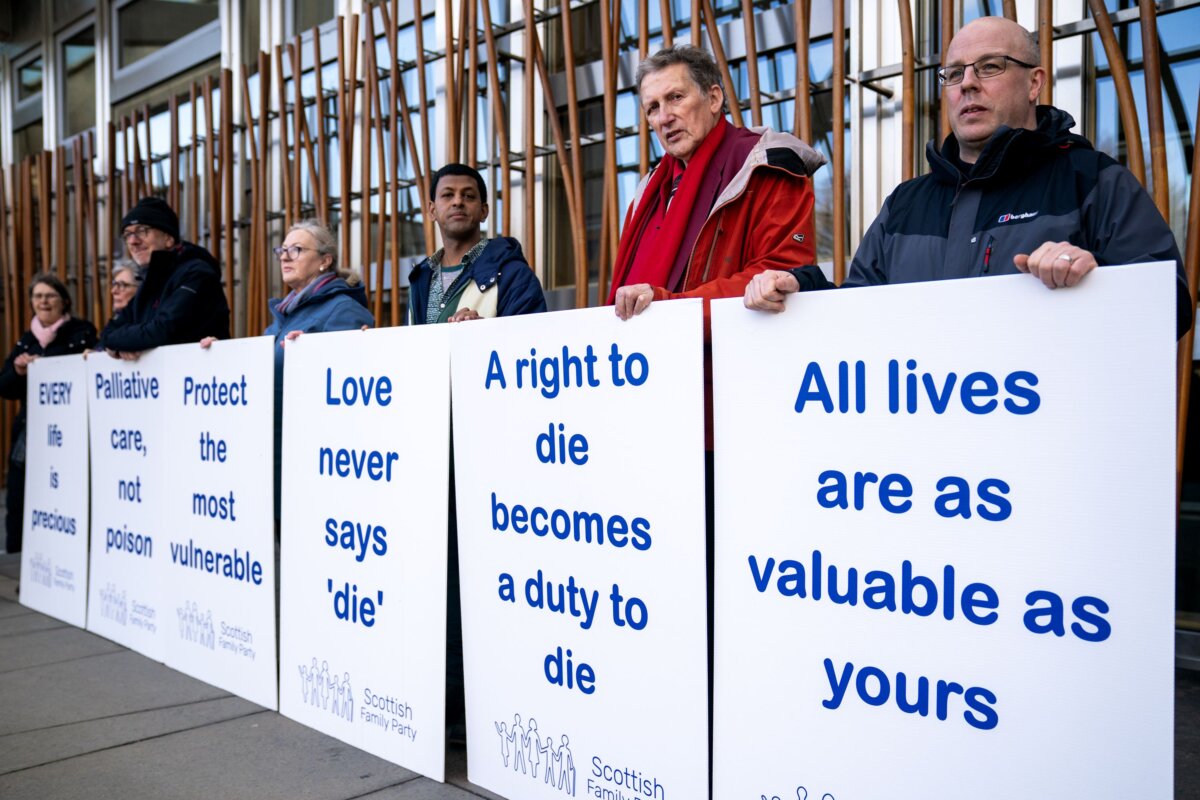

Scottish lawmakers voted against legalizing assisted dying on March 17, with opponents of the legislation hailing it as a “victory for the vulnerable,” while others lamented its failure as an affront to choice and dignity.
Scotland’s parliament at Holyrood in Edinburgh is responsible for devolved powers from the UK government in certain areas, including health policy.
The bill sought to allow terminally ill people over 16, judged as mentally competent and who have lived in Scotland for at least a year, to end their lives with state-sanctioned medical assistance.
A total of 69 members of the Scottish Parliament (MSPs) voted against the bill, while 57 backed it and one abstained.
Had it passed, the bill would have made Scotland the first of the four UK nations to allow assisted suicide, which is already permitted in some U.S. states, and in Canada, Australia, and a handful of nations in Europe and South America.
Emotional Debate
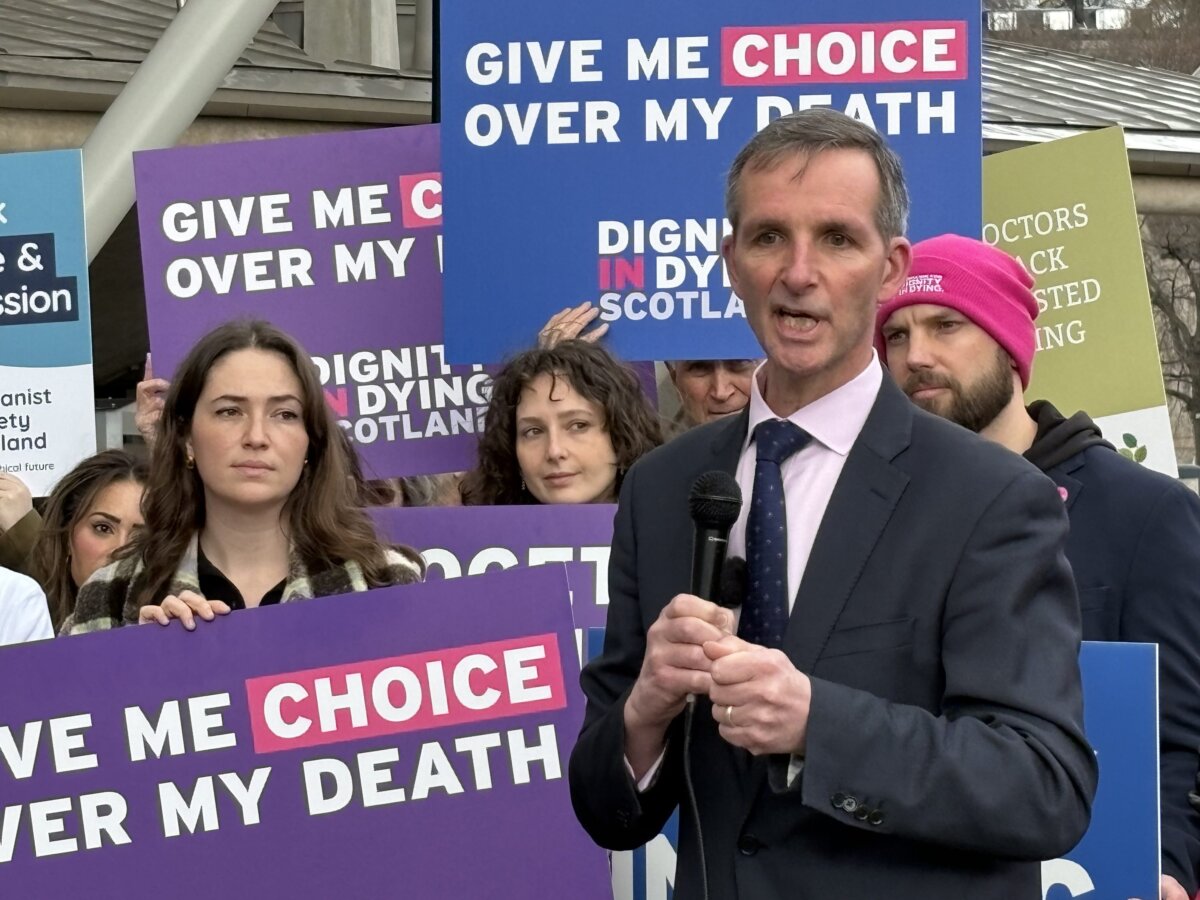
The vote followed an emotional debate, during which the lawmaker who introduced the legislation, Liberal Democrat Liam McArthur, warned many of those who voted it down would come to “regret deeply” their choice.
McArthur said this would not be felt “as deeply or as painfully as those dying Scots and their families who desperately need us to act with courage, compassion and urgency.”
The lawmaker said that if the bill had passed, it would have been the “most heavily safeguarded assisted dying law anywhere in the world.”
‘Pandora’s Box’
Dr. Stewart Weir, head of the Christian charity Care for Scotland, said he was delighted lawmakers rejected the legislation.
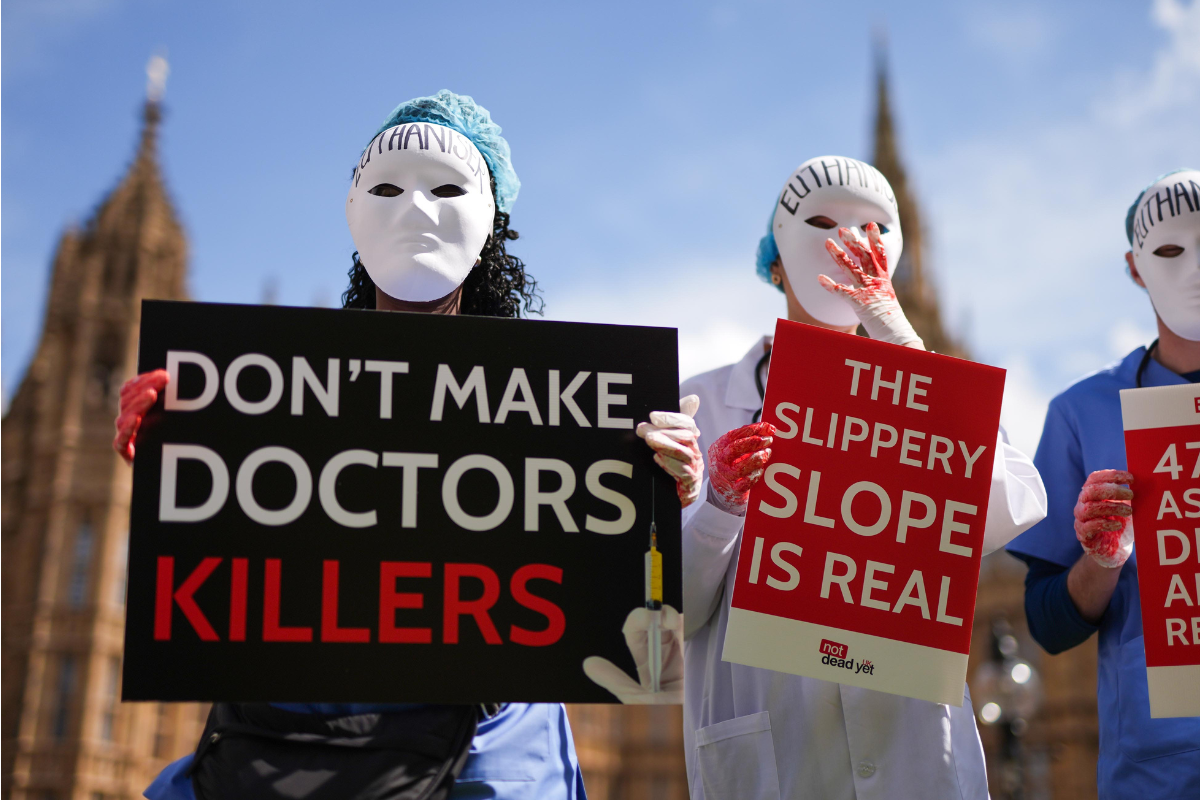
“It is a real victory for the vulnerable. This bill would have opened a Pandora’s box which would have fundamentally changed health care across Scotland,” he said. “There is no doubt in my mind that members have made a positive and truly compassionate decision today.”
Dr. Gordon Macdonald, chief executive of the Care Not Killing campaign group, said he hoped the debate could now shift to how to care for people nearing the end of their life.
“We believe the bill posed serious risks to the most vulnerable in society—including disabled people and those suffering from domestic abuse,” he said. “Now the debate in Scotland has been concluded, I hope we can move on to the real issue, how to care for people at the end of life, because the real scandal is that one in four people who would benefit from palliative care across our country are currently not receiving it.”
The bill proposed that to qualify for an assisted suicide, individuals would need to have two doctors certify they have a terminal illness, as well as the mental capacity to understand their decision.
A late amendment to the bill, passed last week, meant that only those reasonably expected to die within six months could make such a request.

Coercion Concerns
Opponents of assisted dying across the UK have raised concerns about the risks of coercion of older adults and disabled people and the impact on vulnerable people, including those with depression and eating disorders.
Others warned that the bill lacks safeguards for medical professionals, as employment matters are reserved for the UK government in Westminster.
Groups in the medical profession, including the Royal College of Psychiatrists (RCS) and the Royal Pharmaceutical Society, spoke out against the bill because they said it failed to include protection for professionals who object to assisted dying on conscientious grounds.
The bill marked the third attempt by the Scottish Parliament to pass assisted dying legislation, with McArthur’s being the first to make it past the initial vote.
After the first vote, some lawmakers who had backed it withdrew their support, citing concerns about the legislation’s details.
A similar bill at Westminster, which has twice been voted through by lawmakers, may run out of time to clear the House of Lords, meaning it will not be put to the third and final vote in the House of Commons. As a private member’s bill, it will be given a limited period of time for scrutiny and debate, and parliamentary procedure can be used to stall controversial bills.
Ally Thomson, director of the campaign group Dignity in Dying Scotland, said she was sad that the legislation had been rejected.
“But for as long as dying Scots continue to suffer, this debate is not going away,” she added.
MSPs’ Personal Experiences
Scottish Green Party lawmaker Lorna Slater said in the debate that everyone “should have the right to choose” as she shared details of her father’s assisted death in Canada in November 2025.
“Dad was very ill. He was dying and had been moved to a palliative care facility a few months earlier when that became clear. He had excellent care. My mother spent hours with him every day, and he saw his grandkids regularly. He knew that he wasn’t going to get better,” she said.
“I wish that death for myself, I wish it for anyone who wants it for themselves. I don’t mind if you would never want this choice for yourself, but please, please, don’t prevent other people from choosing it for themselves. We should all have the right to choose.”
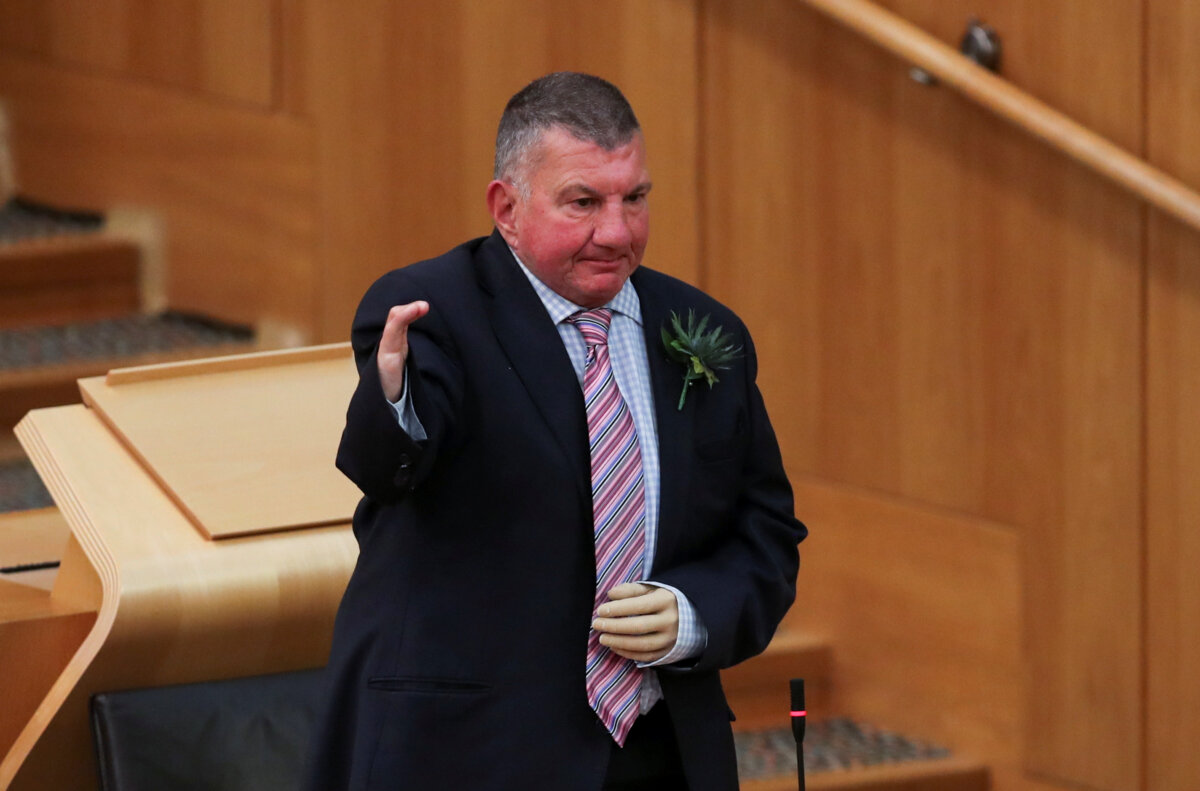
Some Scottish lawmakers in the Holyrood debate expressed concern that passing the bill could open the door to coercion, including independent MSP Jeremy Balfour, born with no left arm and a right arm that ends at the elbow, who said disabled people are “terrified” of assisted dying legislation.
“I’m begging you to consider the consequences for the most vulnerable,” Balfour said in the debate.
MSPs were granted a free vote on the proposals, meaning they were not told to vote along party lines.
While the Scottish National Party government was neutral on assisted dying, the party’s leader and first minister, John Swinney, opposed it.
Speaking after the debate, Swinney told reporters that “Parliament has spoken” and that he was relieved by the result.
 Friends Read Free
Copy
Facebook
Tweet
Friends Read Free
Copy
Facebook
Tweet