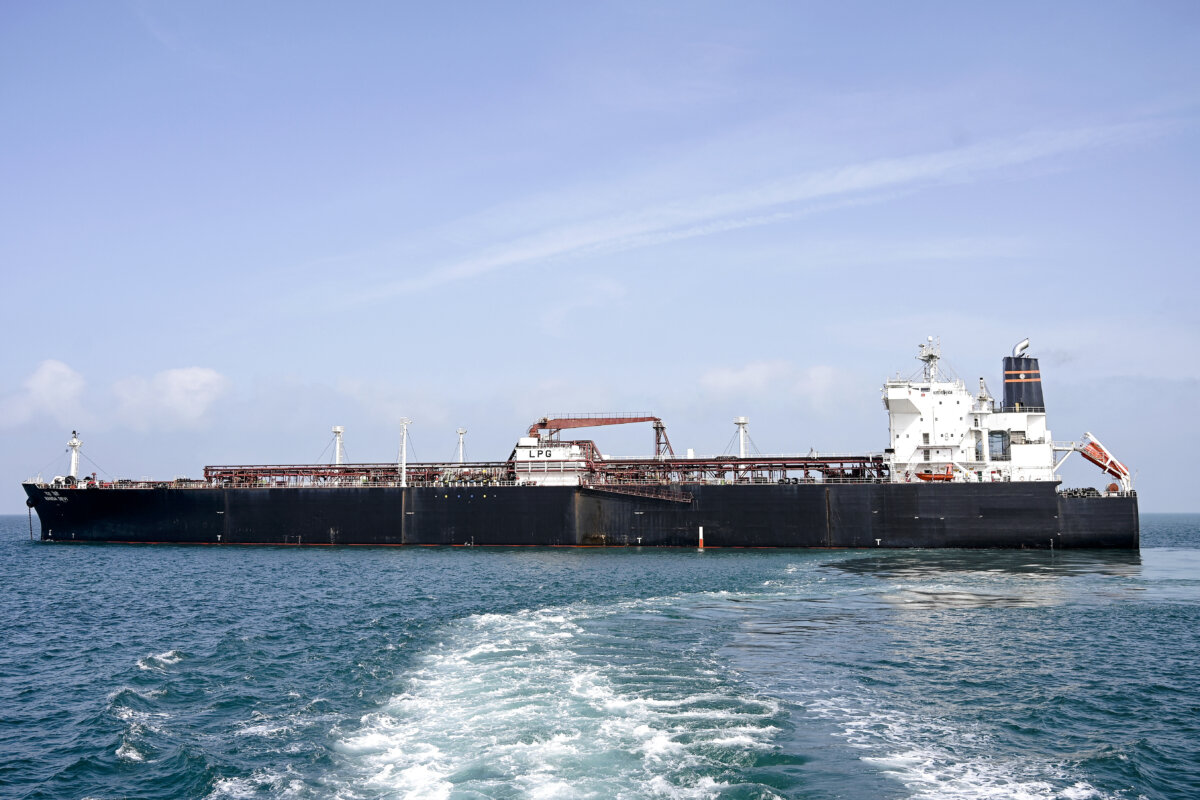

Australia has joined international partners to condemn Iran’s attacks on commercial shipping in the Strait of Hormuz amid ongoing retaliation from the Iranian Islamic regime.
The declaration was made at an emergency session of the UN’s International Maritime Organisation (IMO) Council in London on March 18.
In a statement to the council, Australia said it supported the United Arab Emirates’ (UAE) proposal to condemn Iran’s recent attacks on merchant vessels passing through the Strait.
The proposal highlighted that freedom of navigation is fundamental to global stability and urged all states to comply with international law.
Further, it called for the protection of seafarers and the preservation of maritime safety, security and environmental protection.
“Australia condemns Iran’s dangerous escalations in the Middle East, particularly in and around the Strait of Hormuz, its attacks against merchant vessels, and threats of further attacks. In doing so, Iran has transformed one of the world’s most critical shipping lanes into a theatre of coercion and conflict,” the statement read.
“Any interference with vessels or vessel movements places innocent seafarers at significant risk, and threatens maritime safety and security.”
Australia also highlighted the impact of Iran’s attacks on global markets and Australia’s economy.
“The consequences of Iran’s dangerous escalations are being felt far beyond the Gulf. This disruption has triggered severe global energy shocks, causing oil and fuel prices to surge,” it said.
“In Australia, this is placing immense pressure on households, industries and supply chains.”
Australia then stressed that it is committed to working with the IMO and other state members to support those affected by the crisis.
‘The international community must keep working together to ensure critical waterways are not held hostage by the Iranian regime,” it said.
The Strait of Hormuz, which connects the Persian Gulf to the Gulf of Oman and the Arabian Sea, is one of the world’s most critical maritime waterways, accounting for approximately 20 percent of global oil supply flows.
PM Hopes Conflict Will End
Prime Minister Anthony Albanese said on March 19 he hoped the conflict would end.
“We are not participants in the conflict. So what we will say though is we will continue to argue for de-escalation. It is not certain, that is the truth, how long this will last,” he told reporters.
“I am hopeful you can see an endpoint. The objectives of denying Iran the opportunity to have a development of a nuclear weapon have been secured.
Meanwhile, Opposition Leader Angus Taylor said his party wanted to see the Strait of Hormuz opened up as soon as possible.
“We do want to see the oil and gas flows moving again as quickly as possible, and if we don’t, we will continue to see higher prices, not just for fuel, but for fertiliser and food, and many other products that rely on those inputs,” he told Sky News Australia.
 Friends Read Free
Copy
Facebook
Tweet
Friends Read Free
Copy
Facebook
Tweet