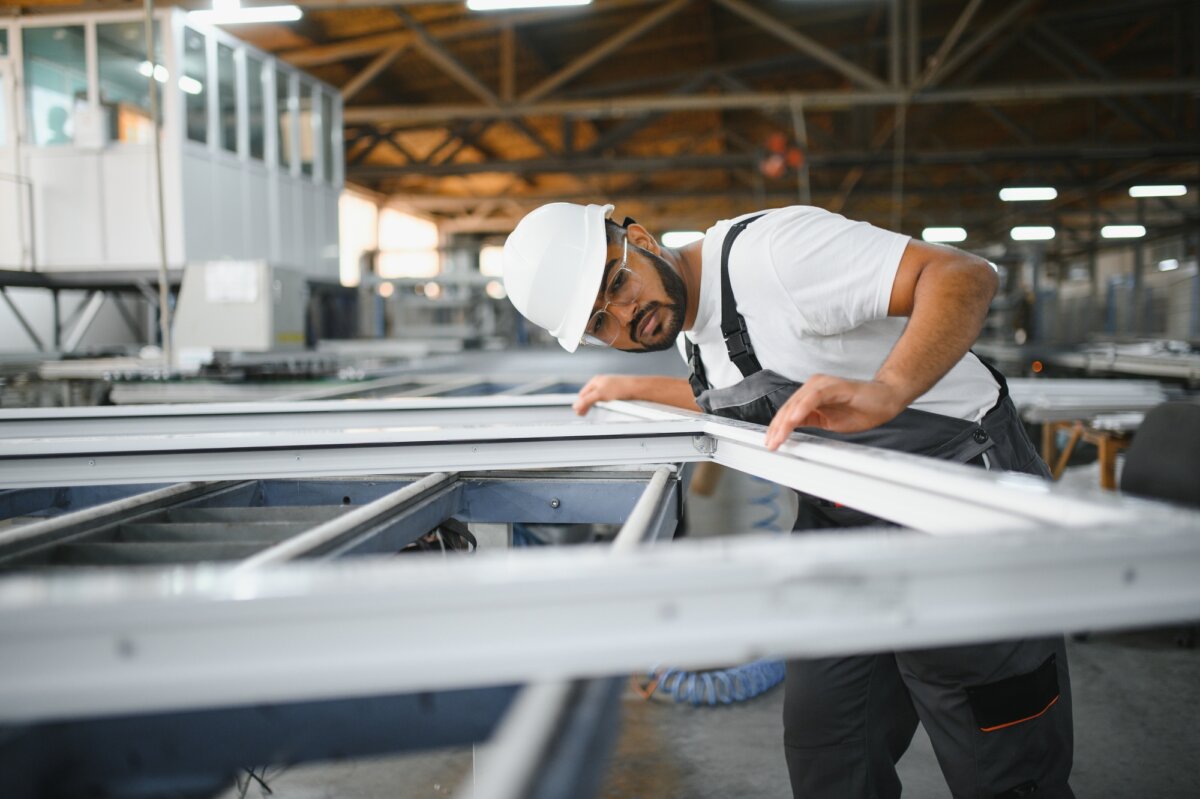

Authorities have found enough grounds for Australia to slap tariffs of around 70 percent on Chinese window and door imports.
The Australian Trade Remedies Commission, formerly the Anti-Dumping Commission, released its preliminary findings which says all Chinese exporters, except for Altop Facade, should be subject to extra duties to deal with the issue of “dumping.”
Dumping happens when goods are exported below their normal value, which is measured against the price they are sold for in their country of origin.
The Commission found the price difference ranged from 5.3 percent for Foshan AMJ Windows and Doors, to 51.6 percent for Zhuhai Yipeng Technology among the six Chinese companies it examined closely, and 70.4 percent for exporters that did not cooperate.
Altop’s exports were the only found not to been sold at below market rate (pdf).
Some exporters were also found to have received subsidies from the Chinese authorities, but for most the amount was too small to act on.
Only the uncooperative exporters faced an extra 2.9 percent charge to offset subsidies, taking their total to 73.3 percent.
From Oct. 15, importers must lodge these amounts as security when the goods clear customs. The money is a guarantee that duties can be collected later if the federal government decides to impose them.
Commissioner David Latina said the securities were needed to stop further serious harm to Australian manufacturers while the investigation continues.
Aluminium supplier Capral said two groups together accounted for about 71 percent of the value of Chinese imports covered by the investigation.
The investigation follows another major Australian trade action involving Chinese imports.
In May, the federal government imposed duties of up to 82 percent on Chinese hot-rolled steel after the Anti-Dumping Commission found the products had been dumped and subsidised, causing material harm to Australian industry.
The current investigation began on Nov. 25, 2025, after window maker Ventora Group and the Australian Glass and Window Association lodged a complaint. It covers windows and doors imported between July 1, 2024 and June 30, 2025.
While the commission could have required securities from late January, Latina instead published a status report (pdf) at that point and held off.
The two applicants repeatedly urged him to act sooner (pdf), warning that local manufacturers would keep losing business while they waited for a final decision.
Interested parties now have until Nov. 3 to respond to the preliminary findings.
The commission must give its final recommendation to Industry and Innovation Minister Tim Ayres by Dec. 16 this year, and the minister will then decide whether to impose duties and at what rates.
Capral, Australia’s largest aluminium extruder, welcomed the findings, saying many of the window and door makers it supplies are small, independently owned businesses.
“These are preliminary findings, but they are important. The commission has recognised that dumped and subsidised imports have caused real financial harm to Australian window and door manufacturers,” Managing Director Tony Dragicevich said.
“Australian manufacturers can compete. What they need is a market where prices reflect fair competition.”
The company warned builders and developers that a supplier’s quoted price may not include the new charges, which could substantially increase the cost if passed on to the buyer.
Opposed by Builders’ Group
Master Builders Australia opposed the investigation from the start, arguing in a December 2025 submission (pdf) that new charges would push up the cost of homes during a housing crisis.
“The imposition of a punitive measure in the form of a tariff on a critical component of the built environment would only serve to exacerbate the current housing supply challenges,” the group wrote.
It said aluminium window and door prices had already climbed 38.8 percent since the pandemic, warned of possible retaliation from Beijing, and asked that any duties be phased in over four to five years so builders could finish projects already priced and contracted.
The findings come as the federal government spends heavily to keep Australia’s aluminium industry afloat, including a $2 billion production credit for smelters that switch to renewable power and a $2 billion deal, shared with the Queensland government, to keep Rio Tinto’s Boyne smelter in Gladstone open.
 Friends Read Free
Copy
Facebook
Tweet
Friends Read Free
Copy
Facebook
Tweet