
Australia will not deploy a naval vessel to the Strait of Hormuz despite growing international pressure to help secure the strategic shipping route amid escalating tensions in the Middle East.
Transport Minister Catherine King said the Albanese government had been clear about its current role in the region and confirmed Australia would not be sending a warship to the Gulf.
The statement follows calls from U.S. President Donald Trump, who urged countries reliant on oil passing through the Strait of Hormuz to send naval forces to help protect the route.
Roughly 20 percent of the world’s oil supply moves through the narrow waterway between Iran and Oman.
“We won’t be sending a ship to the Strait of Hormuz. We know how incredibly important that is but that’s not something we’ve been asked or we’re contributing to,” she told ABC Radio on March 16.
When asked whether the United States had formally requested Australian naval support, King said she was unaware of any such request.
King added that Australia’s contribution was focused elsewhere, referring to the Royal Australian Air Force E-7A Wedgetail surveillance aircraft sent to the Middle East on March 10.
“We’ve been very clear about what our contribution is in relation to requests, and so far, that is to the UAE [United Arab Emirates] —obviously providing aircraft to assist with defence particularly given the number of Australians that are in that area in particular,” she said.
Rising Risks in Strait of Hormuz
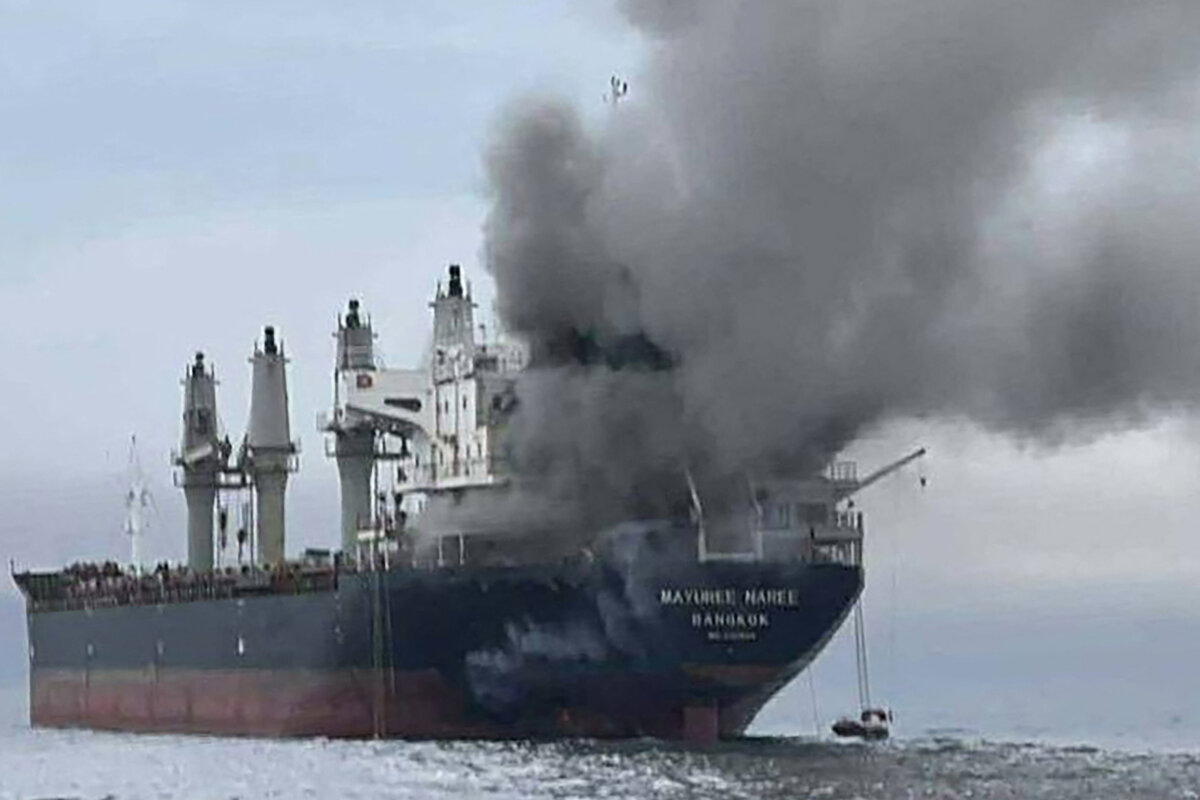
The government’s decision comes as maritime security deteriorates in the Persian Gulf, with several recent attacks on commercial oil tankers raising fears of disruptions to global energy supplies.
Iran has increasingly targeted vessels in the region, a move analysts believe could push international fuel prices higher.
On March 11, a U.S.-owned crude oil tanker, Safesea Vishnu, flying the Marshall Islands flag, was attacked near Basra in southern Iraq, according to the Indian Embassy in Baghdad. One Indian crew member was killed, while the remaining 15 crew members were evacuated.
Maritime security organisations also reported additional strikes against commercial ships operating in the Persian Gulf and the Strait of Hormuz.
Iraq’s State Oil Marketing Company (SOMO) said another vessel, the Maltese-flagged tanker Zefyros, was also targeted while operating in Iraqi territorial waters, highlighting the growing risks to shipping and oil supply chains.
Coalition Urges Caution
Shadow Defence Minister James Paterson said he did not expect the United States to request an Australian naval deployment but added that any such request would need to be carefully considered.
“You would need to have a naval vessel that’s capable of protecting itself against drone and missile attacks,” Paterson told Channel Nine.
Paterson noted that when a similar request was made in 2023 during attacks on shipping in the Red Sea, Australia was unable to send a vessel.
“And in 2023, when a similar request from the United States came to help in the Red Sea against the Houthis terrorist organisation, we weren’t able to provide any naval vessels because we didn’t have ones that could protect themselves that were available for that mission,” he said.
China Export Cuts Raise Supply Concerns
Meanwhile, energy markets are watching developments in China, where reports suggest authorities have instructed refineries to halt fuel exports as tensions in the Middle East intensify.
King said the government was monitoring the reports closely.
“Certainly, we’ve heard reports to that effect, and we’re watching that fairly closely,” she said.
The minister also warned that prolonged conflict in the region could have wider economic consequences. Australia currently relies heavily on imported jet fuel, with Chinese refineries accounting for around 32 percent of the supply.
“It’s clear, obviously, the longer that the war continues, the greater the impacts will be felt, not just by us, but obviously the Asia Pacific region overall,” she said.
Despite those concerns, King said Australia’s fuel shipments were continuing to arrive as scheduled.
“At this stage, all of the ships that were planned to come into Australia, are coming in. The fuel supply is holding,” she said.
King acknowledged there were localised distribution challenges, particularly in regional areas, but said state governments were helping transport fuel to where it was needed.
“There are obviously larger loads being required to get fuel across the country in a different way, and so they’re stepping up to make sure that road load limits are being worked through,” she said.
The minister added that while rising fuel prices were already affecting the aviation sector, there were no immediate risks to jet fuel availability.
 Friends Read Free
Copy
Facebook
Tweet
Friends Read Free
Copy
Facebook
Tweet