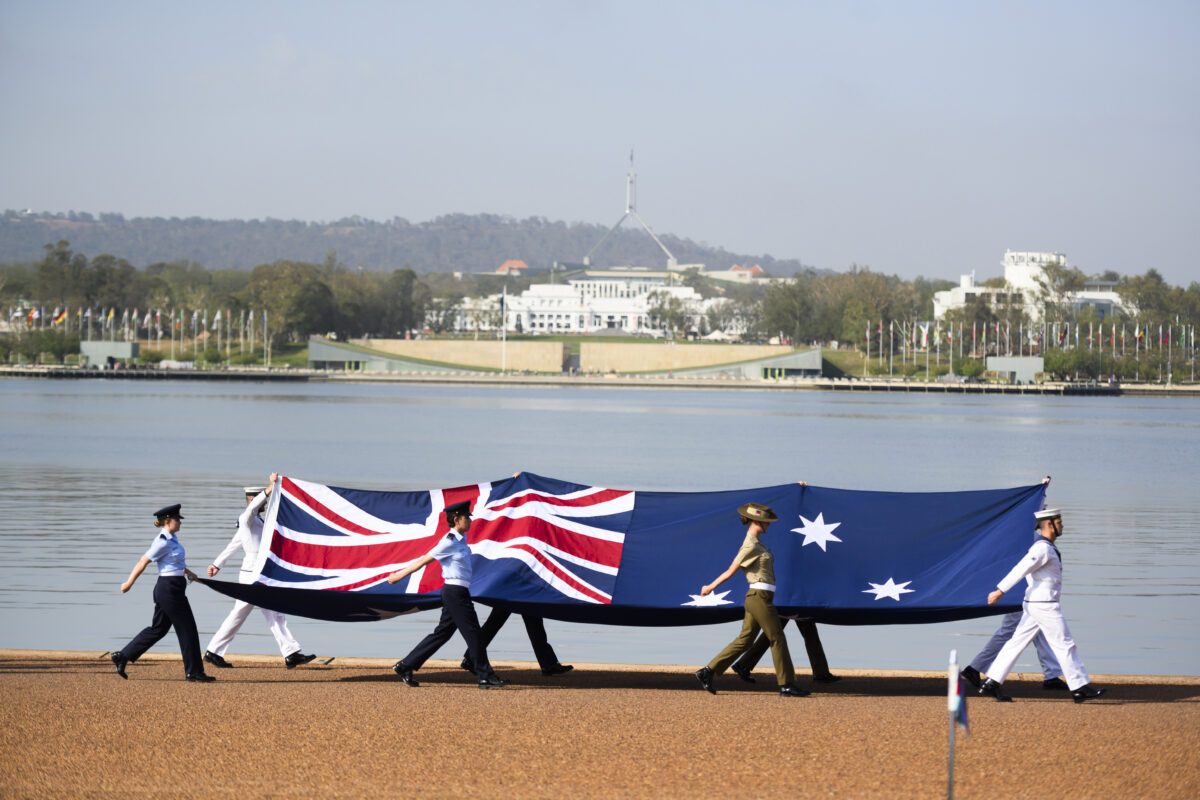
As iconic as koalas and kangaroos, the Australian flag waves above each day—yet behind its stars and stripes lies a story few individuals know.
For those who want to learn more and feel like expressing their inner patriotism, one Australian group is working hard to remind citizens to commemorate the 124th birthday of the flag on Australian National Flag Day on Sept. 3—the day the symbol was first flown in 1901.
The official celebration was declared by former Governor-General Sir William Deane in 1996.
“Our flag symbolises Australia in what I think is a pretty perfect way, because it reflects the ‘have a go’ spirit,” says Allan Pidgeon, chair of the Australian National Flag Association. He shared that few are aware of the origins of the flag.
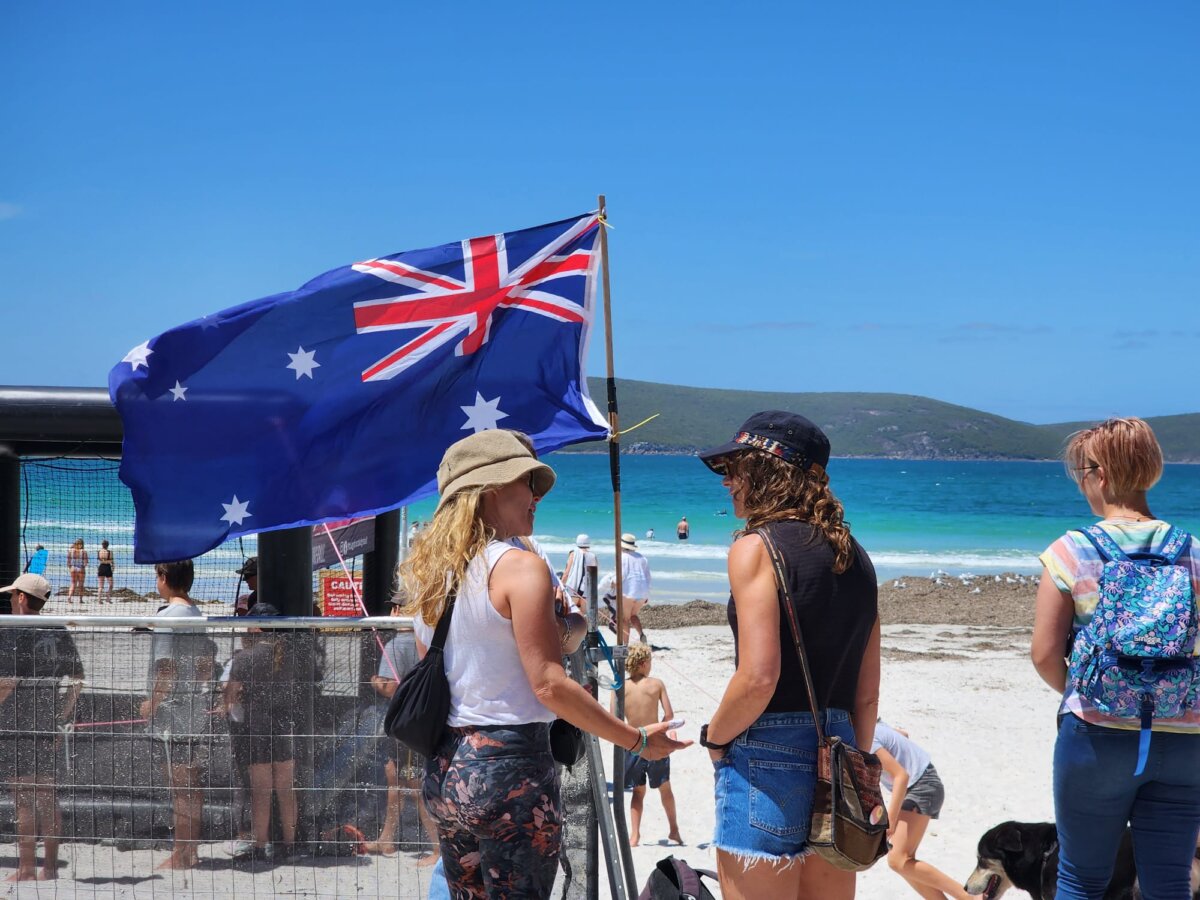
“No other country had thought of inviting everyone to have a go in designing the national symbol,” Pidgeon told The Epoch Times.
But in 1901 that’s exactly what happened when 1 percent of the population entered a competition to design the flag.
It took judges six weeks to determine a winner from 38,000 entries with 5 entrants chosen.
An exhibition was held at the Royal Exhibition Building in Melbourne to display the winners
“I get a bit frustrated that people don’t get taught about it or learn about it like in other countries,” he said.
“The fact that we held the world’s first ever flag design competition should be part of national folklore, and the five people who won it should be household names.
“But instead, they’ve sort of been airbrushed out of history, so we’re trying to celebrate those five people as well.”

The Winners
Entries for the competition were anonymous to protect against favouritism amid rumours state representatives were also entering.
But over time, some details emerged about the five winners who shared the 200 pound prize money—their designs were regarded as similar.
The most notable was 14-year-old schoolboy Ivor Evans, along with female artist Annie Dorrington, an optometrist apprentice Leslie John Hawkins, a draughtsman from Melbourne named Egbert John Nuttall, and a captain of the Union Steamship Company of New Zealand, William Stevens.
For young people and women to win such a contest in 1901 was “groundbreaking” for the time, Pidgeon explains.
Meanwhile, as for the entries that didn’t win, those that weren’t collected were destroyed.
The ones that were recorded include a flag featuring a six-tailed kangaroo to represent all the founding states. Another featured native animals playing a game of cricket.
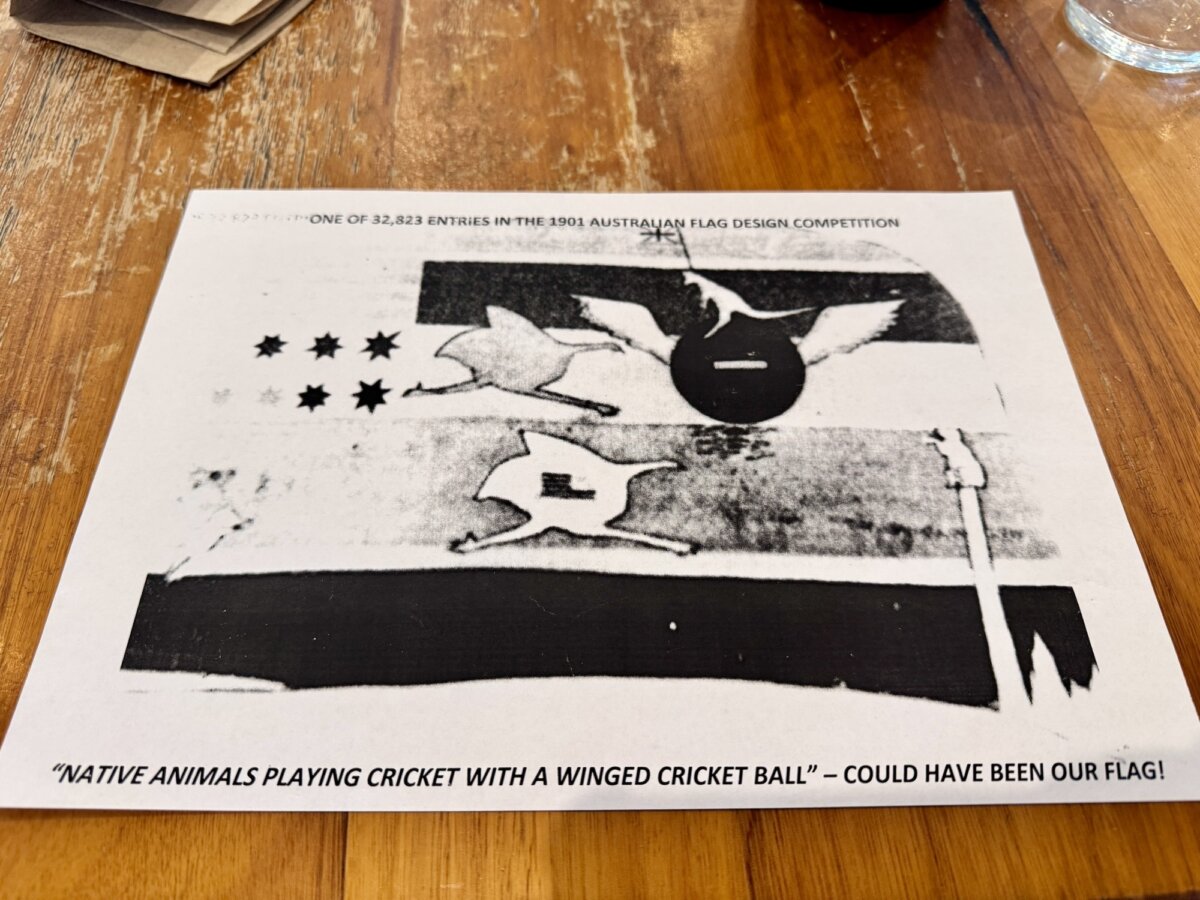
Another was described as a kangaroo firing a shotgun through the stars of the Southern Cross.
Standing the Test of Time
Pidgeon says support for the flag is very high, particularly among young Australians.
“I think it has something to do with the fact that their world is changing so fast and there is so much going on, that something that endures has significance—this is something that we’ve had for 124 years,” Pidgeon says.
“And I think people value that,” he said. “A flag is meant to be a symbolic element that has significance over time, and isn’t just a transient fashion trend or whatever.”
Pidgeon noted it represented the “past, present, and future” for Australians.
“It has the Union Jack, which symbolises the European settlement … it could have come from France or Portugal, but it came from the UK, so that’s given us not only our national language, but our parliamentary system of government, the rule of law, etc.
“And then the present is the Southern Cross, which shows where we are in the world,” Pidgeon says, noting its significance for Indigenous communities.
“And then the future is the Federation star, or the Commonwealth star, which is all of us together in one country, one continent,” Pidgeon says.
The Speaker of the House Milton Dick will host a National Flag Day event in Canberra at Parliament House on Sept. 1. For local events check with your council, for those in Brisbane you can visit this website (pdf).