

The Labor government is projected to slow the growth of net debt in the 2026–27 financial year compared with previous forecasts.
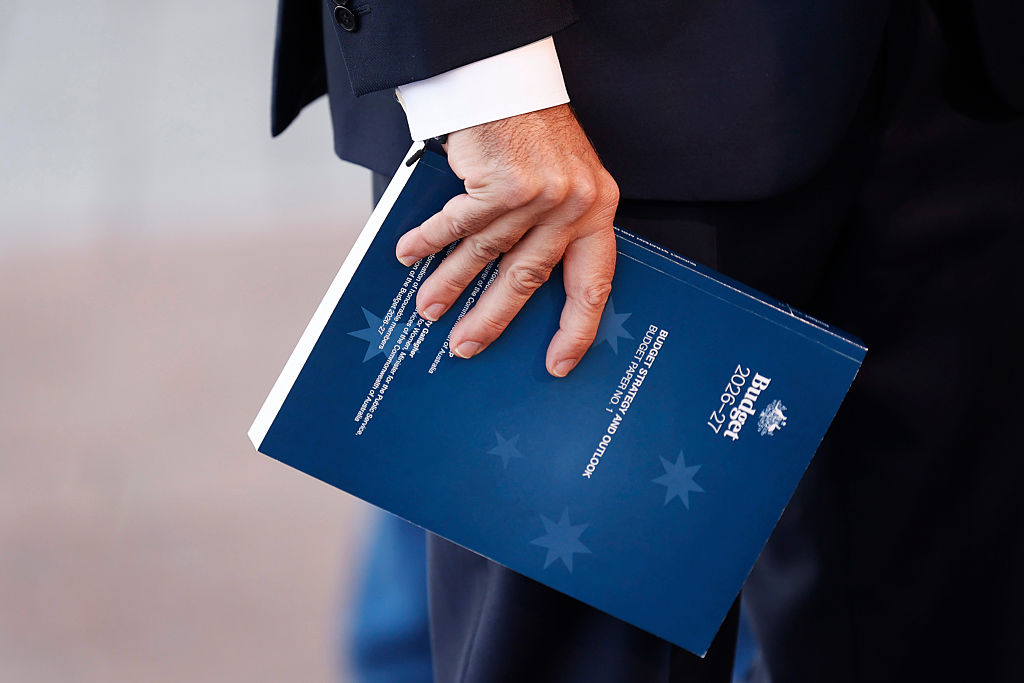
According to the newly released budget paper (pdf), net debt is forecast to reach $616.6 billion (US$445.5 billion), or 19.9 percent of GDP, in 2026-27.
While the figure is significantly higher than the estimates for 2025–26 ($556 billion) and 2024–25 ($552.3 billion), it is lower than the recent Mid-Year Economic and Fiscal Outlook (MYEFO) forecast of $646.9 billion.
“Net debt is estimated to be … 1.5 percentage points lower than estimated at MYEFO. Net debt relative to GDP is expected to be lower in all years of the forward estimates compared to at MYEFO, largely reflecting a lower market value of Australian government securities on issue due to both lower issuance and higher yields,” the paper said.
By June 30, 2037, forward estimates predict net debt will stand at 15.1 percent of GDP.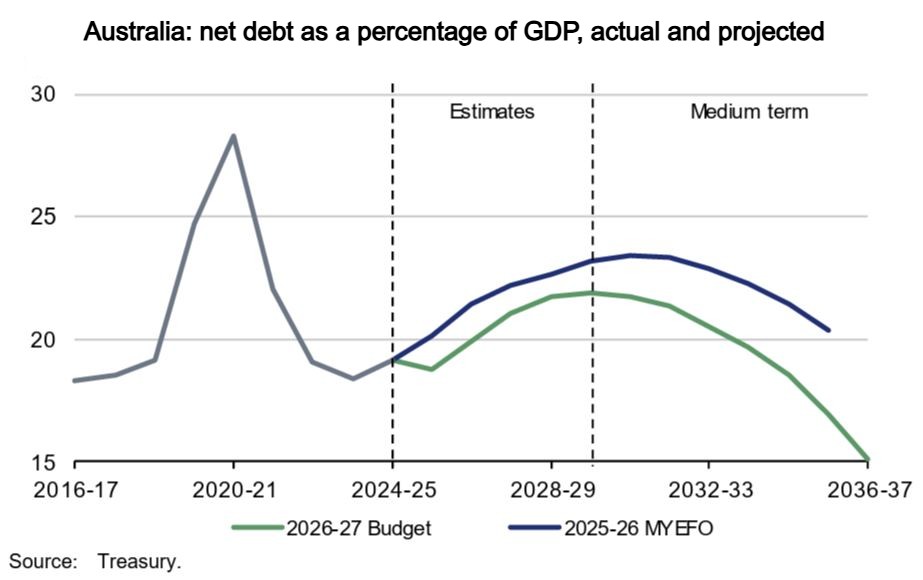
Net debt refers to the Australian Government’s gross debt liabilities, less its liquid financial assets, with liabilities primarily comprising federal government securities and other borrowings.
Australia’s net public debt has risen substantially over the past decade, particularly during and after the COVID-19 pandemic, although the trajectory has varied between the federal government and the broader “all Australia” government sector, which includes state and territory governments.
Lowering a country’s net debt can improve fiscal sustainability, reduce interest costs, free up budget resources for other priorities, and strengthen resilience to future economic shocks.
Lower debt levels also provide governments with greater flexibility to respond to recessions, disasters, or unforeseen crises by preserving borrowing capacity without significantly increasing fiscal risk.
By reducing debt relative to the GDP, the government can lower its interest payments, enhance investor confidence, and create more capacity for future public spending or tax cuts.
Meanwhile, the outlook for the country’s net financial worth—the total value of government financial assets minus outstanding liabilities—is less optimistic.
It is estimated at -28.9 percent of GDP (-$895.6 billion) as of June 30, 2027, improving on the Mid-Year Economic and Fiscal Outlook forecast of -30.8 percent of GDP (-$930.2 billion).
Net financial worth is forecast to worsen to -30.0 percent of GDP by June 30, 2029, before rebounding to -21.2 percent of GDP by the end of the medium term.
Regarding government spending, total payments are expected to reach $829.6 billion, or 26.8 percent of GDP, in 2026-27, up from $788.1 billion (26.6 percent of GDP) in 2025-26 and $726.9 billion (26.2 percent of GDP) in 2024-25.
However, the budget paper said the government’s “fiscal discipline” would temper growth in spending over the coming period.
“Payments as a share of the economy are forecast to decline from 26.8 per cent in 2026–27 to 26.2 per cent in the last year of the forward estimates [2029-30],” it said.
“Payments–to–GDP are lower than at MYEFO in every year of the medium term and is 0.4 percentage points lower by 2035–36.”
Meanwhile, net interest payments—total interest payments minus total interest receipts—are projected to reach $19.9 billion, or 0.6 percent of GDP, in 2026–27, up from $17.7 billion in 2025–26 and $13.7 billion in 2024–25.
“Public debt interest growth is expected to average 8.8 percent over the projection period compared to 10.7 percent at MYEFO,” the budget paper said.
“Lower average growth reflects a lower financing task over the projection period and follows strong growth between 2025–26 and 2026–27. This is partially offset by the impact of higher yields.”
 Friends Read Free
Copy
Facebook
Tweet
Friends Read Free
Copy
Facebook
Tweet