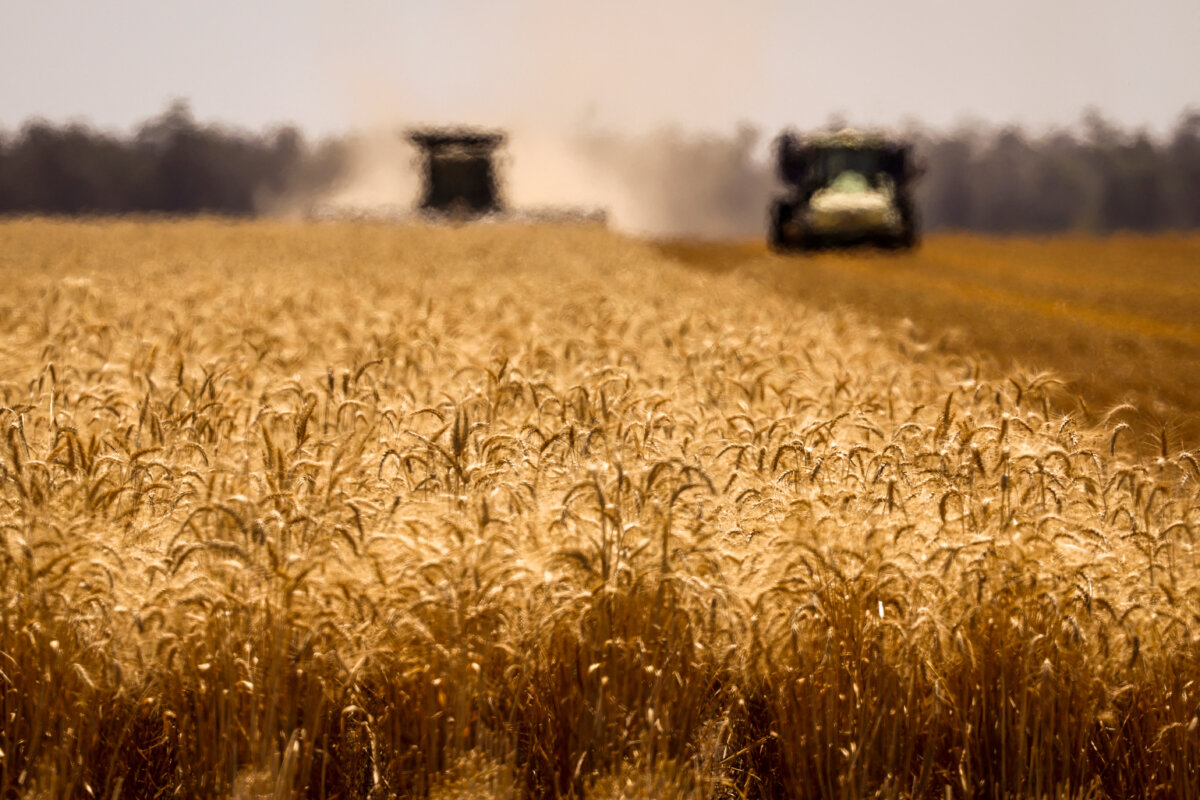

Australian winter crop production is expected to fall dramatically in 2026–27 amid fuel supply disruptions linked to the Middle East conflict.
The Australian Bureau of Agricultural and Resource Economics and Sciences (ABARES) report predicted total production would decline 21 percent compared to the previous year to 54.5 million tonnes.
The report (pdf) noted that the Middle East conflict has caused major disruptions to global supplies of liquid fuels and fertiliser, leaving Australia’s broadacre farmers highly exposed due to their heavy reliance on imports and limited access to substitutes.
“To date, disruptions have resulted in significantly higher input costs rather than physical shortages, although some short-term fuel outages occurred earlier in the planting window,” it said.
“If the Middle East conflict continues, the cost of inputs is likely to remain elevated for longer which could weigh on production.”
While the latest crop output forecast is 12 percent below the five-year average, it remains 4 percent above the 10-year average and ranks as the seventh-largest on record.
Significant Drop in Wheat, Chickpea Production
The report forecasts wheat production will fall 26 percent to 26.7 million tonnes, while barley production is expected to decline 15 percent to 14.1 million tonnes.
Canola production is predicted to fall 20 percent to 6.2 million tonnes, while chickpea output is expected to plunge 51 percent to 1.1 million tonnes.
Lentil production conversely is expected to rise 3 percent to a record 2.2 million tonnes, the report found.
Southern Growers Push Ahead
The report also highlighted that strong early-season rainfall had encouraged planting in the south despite higher costs.
“Despite higher input costs, average to very much above average February to April rainfall across major cropping regions of southern Western Australia, South Australia and Victoria has incentivised growers to go ahead with winter cropping programs, albeit with some changes in cropping mix,” it said.
Meanwhile, northern New South Wales and southern Queensland saw big cuts in planted area due to persistent dry conditions.
“Conversely, persistent dry conditions are expected to result in a significant fall in the area planted to winter crops in 2026–27 through northern New South Wales and southern Queensland,” the report said.
The Bureau of Meteorology’s latest outlook warns of a 60 to 80 percent chance of below-average winter rainfall across all major cropping zones from June to August.
Farmers Worldwide Feeling the Pinch
The crop forecast comes amid growing concern among farming organisations worldwide about the Iran conflict’s impact on food production.
The World Farmers’ Organisation warned in April that rising fuel, fertiliser and transport costs were constraining farmers’ ability to plan, invest and produce. Fertiliser costs had risen sharply while crop prices remained largely stable, squeezing farm margins to historically low levels.
“Farmers are already being forced to adjust how they produce in response to rising energy and fertiliser costs and growing uncertainty. When inputs become unpredictable, production is at risk—and so is global food security,” World Farmers’ Organisation President Arnold Puech d’Alissac said.
 Friends Read Free
Copy
Facebook
Tweet
Friends Read Free
Copy
Facebook
Tweet