
The Trump administration has issued a warning to U.S. and international banks that dealing with private Chinese refineries that purchase Iranian oil could expose them to U.S. sanctions.
Financial institutions “should be on notice that the department is leveraging the full range of available tools and authorities and is prepared to deploy secondary sanctions against foreign financial institutions that continue to support Iran’s activities,” the Treasury Department said in a April 28 statement.
The U.S. government has ramped up efforts to cut off the Iranian regime’s oil revenue as part of its broad campaign dubbed Operation Economic Fury.
According to the Treasury Department, about 90 percent of Iranian oil exports go to China, primarily bought by smaller, private Chinese refineries known as “teapots.”
“This revenue ultimately benefits the Iranian regime, its weapons programs, and its military,” the Treasury said. “Some Chinese teapot refineries have used the U.S. financial system to conduct dollar-denominated transactions and procure U.S. goods.”
In an accompanying alert, the department’s Office of Foreign Assets Control urged U.S. and foreign financial institutions to take steps to avoid facilitating transactions involving Chinese teapot refineries that may be importing Iranian oil.
Financial institutions should exercise enhanced due diligence in dealing with China-based teapot refineries, particularly those located in the eastern coastal province of Shandong, given “the heightened risk that transactions with these refineries could involve Iranian-origin oil,” according to the alert.
The office also recommended that financial institutions communicate their expectations regarding sanctions risks to their correspondent Chinese banks and gather additional information on relevant customers and transactions.
The alert was issued less than a week after the Treasury Department imposed sanctions on a major Chinese refinery, Hengli Petrochemical (Dalian) Refinery, accusing it of purchasing Iranian petroleum worth billions of dollars. The department also sanctioned 40 shipping companies and vessels that were found to serve as Iran’s oil export lifeline.
The Chinese regime has defended its trade with Iran as legitimate and voiced opposition to what it calls “illicit unilateral sanctions.”
Chinese foreign ministry spokesperson Lin Jian said at a regular briefing on April 27 that Beijing will “firmly defend” Chinese companies.
Although it has been identified by U.S. officials as the largest buyer of the sanctioned Iranian oil, China hasn’t officially purchased a single barrel from Iran since 2023.
However, according to a March report by the U.S.–China Economic and Security Review Commission, Chinese entities have developed a sophisticated network to import Iranian oil and facilitate payments.
Such illicit trade is carried out by shadow-fleet vessels whose ownership is difficult to track because they often switch off their transponders and engage in geo-spoofing to hide their locations, the congressional report notes. Much of the oil is then processed by a cluster of teapot refineries, which limits exposure to the international financial system to avoid sanctions.
“Oil revenue from China accounts for about 45 percent of Iran’s government budget, money that in turn funds Iran’s destabilizing activity throughout the region,” the report states.
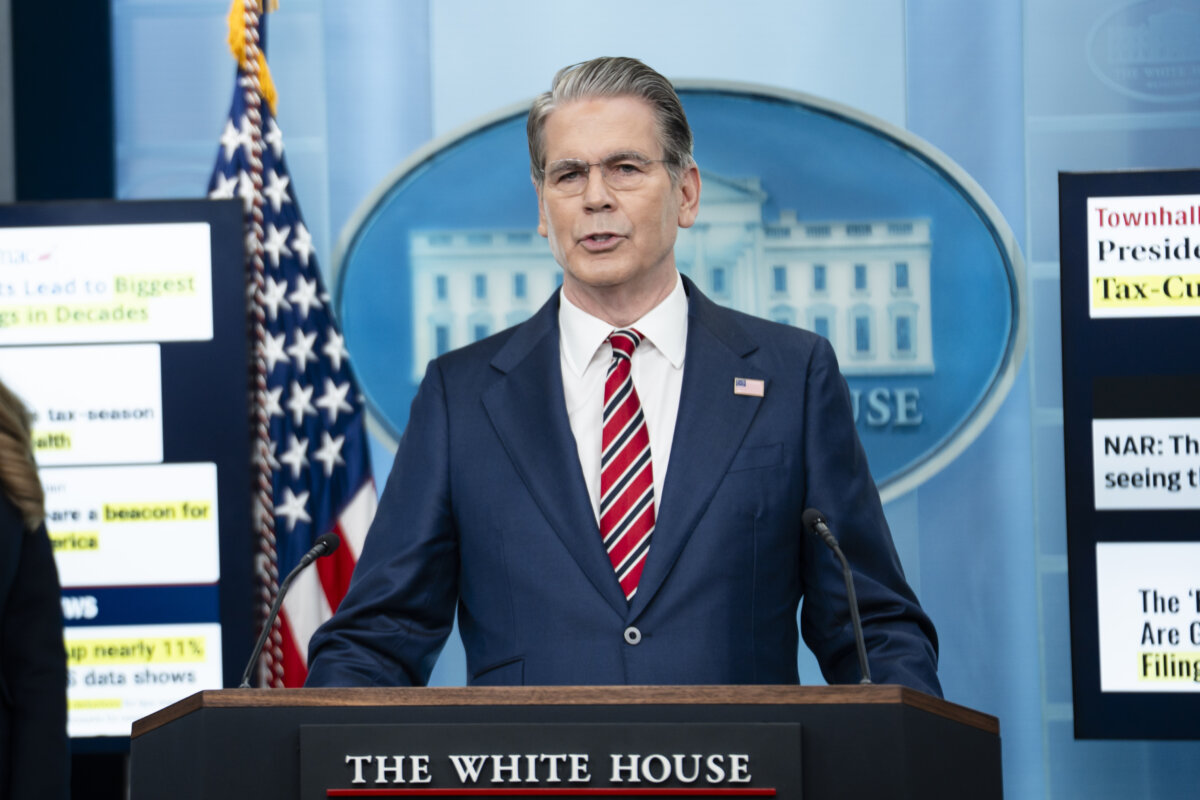
In a social media post on April 28, Treasury Secretary Scott Bessent said that his department “has targeted Iran’s international shadow banking infrastructure, access to crypto, shadow fleet, weapons procurement networks, funding for terrorist proxies in the region, and independent Chinese ‘teapot’ refineries that support Iran’s oil trade.”
He said Kharg Island, a key hub for Iranian oil export, is “soon nearing storage capacity,” which could result in a daily revenue loss of “an additional approximately $170 million” and cause “permanent damage to Iran’s oil infrastructure.”
Bessent said, “Treasury will continue to exert maximum pressure and any person, vessel, or entity facilitating illicit flows to Tehran risks exposure to U.S. sanctions.”
 Friends Read Free
Copy
Facebook
Tweet
Friends Read Free
Copy
Facebook
Tweet