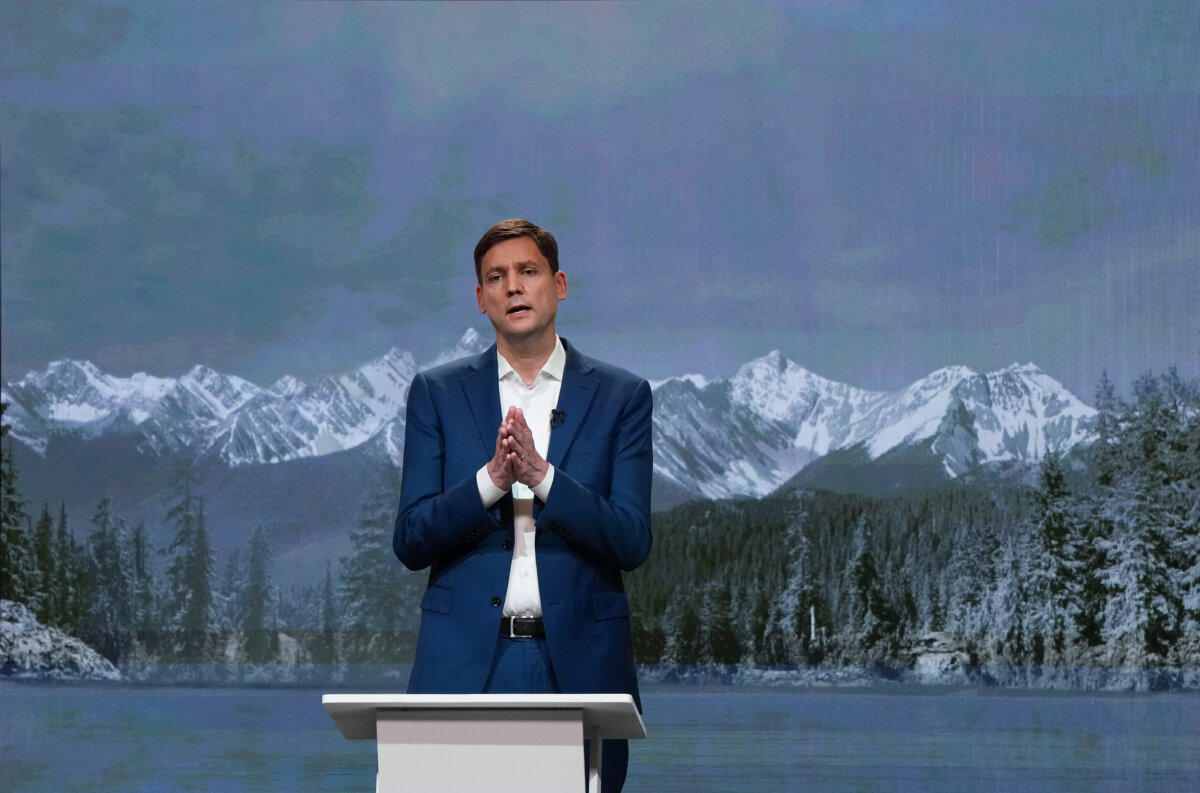

NDP Leader David Eby is defending land transfer decisions made by his government following the release of documents to the media revealing details of a confidential deal with First Nations.
Confidential documents obtained by digital news outlet the Northern Beat show that Eby’s government has committed to transferring about 400 parcels of Crown land to First Nations under treaty and reconciliation agreements, while proposing changes that could limit compensation for companies holding timber rights on the land.
Eby, who was questioned about the plans on the campaign trail this week, said the transfers reflect longstanding treaty and reconciliation commitments, some dating back decades, while the proposed legislation was intended to reduce costs for taxpayers.
The documents said existing legislation mandates that the government provide compensation to forestry companies, but “given ongoing fiscal constraints,” that would make it challenging to complete the land transfers.
An Eby campaign spokesperson said the draft legislation would change the compensation rules. Under one proposal, compensation would not necessarily be paid until cumulative reductions in a forestry licence holder’s annual allowable cut exceed 5 per cent. Another proposal would remove the six-year limit on special-purpose land designations, potentially allowing compensation to be withheld indefinitely.
The documents, dated Sept. 10, came to light ahead of the provincial election scheduled for Oct. 24. The NDP platform does not mention the proposals, and forestry companies that reviewed the confidential documents were required to sign non-disclosure agreements.
Eby told reporters on Oct. 15 that such agreements are routine and rejected allegations of secrecy.
“It’s not a new thing, and what it does, it provides a little bit of relief in terms of cost for taxpayers for these agreements, some of which are historic with First Nations,” he said during a campaign stop in Surrey, B.C.
Eby was questioned about how the proposed legislation would help forestry companies prevent workforce reductions during a time of economic hardship. He said shifting tenure rights to local groups and First Nations strengthens the industry by ensuring logging and employment remain local.
“To characterize it as something that obstructs forestry is actually the complete opposite of what’s happening here,” he said. “It’s about minimizing the impact on taxpayers of these kinds of agreements.”
Cabinet approved stakeholder engagement in July, but the proposal was a draft rather than finalized legislation, an NDP spokesperson said. The engagement process examined how compensation works in instances where land transfers impact areas covered by forest licences.
A B.C. Conservatives press release criticized the plan, characterizing it as “more secret dealings” by Eby’s government.
“Why won’t David Eby just come clean on his plans?” Conservative candidate Scott McInnis said in the Oct. 15 press release. “Once again it appears that David Eby and the NDP are telling British Columbians one thing, and making secret backroom deals that say another.”
Land Issues
The leaked documents come amid contentious debate over land use in British Columbia, following several significant court rulings and legislative changes in recent years.
In in a landmark case in August 2025, the B.C. Supreme Court recognized the Cowichan Tribes’ Aboriginal title to certain lands in Richmond, B.C. The court found that past Crown grants of fee simple interests and the transfer of certain land interests to the City of Richmond unjustifiably infringed on Aboriginal title. It also declared certain federal and municipal land interests within the affected area defective or invalid. The provincial government and other parties appealed the ruling.
That ruling was followed by a late-2025 decision by the Court of Appeal for British Columbia involving the Gitxaala Nation and the province’s mineral claims system. The B.C. Court of Appeal ruled that the province’s online mineral claims system violated the Declaration on the Rights of Indigenous Peoples Act (DRIPA) because it allowed mining stakes to be claimed without First Nations consultation.
B.C. passed DRIPA in 2019, becoming the first Canadian province to establish a framework to align its laws with the United Nations Declaration on the Rights of Indigenous Peoples (UNDRIP).
DRIPA was a prominent topic during the provincial election campaign and featured in the leaders’ debate on Oct. 14.
Eby said his government was appealing recent court decisions to help ensure private property rights are protected. He also argued that partnerships with indigenous peoples have helped advance major projects in the province through the federal government’s Major Projects Office.
“The reasons why we were able to do LNG Canada Phase II, all of these projects, the reason why these things are happening is because we have entered into those partnerships that are enabled by this law,” he said during the debate.
B.C. Conservative Leader Lorne Doerkson said his party would repeal DRIPA if elected, arguing that the legislation had created “division” among residents.
 Friends Read Free
Copy
Facebook
Tweet
Friends Read Free
Copy
Facebook
Tweet