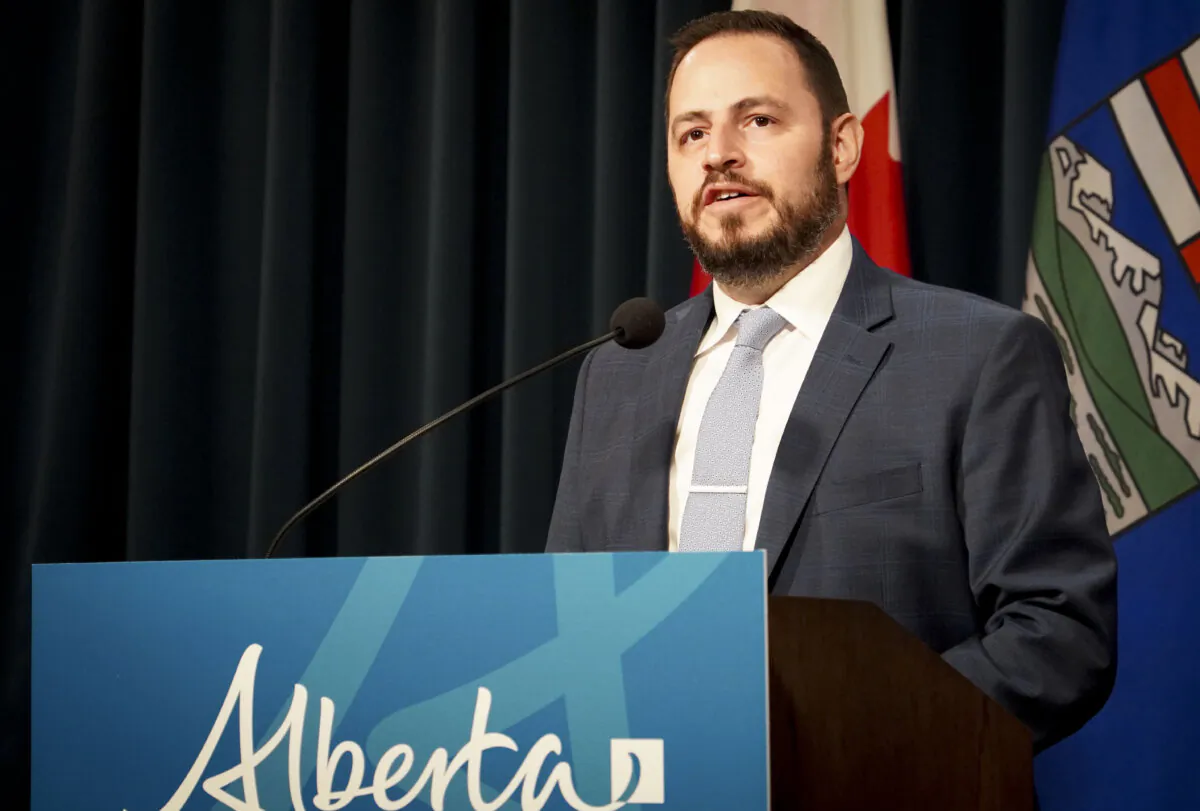

The Alberta government introduced legislation last week aimed at removing political and ideological influences from classrooms, with the education minister saying the move responds to concerns from parents about what their children are being taught in schools.
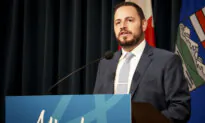
Alberta Education Minister Demetrios Nicolaides says the issue of political and ideological bias is a “longstanding concern” he hears about from parents, and noted specific examples he is aware of that have taken place at schools in Alberta.
“I believe that our classrooms should be free from any kind of political bias, and we should make sure that schools are places where students learn how to think, and not what to think,” Nicolaides told The Epoch Times in an interview.
One example cited by Nicolaides is the case of a teacher in Fort Saskatchewan, Alta., who was recorded in January criticizing people who work in and support Alberta’s oil and gas sector and people from Fort McMurray, where much of Alberta’s crude oil is produced.
He also noted that a Muslim student at a junior high school in Edmonton in June 2023 was “berated” by her teacher for not attending school on the day the school was organizing LGBT Pride activities.
Nicolaides said the teacher told the student: “We believe that people can marry whoever they want. That’s the law, and if you don’t think that should be the law, you can’t be Canadian, and you don’t belong here, and I mean it.”
Parental rights advocacy groups have also voiced concerns about specific examples of ideology and political agendas pushed by teachers in the classroom.
Jeff Park, director of Alberta Parents’ Union, told The Epoch Times that the group has been concerned about lesson plans that teachers and schools use, which he said parents are not allowed to see because they are “highly ideological.”
He recalled one lesson plan on how crickets should replace beef as a food source, another on the events of Jan. 6, 2021, at the U.S. Capitol, and another on the alleged discovery of unmarked graves at the former residential school in Kamloops, B.C., which had a burning church as the lesson’s main photo.
Park also mentioned another teaching resource on climate change that says Canadians need to “rethink property rights” to survive the “climate crisis,” and noted he has heard from parents who work in the oilsands that their work is being “demonized” in the classroom.
Tanya Gaw, founder of Action4Canada, told The Epoch Times her organization has found lessons for school children on sexual orientation and gender identities (SOGI) to be most concerning.

She said her organization has found “evidence of the measurable harms to children” associated with SOGI lessons and exposure to sexually explicit books. Although this was addressed by the province last year, she said the age limit of 16 years old to access such material is not enough, adding that older students could expose younger students to the material. She also voiced concern about public libraries within schools not removing such books, something the province recently addressed as well.
Advocacy group Parents As First Educators also told The Epoch Times it is concerned about sexually explicit or graphic books promoting gender ideology and the flying of LGBT flags outside of schools, in addition to political and sexualized gender ideology symbolism inside schools.
Alberta Bill
Bill 25, introduced by the Alberta government on March 31, mandates an impartial classroom teaching style, requires education to be free from personal bias, and protects educators from participating in activities that violate their personal beliefs, while also guaranteeing students’ free speech, Nicolaides said at a March 31 press conference.
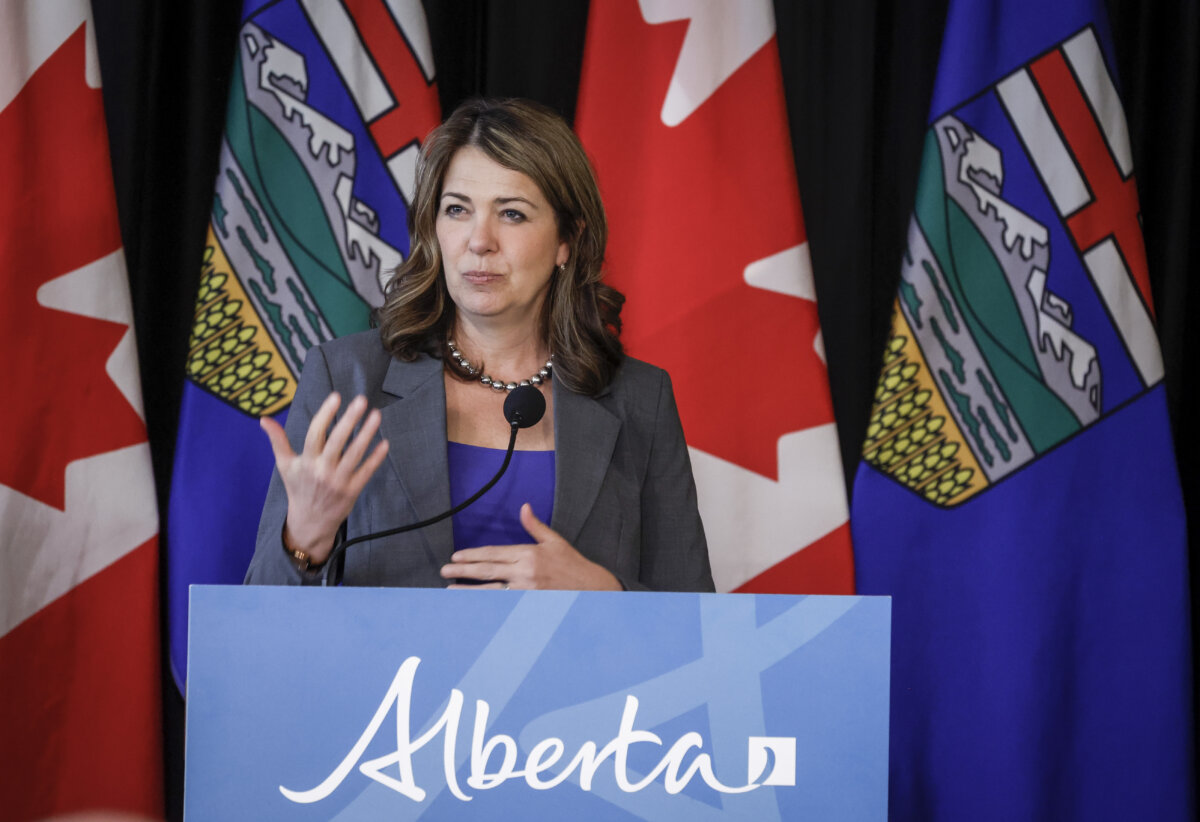
“Classrooms must be an impartial learning environment that prioritize teaching fundamentals like reading, math and science and support students in developing their own opinions and views,” Alberta Premier Danielle Smith said in a post on social media, referring to Bill 25.
Students will still learn about politics and ideologies in the classroom, but in a neutral way that allows for “diverse viewpoints” to be brought forward without educators’ personal opinions taking over, Nicolaides said.
Nicolaides said he is confident the province will be able to ensure students develop “robust” critical thinking skills without school divisions making political statements or engaging in political activity.
When it comes to enforcing the legislation, the minister said school boards are obligated to follow provincial legislation, and the province would ask school boards that are not compliant to “develop a strategy to ensure that they are meeting provincial standards.” Individuals can also raise concerns about teacher conduct and professionalism with the Alberta Teaching Profession Commission, Nicolaides noted.
He said he has received feedback from parents who are “very supportive” of the bill and agree that school boards should not be involved in social issues or political causes, but should instead focus exclusively on student academic success and personal development.
Meanwhile, NDP’s education critic Amanda Chapman said the UCP government is out of touch with what is happening in schools and is legislating an issue that doesn’t exist, referring to teachers pushing their own agendas.
Alberta Teachers’ Association President Jason Schilling also criticized the bill, calling it a “grab-bag of amendments” to the Education Act that has “very little to do with politics and ideology” in the classroom.
Bill 25 would also limit schools to only displaying the Canadian flag and the Alberta flag, require schools to play the Canadian national anthem weekly, set principles for school board trustee codes of conduct, and set clear expectations for student behaviour in an effort to address a rise in classroom violence, among other measures.
‘Ongoing’ Effort
Park said efforts to curb political and ideological agendas in classrooms will be “ongoing” even if Bill 25 is passed, noting that the issues are “embedded in the faculties of education and in the way that teachers are trained and recruited.”
Despite this, he said the bill still solves “genuine, concrete problems” for teachers who don’t want to recite land acknowledgements, or for Christian schools that don’t want to fly an LGBT flag during Pride Month in June.
Parents As First Educators said it is “pleased” with the Alberta government’s effort to keep politics and ideologies out of the classroom through Bill 25, which it said will prevent ideologically motivated educators and school boards from “imparting their politics onto children through critical race theory, radical gender ideology, and age-inappropriate sexual education.”
Gaw said she believes the bill is an “excellent step” by the Alberta government, but noted that “vague” language in the bill leaves room for misinterpretation. She said the policy “must be explicit” to curb political and ideological agendas in the classroom, and should directly name ideologies, such as SOGI, critical race theory, climate change activism presented as fact, land acknowledgements, and diversity, equity, and inclusion.
“These are not neutral or balanced viewpoints,” Gaw said. “They are ideological frameworks that many parents and experts argue are unscientific, politically driven, and rooted in activist theory.”
Other Alberta Legislation
The introduction of Bill 25 follows several related measures introduced by the Alberta government recently, including plans announced last week to implement changes in public libraries to prevent children and younger teens from accessing material containing graphic sexual images. The bill requires such materials to be physically separated, such as placed behind a counter, and to require parental permission to access.
The move comes after the province released guidelines last July to restrict graphic sexual material in school libraries. Nicolaides had said last May the province would engage with the public to develop such guidelines after a group of parents approached him and provided evidence of books with such content in elementary school libraries, and the province confirmed the parents’ findings.
Alberta NDP Leader Naheed Nenshi criticized the province’s measures, calling them “book bans.”
In addition, the Education Amendment Act, formerly Bill 27, which came into force in December 2024, created an opt-in system for lessons on gender identity and related topics, and mandated parental consent for pronoun or name changes at school. It also requires any third-party related materials to be approved in advance by the province’s ministry of education.
Other Provinces
Saskatchewan also passed legislation in 2023 to make parental consent necessary before a child under 16 can use a different gender identity or pronoun at school.
The law also requires schools to inform parents when sexual education content will be presented in their child’s class and gives parents the opportunity to pull their kids from the class by providing written notification to the principal.
New Brunswick under the Progressive Conservative government of former Premier Blaine Higgs announced a similar move in 2023, requiring schools to seek parental consent if students want to change their gender pronouns or identity. However, the changes were reversed by the new Liberal government of Premier Susan Holt.
Carolina Avendano and Jennifer Cowan contributed to this report.
 Friends Read Free
Copy
Facebook
Tweet
Friends Read Free
Copy
Facebook
Tweet