
News Analysis
Assistance to Tehran from Chinese nationals has long been undercutting the effectiveness of international sanctions against Iran’s nuclear project and missile program. Despite decades of legal and diplomatic action by the United States and other countries, U.S. court indictments and other government documentation show that Chinese business networks continue to deliver products critical for sustaining Iran’s missile production.
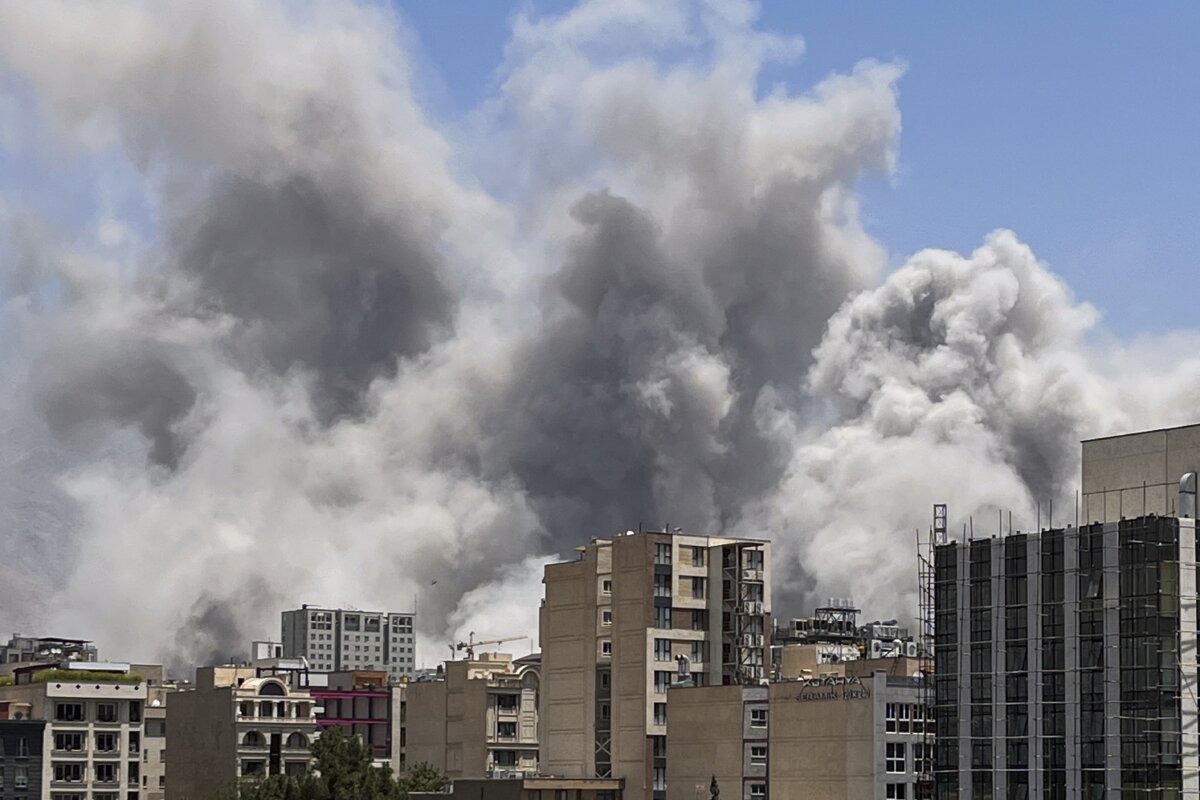
Iran used its ballistic missile force extensively during the recent 12-day war with Israel, laying down heavy barrages against Israeli cities in retaliation for the latter’s strikes targeting Iran’s air defenses, nuclear program, and senior military leadership.
Most of the Iranian missiles were intercepted, but dozens made it through Israel’s defenses, including the Iron Dome, causing 30 deaths, injuring thousands, and wreaking significant damage. More than 1,000 Iranians, mostly military and government personnel, died in the war, which started on June 13 and ended in a U.S.-brokered cease-fire on June 24.
Though the Chinese foreign ministry, in response to inquiries from Israeli newspaper Israel Hayom, denied recent reports that Beijing had transferred military equipment to Iran following the conflict, Israeli Ambassador to the U.S. Yechiel Leiter expressed concerns that China may be helping Iran rebuild its missile arsenal in the wake of its losses.
Iran and Ballistic Missiles
Since the Iranian theocracy’s establishment in 1979, the Chinese Communist Party (CCP) has offered key assistance to the regime as it pursued its nuclear and missile ambitions, with Beijing providing critical nuclear technology and materials since the 1980s, as indicated by various partnerships between the two countries and Western government reports.
In 1985 and 1990, China and Iran inked secret nuclear research agreements, the details of which became known in the following years, according to a 2013 U.S.–China Security Review Commission report. The Isfahan nuclear research complex in southwestern Iran, targeted by Israeli and U.S. airstrikes in the recent war, was constructed with Chinese involvement.
Iran operates a variety of short- and medium-range ballistic missiles, such as the Shahab-3, Ghadr, and Khorramshahr systems. Prior to the Iran–Israel war, it was reported to possess more than 3,000 ballistic missiles, according to U.S. Central Command estimates.
The strategic missile arsenal is under the control of the Iranian regime’s Islamic Revolutionary Guard Corps, a paramilitary organization heavily sanctioned for allegedly furthering Tehran’s terrorist and insurgent activities throughout the Middle East and beyond.
Ballistic missiles are indispensable not just in a scenario where Tehran successfully acquires nuclear weapons, but also as a major factor in the Iranian regime’s overall military policy.
Karl Lee and Sino–Iranian Proliferation Network
While China is not known to directly sell military hardware to Iran, it does provide Tehran with many of the necessary materials, such as those used in missile components and rocket fuel, according to U.S. intelligence.
Allegedly playing a major role in the Chinese proliferation network is Li Fangwei, better known as Karl Lee. Since the early 2000s, the U.S. intelligence community has identified Lee as a principal supplier of dual-use materials—that is, goods with both civilian and military applications—to Iran’s ballistic missile program, and he remains on the FBI’s list of its 10 most-wanted fugitives.
In 2014, the U.S. Department of Justice (DOJ) brought formal charges against Lee in a seven-count indictment filed with the Southern District of New York, accusing him of conspiracy to violate the International Emergency Economic Powers Act, money laundering, wire fraud, and sanctions evasion.
His U.S. assets were frozen and there is a $5 million reward for information leading to his arrest or conviction.
The DOJ alleges that Lee, who is from northeastern China, used dozens of front companies to conceal his transactions with Iran’s Defense Industries Organization and Aerospace Industries Organization, both of which are involved in Iran’s ballistic missile industry and nuclear research.
Lee’s companies allegedly supplied gyroscopes, maraging steel, high-grade aluminum alloys, and specialty graphite—all listed under missile technology control regime export controls.
Classified U.S. State Department cables obtained and released by WikiLeaks hint at the difficulty American diplomats have faced in getting the CCP to take action on Lee and his networks.
According to one cable from March 2008, Wang Daxue, an official from the Chinese foreign ministry tasked with arms control work said he was instructed to inform the U.S. side that while Beijing was working on a “most complicated” interagency investigation into Lee, it was unable to find evidence of his alleged violations.
Lee, according to Wang, is “clever and smart” and exploits the gray area provided by Chinese laws concerning the export of dual-use goods, making it difficult to find “solid evidence” against him.
In 2023, the DOJ unsealed an indictment against Qiao Xiangjiang, also known as Joe Hansen, a Chinese national working for Sinotech Dalian Carbon and Graphite Manufacturing Corp.—a company long linked to Karl Lee’s network.
Qiao was accused of exporting isostatic graphite, a material central to the production of missile nose cones and rocket nozzles, to Iran between 2019 and 2022, according to the DOJ.
Fraud, Fronts, and the CCP
The indictment of Qiao confirms that even a decade after Lee was formally charged, the latter’s network remains not only functional but deeply embedded in sensitive supply chains.
Qiao allegedly used fabricated invoices, shell companies such as Lexing International Trade Co., and U.S. financial institutions to circumvent U.S. sanctions, according to the indictment. These activities took place despite Sinotech Dalian’s having been designated for sanctions by the U.S. Treasury’s Office of Foreign Assets Control since 2014, suggesting that aspects of Lee’s original network remain functional.
A 2018 report by King’s College London found that Lee routinely used family members, both living and deceased, to register new companies. Several relatives acted as legal representatives and sales agents across his network, according to King’s College. There are eight identified front companies that have had direct transactions with Iran and over which Lee has operational control.
While China claims that it maintains strict controls over the export of military-related goods and takes actions to support the nonproliferation of weapons of mass destruction, it has refused to extradite Lee or prevent him and his organizations from continuing their alleged activities.
Immediately following the DOJ’s 2014 indictment, the Chinese foreign ministry rejected U.S. claims, stating, “China firmly opposes the U.S. imposing unilateral sanctions … under its domestic laws.”
This year, in its response to Israel Hayom over reports that China was supplying air defense systems to Iran following the June 24 cease-fire with Israel, the Chinese Embassy in Israel stated that Beijing “upholds a cautious and responsible approach to the export of military-related goods,” including dual-use items, as a member of the U.N. Security Council.
Leiter said in an interview with Voice of America that the Israeli strikes during the 12-day war caused severe damage to the Iranian ballistic missile program, including what he said were plans to create intercontinental ballistic missiles (ICBMs) capable of reaching the U.S. mainland.
The U.S. Defense Intelligence Agency assessed that Iran, through further development of its space launch rockets, could build an ICBM should Tehran choose to do so, as reported in mid-June by the U.S. Naval Institute.
“We’ve terminated that program, we’ve compromised their entire industry,” Leiter said, adding that “component elements” of the ICBM project were destroyed.
“We just have to be sure that China or other bad actors don’t allow them to reconstitute it.”
Charles Davis contributed to this report.
 Friends Read Free
Copy
Facebook
Tweet
Friends Read Free
Copy
Facebook
Tweet