
After China’s delegation to Asia’s top defense forum accused Japan of sliding back toward “militarism,” a group of Taiwanese defense scholars said the label fits Beijing better when comparing the two countries’ militaries.
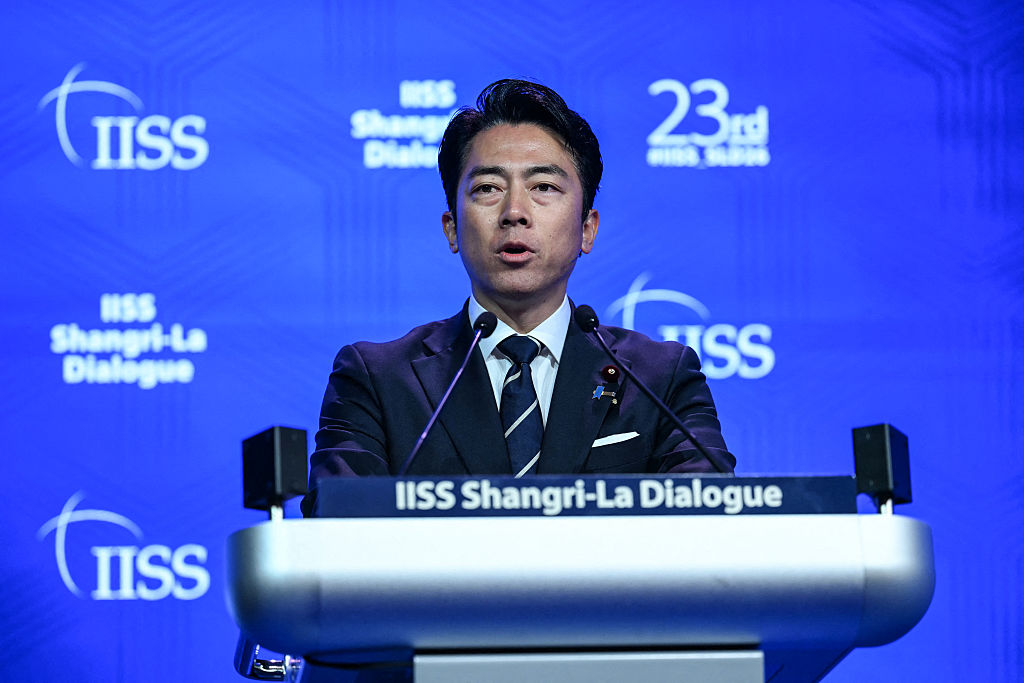
The exchange took place at the Shangri-La Dialogue, the annual security summit held in Singapore from May 29 to 31. Maj. Gen. Meng Xiangqing, who led China’s delegation, questioned whether Japan was fit to talk about defense cooperation at all, tying his remarks to the 80th anniversary of the postwar tribunal that prosecuted Japan’s wartime leaders.
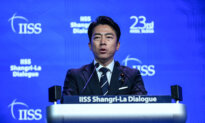
Japan’s defense minister, Shinjiro Koizumi, rejected the accusation on the spot. He accused Beijing of expanding its military rapidly and with little transparency, and called China’s external conduct a serious concern for Japan and the wider world.
He found it strange, he said, that a country with a large arsenal of nuclear weapons and strategic bombers would call Japan—which has neither—a “new militarist.”
Japan abides by the U.N. Charter and international law and remains a peaceful nation, Koizumi said.
Relations between the two governments are already at their lowest point in years. Things soured after Prime Minister Sanae Takaichi warned in November that a Chinese military move against Taiwan could threaten Japan’s security and potentially draw a military response.
Several specialists who study the region’s militaries told The Epoch Times that by the standards that define militarism—a military that runs the government, an offensive buildup aimed at expansion, and the real use of force to coerce neighbors—they said it is the Chinese regime that fits.
For Japan to count as militarist, it would have to meet conditions it plainly does not, said Chen Shih-min, a political science professor at National Taiwan University.
Militarism, he told The Epoch Times, has at least three hallmarks: the military dominates political decisions; the state builds powerful offensive forces for expansion; and it actually uses force for aggression or coercion. Japan’s Self-Defense Forces hold no political power, and the country’s posture is built around deterrence, he said, so the “new militarist” tag has no objective basis.
Su Tzu-yun, a director at Taiwan’s Institute for National Defense and Security Research, called the Chinese regime’s repeated labeling of Japan an old tactic with three aims: to signal displeasure with Takaichi’s defense reforms, to exploit memories of World War II by blurring the line between today’s elected Japan and its wartime military regime, and to stir nationalist sentiment at home.
Most people, he told The Epoch Times, don’t separate the two Japans in their minds.
Chen Wen-chia, a geopolitical scholar and vice president of Taiwan’s Kainan University, told The Epoch Times that “new militarism” has become a fixture of Chinese messaging abroad—a way to prop up the party’s legitimacy while telling Southeast Asia that Japanese remilitarization is reviving, which would chip away at Tokyo’s standing in regional security.
Defense Spending
The spending figures contradict that story.
Japan’s budget for defense and related costs in fiscal 2026 comes to about 10.6 trillion yen (roughly $66.5 billion)—about 1.9 percent of GDP, a record for the 12th year running. For decades, Japan held defense spending near 1 percent of GDP, about 5 trillion yen (roughly $31 billion)—under its pacifist postwar constitution, whose U.S.-drafted Article 9 renounces war and long limited the country to defensive “Self-Defense Forces” rather than a conventional military.
China spends far more. At its National People’s Congress in March, Beijing set a 2026 military budget of about 1.9 trillion yuan (roughly $275 billion)—a 7 percent rise, on top of three straight years of 7.2 percent growth, and more than four times Japan’s outlay. The budget kept climbing even as Beijing cut its growth target to one of the lowest in roughly three decades.
Chen said Japan’s recent moves—a larger budget, new counterstrike missiles, and reinforced defenses on its southwestern islands—are a response to China’s buildup and rising friction in the Taiwan Strait and East China Sea, not a push to expand.
Even with the increases, he noted, Japan’s spending stays far below China’s.
However, the official Chinese figure may understate the real total.
The U.S. Defense Department, in its most recent annual report to Congress, estimated that China spent between $304 billion and $377 billion on defense in 2024—roughly 32 to 63 percent more than the official number.
That money is driving one of the fastest nuclear expansions anywhere.
The Pentagon estimates China’s stockpile of operational warheads stayed in the low 600s through 2024 and projects it will top 1,000 by 2030 and keep growing through at least 2035—roughly triple the arsenal of about 200 warheads it held in 2020.
The buildup includes new intercontinental ballistic missiles that the Pentagon says will require still more warhead production. U.S. officials describe the pace as faster than that of any other nuclear power.
Japan Enjoys Support at Forum
At the forum itself, the accusation against Japan did not seem to land, said Yu Tsung-chi, a former dean at Taiwan’s National Defense University who attended as an adviser to TW Talks.
Many ASEAN governments, he told The Epoch Times, were more concerned with present-day security than with 80-year-old history, and Japan’s role drew support rather than suspicion.
He noted one telling moment. On May 30, Singapore led 17 countries—among them Australia, New Zealand, Malaysia, the Philippines, France, Finland, and Britain—in launching a framework to defend undersea cables and other seabed infrastructure. China and the United States were not on the list.
Australian Defense Minister Richard Marles told delegates the seabed had become a “battlefield,” noting an unprecedented run of attacks on subsea infrastructure over the past 18 months, including about five damaged cables in the Taiwan Strait.
No one named names, Yu said, but everyone knew who the careful language was aimed at. In Asia, he said, the actor capable of cutting other countries’ undersea cables is the CCP.
For Chen, the case comes back to how the Chinese regime was built. It is an authoritarian system in which, as former CCP leader Mao Zedong put it, “political power grows out of the barrel of a gun”—and leader Xi Jinping, he said, was able to push out rival factions precisely because he controls the military.
Although Beijing calls its defense policy purely defensive, Chen said, it pours national resources into offensive weapons and regularly uses them for “gray zone” coercion against Taiwan, the Philippines, Japan, and Vietnam.
That record, by his reading, answers the question Chinese Maj. Gen. Meng raised in Singapore. The one truly practicing militarism, Chen said, is the CCP.
Fei Chen contributed to this report.
 Friends Read Free
Copy
Facebook
Tweet
Friends Read Free
Copy
Facebook
Tweet