
Belgian prosecutors disclosed Sept. 7 that a senior researcher at chipmaker BelGaN has been held since May as authorities investigate suspected espionage and the possible unlawful transfer abroad of trade secrets involving a semiconductor technology used in aerospace and military applications.
The 52-year-old man was born in Beijing, holds Belgian and Chinese nationality, and lives in Leuven, according to the Federal Prosecutor’s Office. He was taken into custody on May 10 at Brussels Airport as he prepared to return to Beijing, formally arrested the following day, and remains in pretrial detention at Oudenaarde prison.
Prosecutors said the researcher held a senior position at BelGaN while simultaneously serving as a director of a Chinese company engaged in similar semiconductor work. They said that company was financed by a Chinese investment fund.
Investigators are examining whether specialized intellectual property and trade secrets related to gallium-nitride, or GaN, chip production were unlawfully transferred abroad. The case also covers suspected participation in a criminal organization, misuse of company assets, and unlawful disclosure of company secrets.
Authorities have seized data-storage devices and electronic communications.
The Federal Prosecutor’s Office said it is still seeking a second suspect but did not identify that person or the detained researcher. The office told The Epoch Times that the Chinese company referenced in the investigation is Gancool.
Belgium’s ‘Copy to China’ Warning
The alleged parallel-company arrangement resembles a technology acquisition method that Belgium’s State Security Service, or VSSE, has publicly warned about.
In its 2025 intelligence report, the service identified semiconductors among strategic technologies sought by China. It said Beijing uses a range of methods to obtain foreign technology and know-how, including investments, partnerships, research cooperation, and recruitment of specialists.
The report described one approach as “Copy to China.” It said Chinese companies can gain access to Belgian know-how through investments in companies, research centers, or technology startups and then establish a counterpart in China to reproduce the technology.
Gancool’s China Operations
Gancool’s website identifies the business as Fuzhou GaGu Semiconductor Co. and currently uses the Gankool branding, stylized as GaNkool. Qichacha, a Chinese commercial corporate-information database, shows the company applied for the Gancool trademark in 2022 and later filed for the Gankool trademark in 2024.
The company says it was established in 2022 and develops and produces GaN epitaxial wafers in Fuzhou and Xiamen.
A March 2023 article published by the Fuzhou New Area administration identified Liang Hu as chief technology officer of Fuzhou GaGu Semiconductor and said he presented the company’s GaN epitaxy technology at a seminar on third-generation semiconductors.
The records establish that Gankool was operating in the same broad gallium-nitride semiconductor field described by Belgian prosecutors. They do not establish that the company received BelGaN intellectual property.
Belgian Operation With Foreign Investors
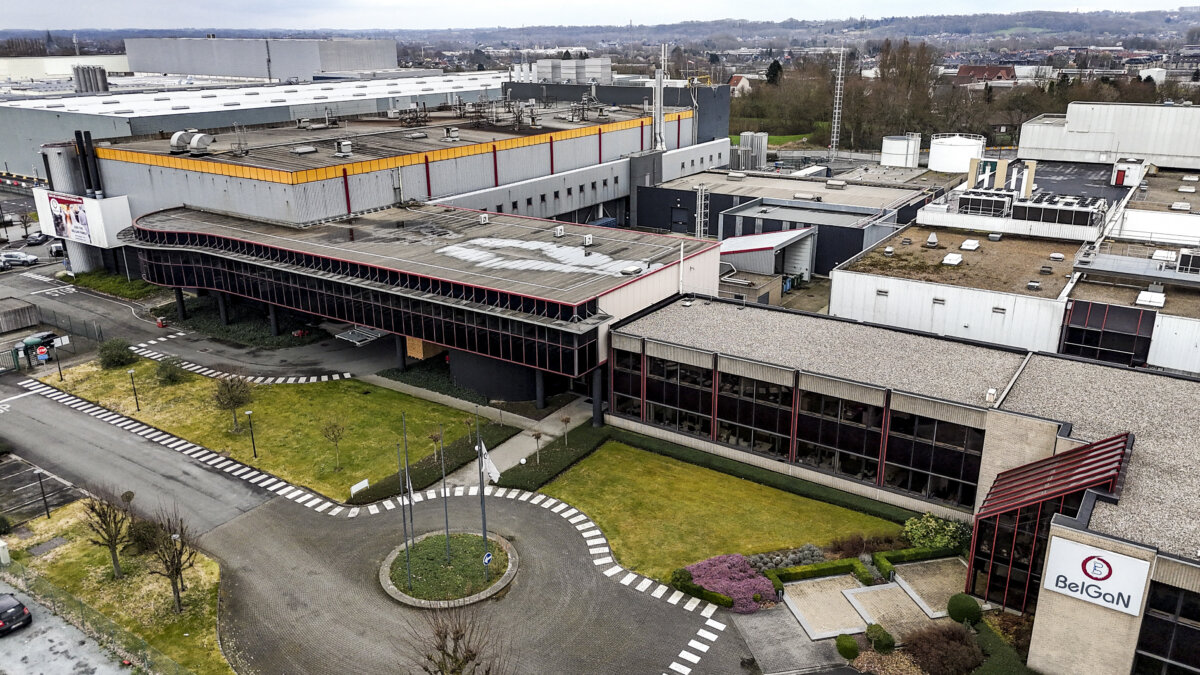
BelGaN operated a semiconductor factory and research center in Oudenaarde, Belgium, previously owned by U.S.-based ON Semiconductor.
In 2022, BelGaN Group acquired the operation. Jones Day, the international law firm that advised the buyers, identified BelGaN Group and Hong Kong-based Rockley Management as its clients in the transaction.
BelGaN continued operating the production and research facilities in Oudenaarde, where it sought to convert the former onsemi silicon operation toward GaN chip production.
The company recorded a net loss of 8.3 million euros ($9.4 million) on 55 million euros ($64 million) in revenue in 2023 and said it could not obtain enough additional financing, according to European Commission records. It filed for bankruptcy in July 2024.
The European Commission proposed employment assistance for 417 former BelGaN workers affected by the company’s closure.
The current investigation examines whether the Belgian operation unlawfully transferred intellectual property and trade secrets abroad. Prosecutors have not said the alleged conduct caused BelGaN’s bankruptcy.
Chips Used for Cars, Missile Defense
Gallium nitride is a semiconductor material used in electronics that need to operate efficiently at high power and high frequencies.
Its uses extend from chargers and electric vehicles to communications, aerospace, radar, and electronic-warfare systems.
Belgian prosecutors cited electric vehicles, aerospace, and military applications when describing the technology under investigation.
U.S. defense agencies also use GaN-based radio frequency technology in military systems. DARPA says advances in GaN-enabled RF components helped enable the Navy’s Next Generation Jammer, which jams adversary radar, and the Air and Missile Defense Radar, which searches for and tracks ballistic missiles. DARPA also cites Space Fence, a radar system used to detect small objects in orbit.
Belgian prosecutors have not said that the specific BelGaN material under investigation was designed for military systems, classified, or subject to export controls.
Lawyer Disputes Espionage Allegation
The detained researcher’s lawyer, Brussels criminal attorney Dimitri de Beco, disputed the allegations.
De Beco said in a statement to Flemish newspaper De Standaard that his client disputes all the allegations and that suspicion of espionage was no longer the basis for his detention. He argued that even if confidential business information had been disclosed, the conduct would amount to unlawful disclosure of business secrets rather than espionage because authorities had not established a transfer to a foreign state.
Belgium’s State Security Service and de Beco did not respond to requests for additional comment by publication time.
 Friends Read Free
Copy
Facebook
Tweet
Friends Read Free
Copy
Facebook
Tweet