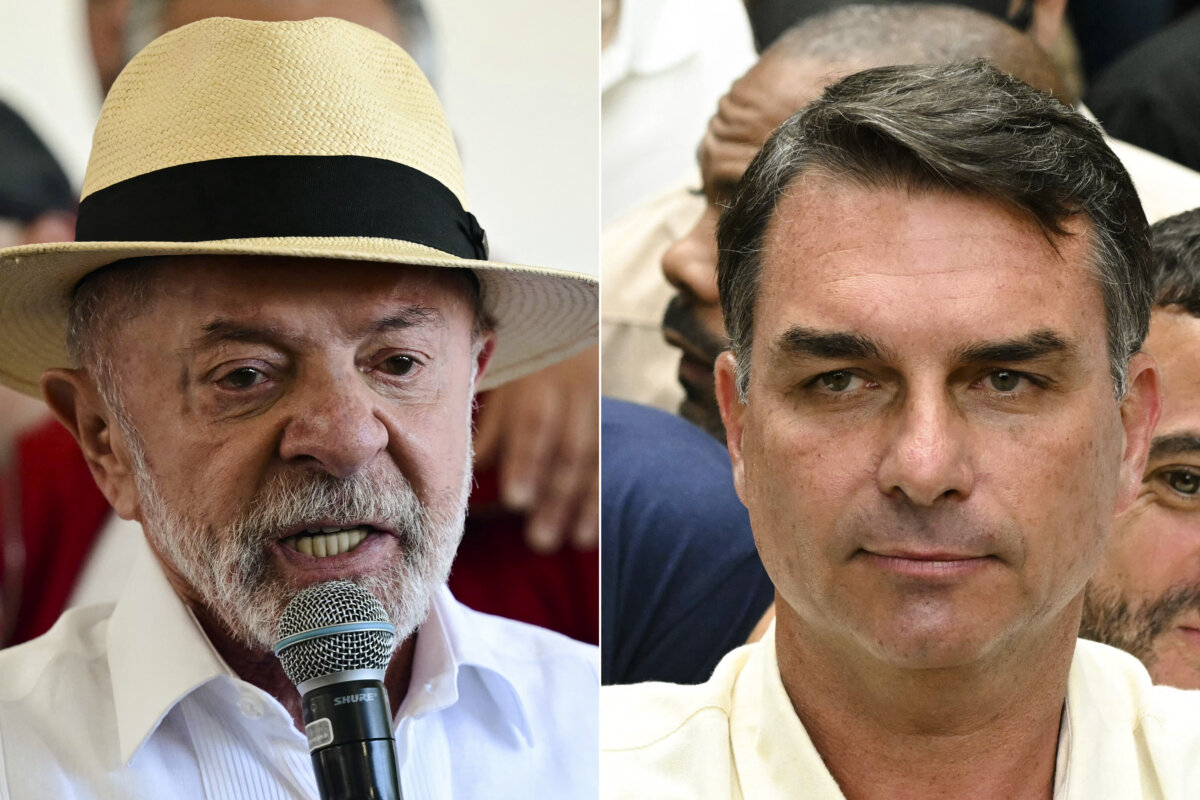

Brazil’s presidential election is headed to an Oct. 25 runoff, Brazil’s electoral court said Sunday night, with neither candidate receiving more than 50 percent of the vote in the preliminary count.
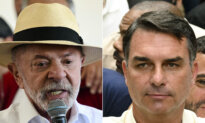
Brazilians headed to the polls on Oct. 4 for a presidential election pitting incumbent Luiz Inácio Lula da Silva against Sen. Flávio Bolsonaro. Dominating the campaigns are allegations of corruption, concerns over the cost of living, and claims of U.S. influence.
Lula, 80, is seeking a fourth term. Bolsonaro, 45, is the son of former President Jair Bolsonaro, who is serving a prison sentence of more than 27 years over charges of plotting a coup following his 2022 election loss.
With 95.26 percent of the vote counted at 8:45 p.m. Sunday night, Bolsonaro was in the lead with 47.78 percent of the vote. He was 3.5 million votes in front of Lula, who was in second place with 44.32 percent support.
Voter turnout was around 73 percent.
Flávio Bolsonaro has promised to seek amnesty for his father and strengthen relations with the United States and Israel. Lula has warned of foreign interference in the election.
The Trump administration has designated Brazil’s major gangs as terrorist organizations. Bolsonaro agrees with the Trump administration, while Lulu rejects the designation.
A victory for Bolsonaro would add to a number of right-wing Latin American candidates aligned with Trump who have won office in recent years.
In July, the Brazilian Foreign Ministry under Lula denied visas to two U.S. State Department officials who had sought to travel to the South American country.
The officials, U.S. Assistant Secretary of State Riley Barnes and U.S. Deputy Assistant Secretary of State Samuel Samson, had planned to visit in late July.
A State Department spokesperson called the trip routine and described allegations of a plot to undermine the election as baseless. The spokesperson told The Epoch Times that the officials planned meetings with government representatives, religious leaders, and civil society to discuss election integrity, religious freedom, and freedom of expression.
The Trump administration announced a 25 percent tariff on some Brazilian imports on July 15, following a year-long investigation into whether certain Brazilian trade policies unfairly burden U.S. commerce.
U.S. Trade Representative Jamieson Greer said negotiations with Lula’s government have failed to resolve concerns involving digital trade, intellectual property protections, ethanol market access, and illegal deforestation.
The administration said exemptions would cover products including beef, coffee, crude oil, and aircraft parts.
Brazil criticized the measures, saying that there was “no justification” for unilateral tariffs and noting that the United States had a trade surplus with Brazil. Lula’s office said it would challenge the tariffs through the World Trade Organization and pursue measures under Brazil’s reciprocity law.
Bolsonaro met Trump in Washington on May 26.
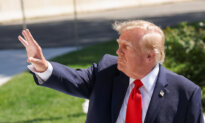
“It was very nice having Flávio Bolsonaro in the Oval Office of the White House—A smart young man who loves his Country, Brazil, very much!” Trump said in a June 2 post on Truth Social. Trump later posted on June 23 a news article reporting on Abelardo de la Espriella’s victory in the presidential election in Colombia.
“Trump Scores 8 Triumphs in 7 Years Across Latin America,” Trump posted on Truth Social.
Lula’s supporters have expressed concern that the United States might not recognize the election results if Lula wins.
The International Monetary Fund, a financial institution of the United Nations, said in July that Brazil’s economy has shown “remarkable resilience” despite what it described as a “series of shocks,” including global trade tensions.
The Brazilian economy has been tested by the economic fallout of the Middle East turmoil. The economy still faces challenges of high and rising public debt and lagging productivity growth, according to the International Monetary Fund.
Brazil stated that its unemployment rate was 5.3 percent as of August, down from 5.6 percent in August 2025.
There has been concern among citizens about Brazil’s public finances and slowed economic growth.
Reuters contributed to this report.
 Friends Read Free
Copy
Facebook
Tweet
Friends Read Free
Copy
Facebook
Tweet