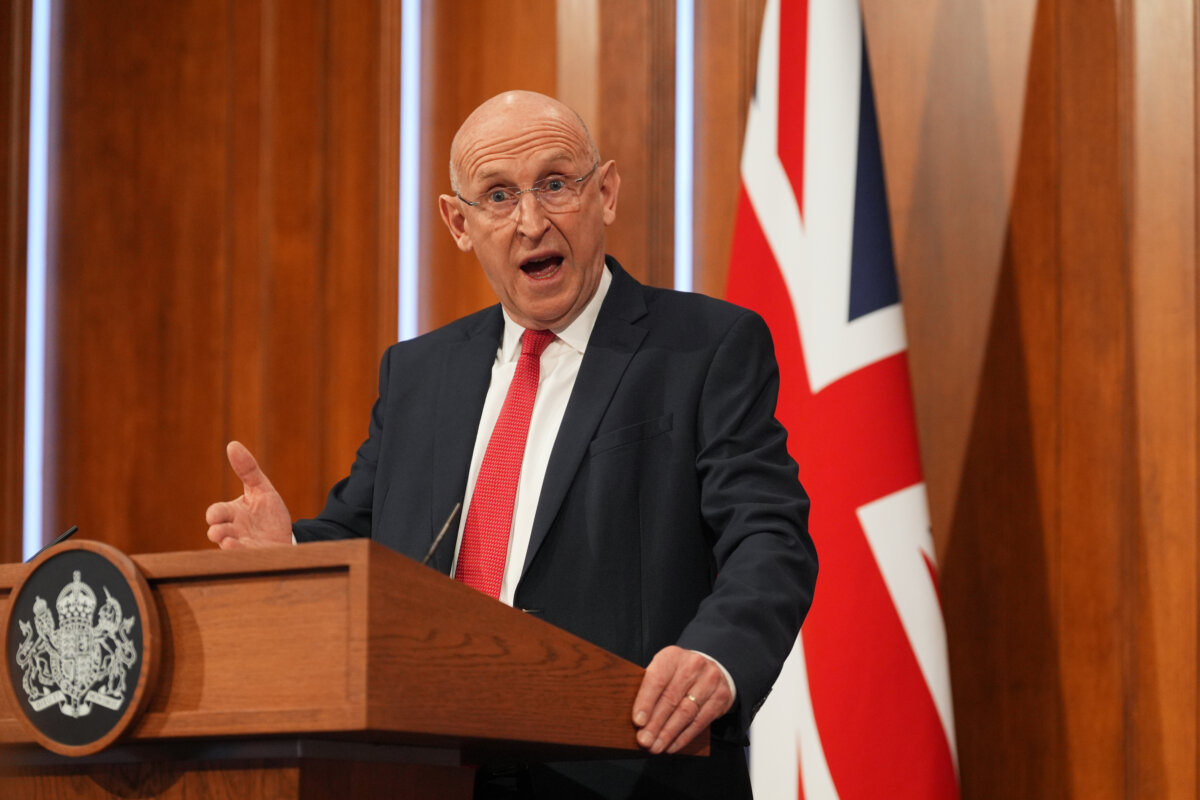
British Defence Secretary John Healey said on April 9 that the militaries of the UK and Norway had deterred “nefarious activity” by Russian spy submarines over undersea cables in the North Atlantic in recent weeks.
Healey said a Royal Navy frigate, HMS St Albans, and Boeing P-8 maritime patrol planes were involved in tracking a Russian attack sub and two spy submarines in the waters north of Scotland, and the British Ministry of Defence (MOD) said they had been forced to retreat back to Russia.
Healey said he had a message for Russian President Vladimir Putin: “We see your activity over our cables and our pipelines and you should know that any attempt to damage it will not be tolerated and will have serious consequences.”
Norwegian Defense Minister Tore Sandvik said in a statement: “In recent weeks, Russia has conducted activities in and near Norwegian and British waters.
“Such actions underscore Russia’s persistent ambition to threaten the interests of Norway and our allies.”
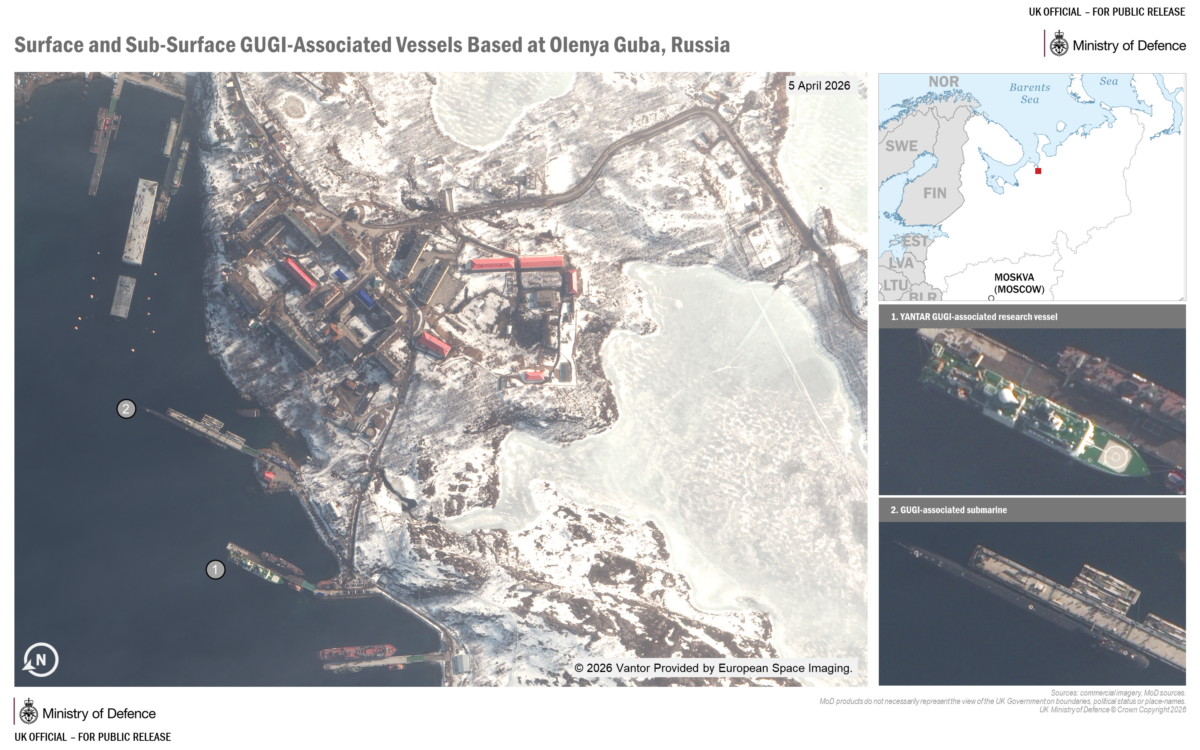
The UK and Norway claim that the unit responsible for the undersea operation was Russia’s Main Directorate of Deep Sea Research, known as GUGI, which is based at Olenya Guba, a naval base in the Arctic Circle.
Norway’s Defense Ministry said Russia was developing its abilities to map and sabotage Western infrastructure on the ocean floor.
Survey and Sabotage
“British aircraft and warships identified a Russian attack submarine entering international waters in the High North several weeks ago, and tracked its activity around the clock,” the MOD said in a statement published on April 9.
The MOD said naval personnel quickly established that the Akula class submarine was “deployed as a distraction,” and they worked closely with NATO allies to identify and monitor other “Russian undersea naval units” that were located over critical undersea infrastructure elsewhere.
The MOD said sonobuoys were used to track the Russian spy submarines.
“The UK and its allies began a campaign of overt action to ensure the Russian units knew that they were being monitored and were no longer covert as Putin had planned,” the MOD said.
British Prime Minister Keir Starmer said, “Our armed forces are among the best in the world, and the British public should be in no doubt that this government will do whatever it takes to defend our national and economic security, wherever in the world that is needed.”
“GUGI is Russia’s long-running military programme to develop capabilities to be deployed from specialist surface vessels and submarines, that are intended to survey underwater infrastructure during peacetime, but then damage or destroy infrastructure during a conflict,” the MOD said.
Warning About Russian Attack
In June 2025, German defense chief Gen. Carsten Breuer told the BBC that Russia might attack a NATO member state, possibly one of the Baltic nations, by 2029.
Under NATO’s charter, nations that are part of the alliance are duty-bound to protect a member state that comes under attack.
In November 2025, the Russian spy ship Yantar was monitored by Royal Navy ships as it sailed through the North Sea, close to British waters, before sailing toward the Faroe Islands, which are owned by Denmark.
“The Yantar is one the key vessels used by Russia to threaten the UK and our allies,” the MOD said in its April 9 statement, “Over the last two years, the UK has seen a 30% increase in Russian vessels threatening UK waters.”
In 2017, a report by the Policy Exchange think tank by Rishi Sunak, who later became Britain’s prime minister, said 97 percent of global communications, and an estimated $10 trillion of daily transactions, relied on undersea cables, rather than satellites.
The report said undersea cables were part of an “indispensable yet insecure internet infrastructure.”
In October 2022, extra police officers were sent to the Shetland Islands after an undersea telecommunications cable was damaged twice, leaving residents without phone and internet connection until it could be repaired a few days later.
Scotland’s then-First Minister Nicola Sturgeon described the situation as “very serious.”
But Tim Ripley, a defense analyst and author of “Little Green Men: The Inside Story of Russia’s New Military Power,” told The Epoch Times at the time that the Russians were more likely to want to tap cables, rather than cut them.
The Associated Press contributed to this report.
 Friends Read Free
Copy
Facebook
Tweet
Friends Read Free
Copy
Facebook
Tweet