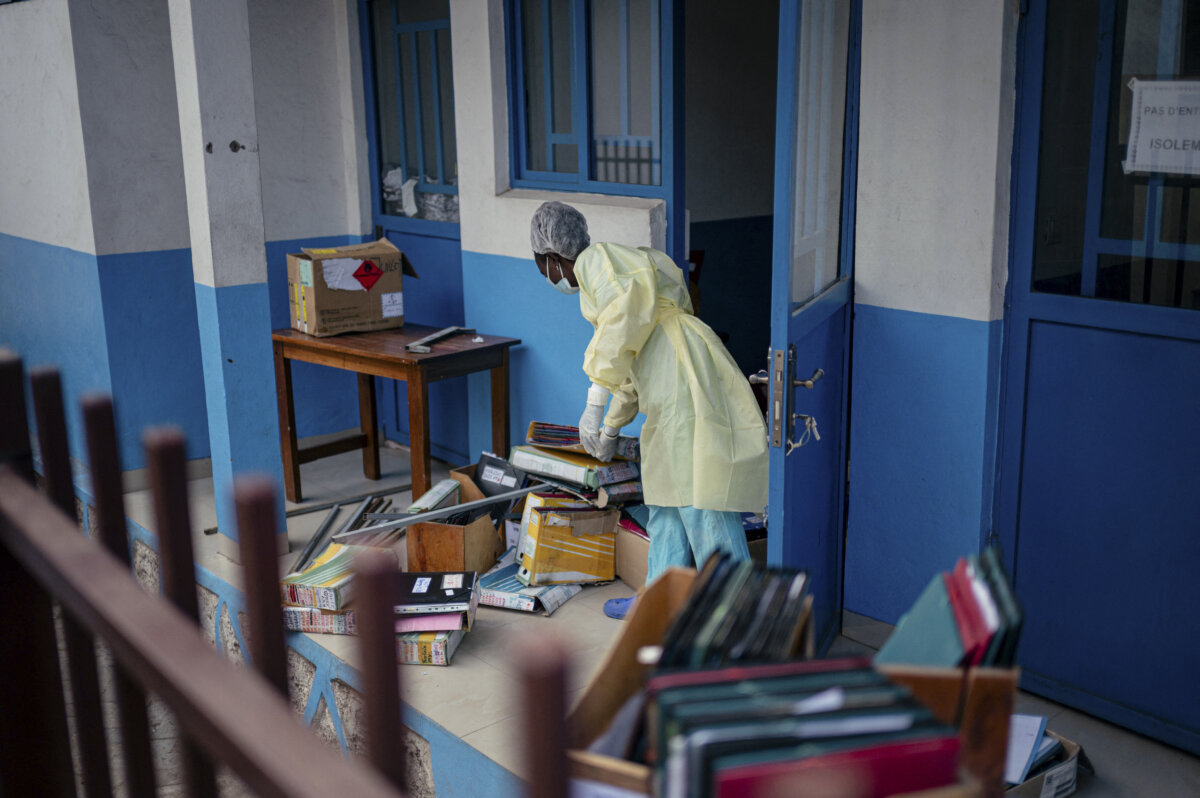

Ottawa has issued a Level 2 travel health advisory for the Democratic Republic of the Congo, warning against non-essential travel to the provinces of Ituri and North Kivu amid an ongoing Ebola outbreak.
The World Health Organization (WHO) has declared the outbreak in Congo and neighbouring Uganda a public health emergency of international concern, following an outbreak of Bundibugyo virus disease, a strain of Ebola for which there are no approved vaccines or specific treatments.
As of May 19, health authorities in the Democratic Republic of the Congo and Uganda had reported 536 suspected Ebola cases, 105 probable cases, 34 confirmed cases, and 134 deaths, according to the U.S. Centers for Disease Control and Prevention (CDC). Officials said 26 new confirmed cases and 143 new suspected cases had been identified within the previous 24 to 48 hours.
The figures also include two confirmed cases in Uganda, including one death, involving people who had travelled from the DRC, though officials said no further spread has been reported.
According to the Canadian advisory, Ebola is not spread through the air or casual contact, but through exposure to infected bodily fluids from symptomatic people or animals. The disease is considered severe and often fatal, although officials said the risk to most travellers remains low if appropriate precautions are followed.
Health officials are advising travellers to avoid contact with individuals showing Ebola symptoms, contaminated bodily fluids, and the bodies of people who have died from Ebola or unexplained illnesses.
Travellers are also advised to avoid non-essential visits to health-care facilities in affected areas, avoid contact with live or dead animals, and wash their hands regularly with soap and water or alcohol-based sanitizer.
Those returning to Canada from the Congo are being asked to monitor themselves for symptoms for 21 days if they visited an outbreak area, and to avoid travelling if symptoms develop. Travellers who become ill while returning to Canada are advised to notify a flight attendant or border services officer immediately, as they may be referred for a public health assessment.
Anyone who develops symptoms after arriving in Canada is advised to isolate from others and contact public health authorities by phone, while informing officials of their symptoms and recent travel history.
Symptoms of Ebola can appear between two and 21 days after exposure. They often begin suddenly with fever, fatigue, headache, muscle pain, weakness, sore throat, rash, nausea, vomiting, and diarrhea. In severe cases, the disease can progress to hemorrhaging, loss of consciousness, and death.
According to the Public Health Agency of Canada, Canada has never recorded a confirmed case of Ebola. First identified in 1976 near the Ebola River in what is now the Democratic Republic of the Congo, the virus has caused multiple outbreaks across Africa.
PHAC said that if a case were confirmed in Canada, it would notify the Pan American Health Organization and the WHO in accordance with the International Health Regulations.
Separately, on May 18, the U.S. CDC and the Department of Homeland Security invoked a Title 42 order suspending the entry of certain persons from countries where a quarantinable communicable disease exists, in an effort to prevent Ebola from entering the United States.
 Friends Read Free
Copy
Facebook
Tweet
Friends Read Free
Copy
Facebook
Tweet