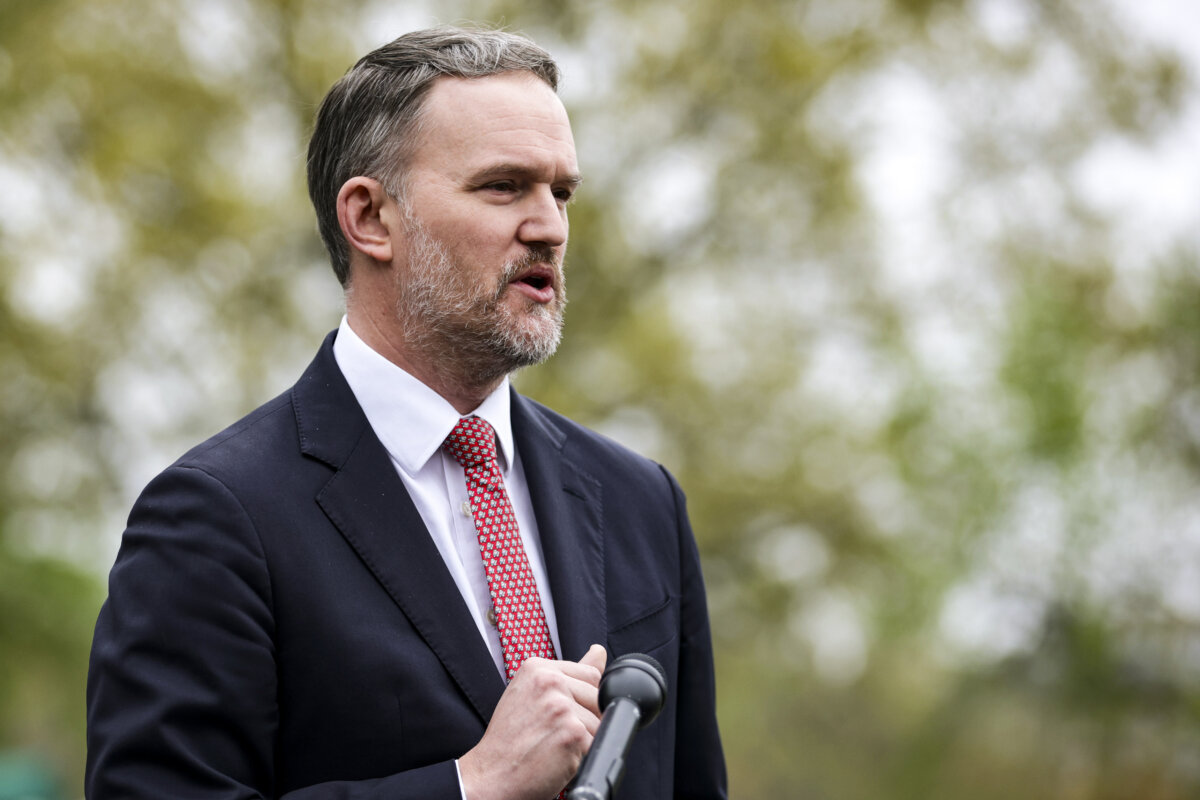

Canada is responsible for the White House’s decision to impose further tariffs and import bans on certain Canadian products, U.S. Trade Representative Jamieson Greer says.
U.S. President Donald Trump issued five new presidential proclamations on Sept. 8, expanding trade measures against Canada in response to new Canadian counter-tariffs imposed on U.S. goods that same day.
Greer said the new U.S. trade measures followed Canada’s decision last month to walk away from a “near-final” trade deal with the Trump administration that offered “better treatment than any other trading partner.”
“Today’s action… is a natural consequence of Canada’s continued discriminatory treatment of crucial American exports,” Greer said in a statement that characterized Canada’s counter tariffs as “senseless retaliation.”
Greer also criticized Prime Minister Mark Carney during a recent interview with the Financial Times for describing the ongoing trade issues between the two countries as a trade “war”. Greer’s office shared quotes and links to the FT News Briefing podcast in a Sept. 9 press release.
“Prime Minister Carney used the term ‘war.’ It’s not a word we use, right? We don’t talk about it that way. For us, it’s business, it’s economics,” Greer said. “To kind of have it whipped up into this giant thing, where we’re talking about war and economic attacks and all these things, it’s a little unhinged.”
He said the U.S. tariffs are not an attack on Canada.
“We’re just putting additional fees on foreign goods made by foreign workers in foreign countries,” he added. “Like, that’s all a tariff is. It’s just business for us.”
The five new trade proclamations issued by Trump are set to take effect later this month. They will ban imports of specific Canadian products, such as motorcycles, certain dairy products, and alcoholic beverages.
The orders also excluded certain Canadian products from tariffs entirely, such as toilet paper, road salt, and cement.
Republican U.S. Sen. Susan Collins applauded the exclusions in a social media post.
In a letter to the Trump administration, Collins warned that tariffs on road salt and cement would be detrimental to Frenchville, a small Maine town on the Canadian border. She said the measures would increase the town’s road salt costs by $10,000 alone and threaten its ability to provide municipal services.
The senator from Maine also welcomed Canada’s decision to remove American seafood and fish products from its retaliatory tariff list, saying the measure would have inflicted “significant harm” on the state’s lobster industry.
While expressing appreciation for the exemptions, Collins urged the White House to finalize a trade deal with Canada.
“Significant tariffs—including those on forest products—remain in effect and will lead to higher costs for Maine families and uncertainty for businesses,” she added. “I urge the Administration to continue to work to deescalate this conflict and reach a trade resolution with our Canadian partners.”
No formal trade talks are currently scheduled between Canada and the United States, as negotiations remain frozen following collapse of talks in late August and the rollout of new tariffs on both sides of the border.
Canada imposed counter-tariffs on American goods on Sept. 8 in response to Washington’s 50 percent tariffs on $27.6 billion worth of Canadian goods that took effect in August. The Canadian measures apply tariffs of 15, 25, and 50 percent to a range of U.S. products.
Trump responded the same day by invoking Section 338 of the Tariff Act of 1930 to expand U.S. trade measures against Canada, including modifying the scope of existing 50 percent tariffs and banning imports of certain Canadian products. He accused Ottawa of treating the United States unfairly, citing Canada’s supply managed dairy system, provincial restrictions on American liquor imports, and quotas on certain U.S. vehicles.
The White House has said Section 338 grants the president authority to impose tariffs of up to 50 percent when a nation places U.S. exporters at a disadvantage compared to exporters from other nations, although this law has not previously been used for that purpose.
Carney has warned that Ottawa’s pivot away from the United States could mean some tough times are ahead, while describing the approach as necessary in a Sept. 8 video address.
“This won’t be easy, and I won’t pretend otherwise,” Carney said after characterizing Canada’s counter-tariffs as “necessary to protect our workers, companies, and communities.”
He argued that Canada cannot allow American goods to enter the country tariff-free while the White House imposes tariffs on Canadian companies exporting to the United States.
The Canadian Press contributed to this report.
 Friends Read Free
Copy
Facebook
Tweet
Friends Read Free
Copy
Facebook
Tweet