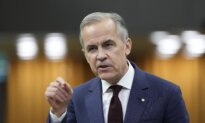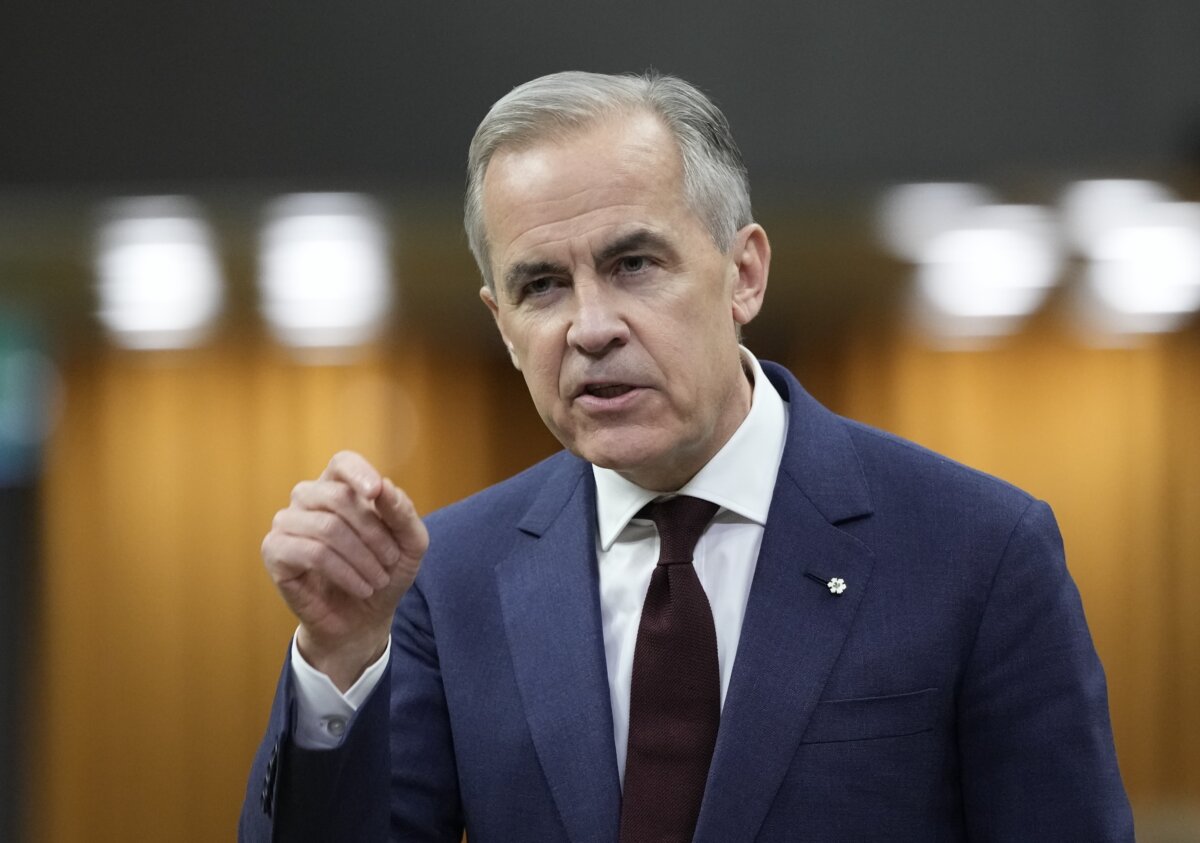

Prime Minister Mark Carney says Ottawa is prepared to enter trade talks with the United States, but is also “ready to wait,” while Washington and Mexico City move forward in their bilateral trade negotiations.
“We’re going to do multiple things at the same time, we have enough room. We’re ready to go into detailed negotiations. We’re also ready to wait, if that’s what has to happen,” Carney told reporters in Ottawa on April 23.
The prime minister said Washington has brought up several trade irritants ahead of the upcoming Canada-United States-Mexico Agreement (CUSMA) negotiations, while Ottawa has raised ways in which the United States is “in violation” of the existing agreement, such as its tariffs on steel, aluminum, vehicles, and lumber.
“We’re not sitting here taking notes and taking instructions from the U.S.,” Carney said, referring to ongoing discussions.
Carney also commented on a Radio-Canada report that said the United States was demanding concessions before starting negotiations with Canada, including an “entry fee” before can talks begin.
“I don’t know where the talk of an ‘entry fee’ is coming from. It’s certainly not coming from me,” Carney said, in response to a reporter’s question on the report. “It’s not language I’ve ever used, and it’s not language I’ve ever heard from the president of the United States.”
While the United States and Mexico have been moving forward with trade negotiations, progress between Washington and Ottawa has been slower, and tensions have been higher.
Deputy U.S. Trade Representative Rick Switzer accused Carney on April 22 of making the trade dispute with the United States “personal,” which he said was “political malpractice for the prime minister.”
In testimony before a U.S. House of Representatives committee the same day, U.S. Trade Representative Jamieson Greer said there was a gap between the trade philosophies of Ottawa and Washington. Greer said Canada was “doubling down on globalization” by seeking to diversify its trade, while the U.S. was trying to “correct for the problems of globalization.”
A few days earlier, U.S. Commerce Secretary Howard Lutnick had criticized comments from Steve Verheul, Canada’s chief trade negotiator from 2017 to 2021, who said that “time is on [Canada’s] side” in trade talks because the U.S. administration faces increasing pressure.
“That is like the worst strategy I’ve ever heard,” Lutnick said.
Meanwhile, Canada-U.S. Trade Minister Dominic LeBlanc told reporters on April 16 that Canada would not be a source of delays in CUSMA negotiations, and that Ottawa was “ready to do the work to get to a deal very quickly.”
If the United States, Canada, and Mexico agree to renew the CUSMA at talks in July, the trade agreement would remain in force until 2032. If the renewal is denied or delayed, the agreement could enter a period of annual reviews. If one or more countries withdraw from the trilateral agreement altogether, the three countries could then make bilateral agreements.
American Alcohol
During the press conference, Carney was also asked about several provinces banning the sale of U.S. alcohol, a move Washington has raised as a trade irritant.
“Look, you know what’s an irritant? 50 percent tariffs on steel, 50 percent tariffs on aluminum, 25 percent tariffs on automobiles,” Carney said, referring to U.S. sectoral tariffs on Canadian industries.
While Alberta and Saskatchewan resumed selling U.S. alcohol last year, other provinces have kept up their ban. The prime minister said it ultimately is up to the provinces to decide whether they sell American beer, wine, and spirits, but said Canadians do not want to buy American alcohol.
“Issues such as decisions on which alcohol to put on the shelves, we can make progress very quickly on that, with progress in other areas,” Carney said.
When Conservative Leader Pierre Poilievre was asked by reporters on April 23 whether the provinces should put American liquor back on their shelves, he said, “I don’t think we need to spend three or four days debating whether we should drink bourbon or not.”
“I think we should discuss whether 2.6 million Canadians are going to have their jobs, and the way to get those jobs secured is to get a tariff-free trade deal with the U.S.,” Poilievre said.
 Friends Read Free
Copy
Facebook
Tweet
Friends Read Free
Copy
Facebook
Tweet