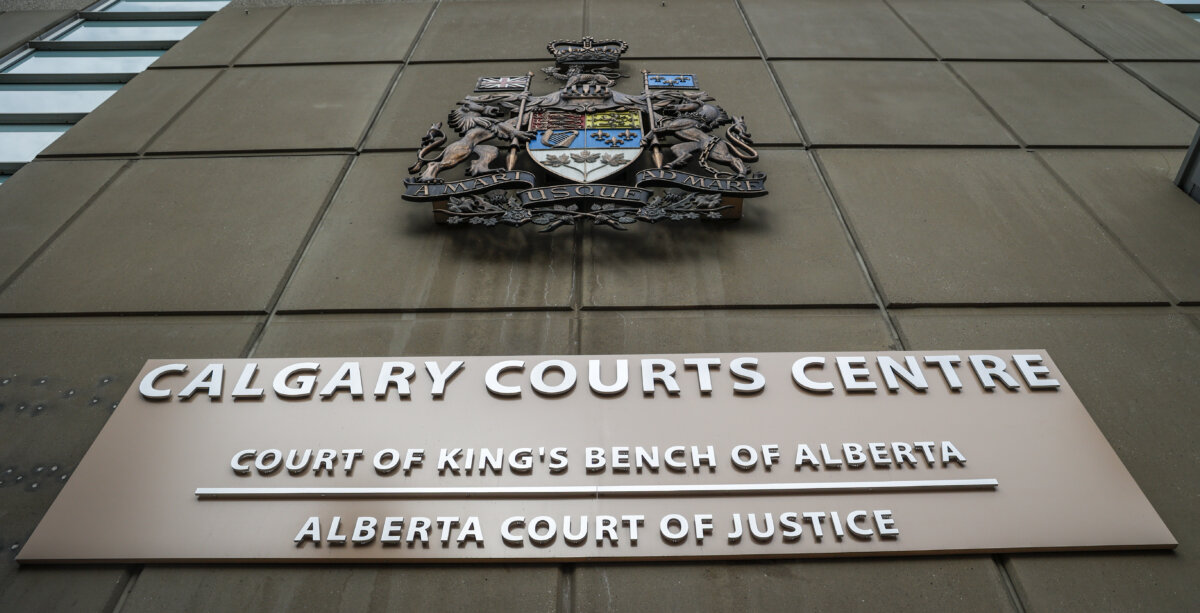

An Alberta judge has ruled that a proposed referendum question on the province’s separation from Canada would contravene the Constitution.
Court of King’s Bench Justice Colin Feasby said in a Dec. 5 decision filed in Calgary that a proposed separation-referendum question from the sovereignty advocacy group Alberta Prosperity Project (APP) would be unconstitutional because it doesn’t guarantee the rights protected by the Canadian Constitution.
The decision came less than a day after the Alberta government tabled Bill 14, which, if it had passed prior to the court making its decision, would have discontinued the court proceeding as part of measures aimed at reducing delays for citizen-initiated petitions.
Feasby said in his decision that the province’s move to potentially halt the court case amounted to silencing the court. He had been hearing arguments on the constitutionality of the APP’s question after Alberta’s chief electoral officer Gordon McClure referred the question to the court in late July .
“Contrary to the pending [Bill 14], this case cannot be discontinued, and the Court cannot be silenced because the case has been decided,” Feasby wrote. “These reasons are delivered despite the anticipated change to the law because reason giving is democratic.”
The APP’s proposed question asks Albertans: “Do you agree that the Province of Alberta shall become a sovereign country and cease to be a province in Canada?”
In his decision, Feasby concluded that the question violates the Constitution and may infringe on Treaty Rights.
“The Referendum Proponent’s constitutional referendum proposal contravenes Constitution Act, 1982 ss 1-35.1 because independence would require the replacement of the Canadian constitution, including the identified sections, with a new Alberta constitution,” he wrote.
“The fact that an independent Alberta would have a new and different constitutional order necessarily means that Alberta independence contravenes Constitution Act, 1982, ss 1-35.1. ”
He noted that his decision doesn’t imply that the Constitution can’t be amended or that Alberta cannot hold a separation referendum. He said that Alberta’s Citizen Initiative Act (CIA) does not provide the necessary tools for a separation referendum, because it requires citizen petitions to comply with the Constitution while secession, by definition, would violate it by requiring a new one.
“This decision only stands for the proposition that Alberta in the CIA did not give citizens the power to initiate a referendum on the question of independence from Canada,” he wrote.
The government of Alberta says it “strongly disagrees” with Justice Feasby’s decision.
“This decision would bar a citizen-initiated referendum even in cases where a proposal aims to amend the Constitution through lawful means,” Heather Jenkins, press secretary to Alberta’s Minister of Justice Mickey Amery, told The Epoch Times.
Jenkins added that the court’s decision would have no “practical impact” once the legislature passes Bill 14.
“That bill will clarify and simplify the rules relating to citizen-initiated petitions, making the process more efficient, and encouraging citizen participation in our democracy,” Jenkins said.
She also suggested that Feasby’s comments about a bill which is before the legislature conflict with the principles of the separation of powers and the democratic process.
“Justice Feasby’s decision includes comments that are critical of a bill currently before the Legislative Assembly. The separation of powers is an important constitutional principle. The Assembly has been elected by the people of Alberta to freely debate and pass legislation in the public interest. Judicial statements about the merits of a proposed bill before the legislative branch interfere with well-established democratic processes,” Jenkins said.
Bill 14
The UCP government introduced Bill 14, the Justice Statutes Amendment Act, 2025, which proposes a range of changes to existing legislation, on Dec. 4. In addition to proposing an amendment to halt court cases brought by the chief electoral officer concerning citizens’ initiatives, the bill also seeks to transfer the authority to refer citizen-initiated questions to the courts from the chief electoral officer to the justice minister.
It would also let applicants whose petitions were referred to the courts resubmit their applications within 30 days of the bill taking effect, without any additional cost.
Justice Minister Amery said on Dec. 4 that the changes would promote direct democracy by preventing court delays from blocking citizen initiatives.
Bill 14 also proposes an amendment to the Referendum Act establishing that the Alberta government is not required to implement the results of a referendum if doing so would contravene the Constitution.
APP’s Response
The APP said it wasn’t “particularly surprised” by Feasby’s decision and urged the provincial government to make the changes needed to allow a separation referendum question.
“Bill 14 will fix some of the problems, but we urge the Smith government to read Justice Feasby’s decision and make the required adjustments,” Jeffrey Rath, the lawyer representing the APP’s CEO Mitch Sylvestre, said in a Dec. 5 statement.
“I am pleased that both the conclusion of the court proceeding and Bill 14 will allow Mitch Sylvestre and Albertans for a Free and Independent Alberta to start gathering petition signatures in January.”
 Friends Read Free
Copy
Facebook
Tweet
Friends Read Free
Copy
Facebook
Tweet