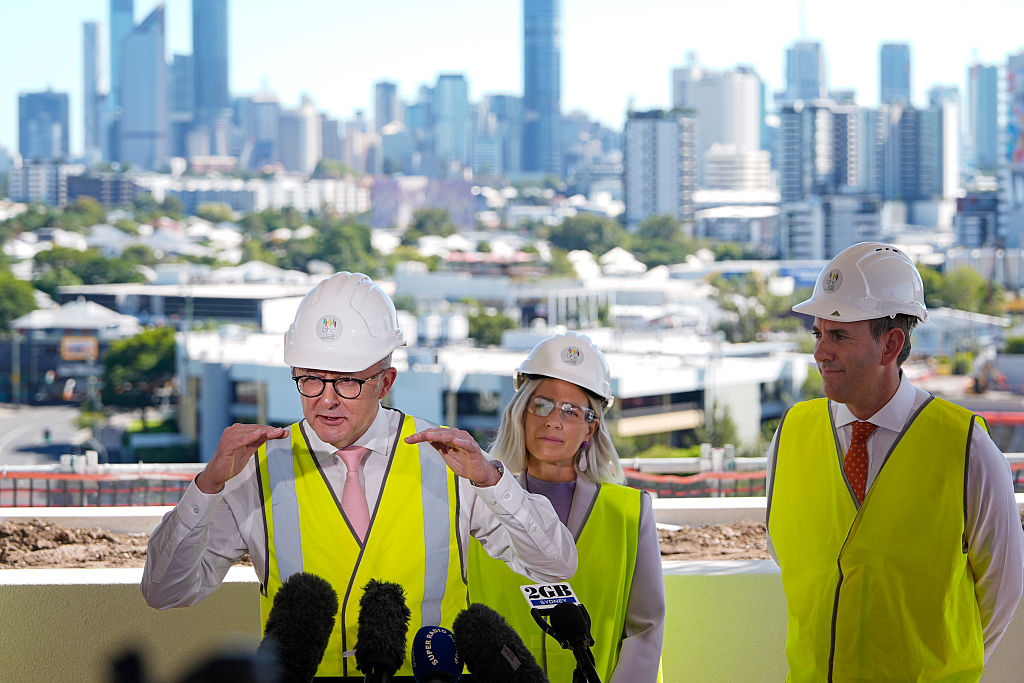

Politicians don’t just weather crises. They guzzle them, roll about in them, and then smear the muck theatrically across their faces like it’s a day spa.
Nothing sends a leader’s pulse racing faster than catastrophe. A flood, a trade war, or a mysteriously timed lettuce shortage, and suddenly, they’re in hi-vis on the evening news, windswept, solemn, and wildly overexposed. Approval ratings spike faster than avocado prices in Bondi.
This is the rally-round-the-flag effect, where the public panics, forgets the gas bill, and clings to whoever happens to be holding the microphone, much like settling for some dodgy kebab at 3 a.m. when nothing else is open.
Political scientist John Mueller first spotted this phenomenon in the 1970s, contending that leaders can bag a 5–20 point approval boost from a crisis. But like a dodgy kebab, the buzz fades quickly.
Roosevelt, Churchill, and Thatcher
It’s not new. Franklin D. Roosevelt shot to 84 percent after Pearl Harbor. Churchill thundered his way to 88 percent approval in 1940. Thatcher’s Falklands gamble gave her a double-digit boost, and commentators say John Howard milked the 2001 Tampa affair for a 10-point sugar hit.
And today? Anthony Albanese is surfing crises like Kelly Slater on Red Bull, while poor Keir Starmer looks like he’s swallowed the surfboard and can’t burp it back up.
Anthony Albanese is Like Moses in Gumboots
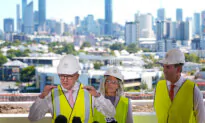
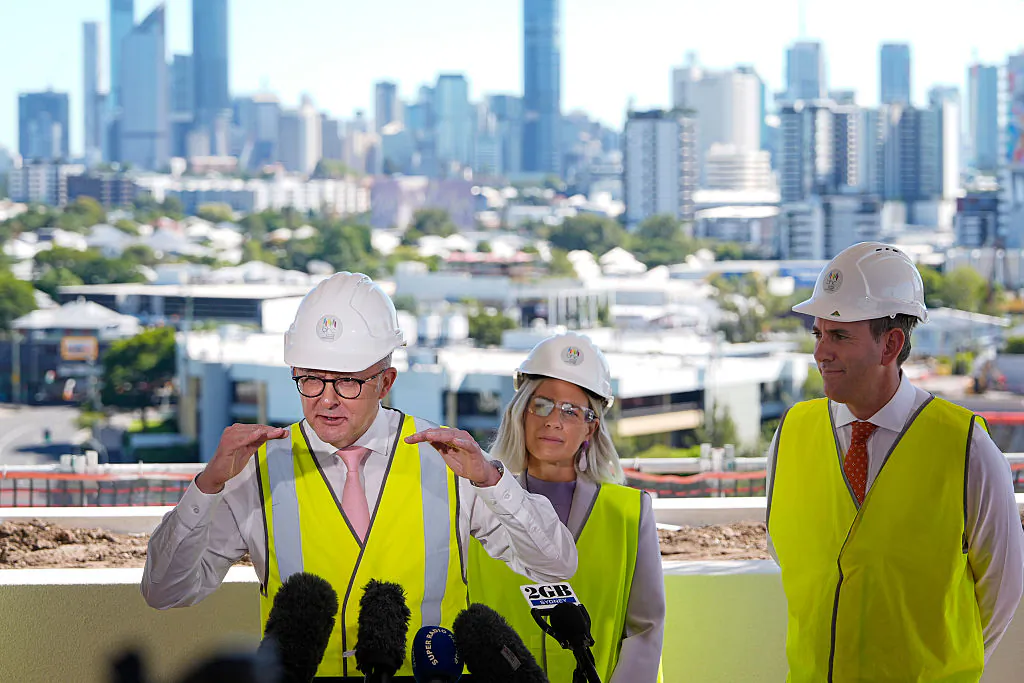
While Anthony Albanese is more raffle at the RSL than prophet in the desert, give him a flood and he transforms. You’ll find him striding through waist-deep water like Moses in Kmart gumboots, ratings floating higher than his trousers.
In March 2025, Albo finally got a proper crisis bounce, and it wasn’t from dangling off a cherry picker. It was the old-fashioned kind of chaos: a cyclone and a soggy state or two.
After Cyclone Alfred drenched Queensland and northern New South Wales, Albo dusted off the gumboots, rolled out the “we’re here for you” speeches, and suddenly looked like a man with purpose rather than a man who couldn’t get the groceries under $200.
The timing lined up with The Guardian’s poll that gave him 46 percent approval, up four points, his best in a year and a half. The headlines credited “rising global trade tensions” for giving him a bit of extra gravitas, but nothing photographs quite like a Prime Minister ankle-deep in mud, nodding gravely at flood victims while wearing a hi-vis vest that looks two sizes too big.
It wasn’t exactly Churchill in the Blitz, but in rally-round-the-flag terms, it did the trick: a soggy disaster at home, a diplomatic scuffle abroad, and bingo—Albo’s approval floated up just enough to remind him that crises, while terrible for the nation, are terrific for a politician’s diary.
Keir Starmer
And then there’s Keir Starmer. Oh, Keir. When riots erupted in 2024, he went full headmaster with 1,000 arrests, swift convictions, and a brief 10-point bounce. But the rally faded faster than warm prosecco.
By mid-2025, his numbers resembled an abandoned mineshaft: –41 net approval (City AM), —42 with 54 percent calling for his resignation (Opinium), and an operatic—54, with only 13 percent approval (YouGov).
Clement Attlee turned the crisis into post-war unity and the NHS. Tony Blair rode 9/11 solidarity to 66 percent approval. Starmer? His crises breed eye-rolls and shivers.
He’s juggling Ukraine aid (£3 billion doubled), Gaza ceasefire calls, NATO demands, EU trade resets, and domestic fuel allowance cuts like flaming chainsaws. The applause? Non-existent. Pensioners huddle in cardigans muttering, “Where’s my bloody heating allowance?”
What we see here is that the rally effect is like champagne, which is fizzy and fun in small doses, but guzzle the lot and you’re face-down in a kebab shop. Albanese understands this with one crisis at a time, preferably with a photogenic cul-de-sac.
Starmer, though, has turned everything into the Crisis of the Century—Riots, immigration, NATO, pensions, fuel allowances—each one inflated to DEFCON 1.
He gilded the lily, painted it, bedazzled it. And now the lily is dead, and so (judging by his approval ratings) is his political honeymoon.
Churchill stuck to one all-consuming crisis, which was to win the war. Starmer’s scattergun approach has exhausted his voters. It’s rally-round-the-flag turned rally-round-the-tired-bloke-yelling-into-a-megaphone.
Why Do We Keep Buying It?
Yet why do we keep buying it? Because we’re addicts too. Roosevelt’s fireside chats, Churchill’s radio thunder, Thatcher’s Falklands posturing; these all worked because the media magnified them into theatre. Today, it’s the same with hi-vis photo ops on the nightly news, delivering the sugar hit.
Not everyone rallies, of course. Social media cynics scoff and tweet. But many who consume mainstream TV news still fall for the optics, and that’s enough to keep the circus rolling, cameras faithfully in tow.
There is a comedown to this rally-effect sugar hit. FDR, Churchill, Thatcher, and Howard all surfed their bounce, only to feel the crash later. Albanese is floating at the moment. Starmer? He’s already on the bathroom floor, clutching the porcelain bowl of public opinion.
So next time you see a leader waving from a dinghy or dwarfed by flags the size of doonas, don’t just clap. Ask yourself, are they genuinely steering us through chaos or just distracting us from the price of cucumbers?
Because in 2025, crises aren’t just survival. They’re performance art. And some leaders, hi-vis Moses, for instance, play the role better than others.
 Friends Read Free
Copy
Facebook
Tweet
Friends Read Free
Copy
Facebook
Tweet