
Denmark banned civilian drone flights on Sept. 28 ahead of a meeting of European Union leaders in the country later this week.
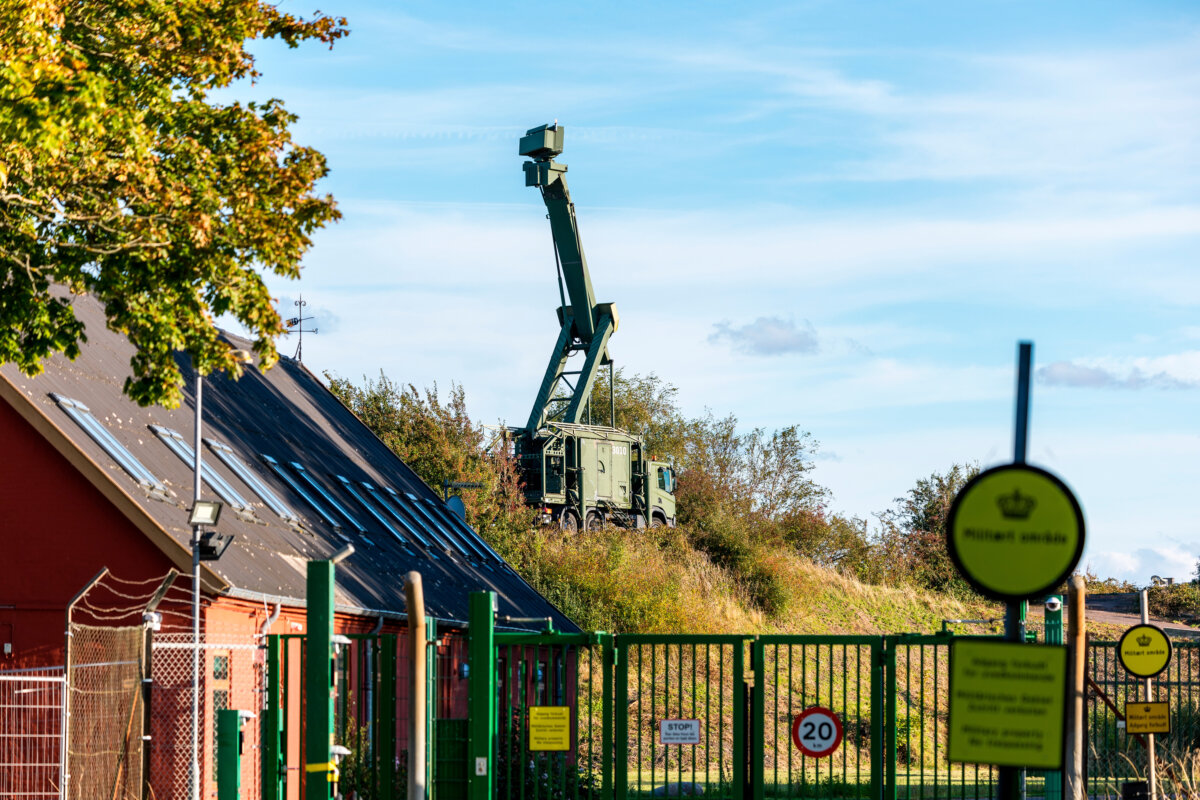
The move comes after unmanned aerial vehicles (UAVs) were observed at several military facilities on Sept. 28. Other drone activity forced the temporary closures of several Danish airports on Sept. 22.
Copenhagen Airport itself was shut for almost four hours.
The ban barred civilian drones from Danish airspace from Sept. 29 through Oct. 3, when Denmark, which holds the rotating presidency of the EU for the second half of this year, will be hosting European leaders.
Violations are punishable by a fine or imprisonment for up to two years.
“We are currently in a difficult security situation, and we must ensure the best possible working conditions for the armed forces and the police when they are responsible for security during the EU summit,” Danish Defense Minister Troels Lund Poulsen said on Sept. 28.
Of the Sept. 28 incidents, the Danish military said in a statement that it could “confirm that drones have been observed at several of the Danish Defense’s locations,” during the previous night, adding that “more capacities were deployed.”
Poulsen called it a “hybrid attack” because the drone flights all happened within the same timeframe.
He said at a news conference that it appeared that a “professional actor” was behind the “systematic” flights, but Poulsen stopped short of naming who they believed to be controlling the UAVs.
However, Danish Prime Minister Mette Frederiksen suggested that it could be Russia, calling the nation the primary “country that poses a threat to European security.”
In a Facebook post on Sept. 25, the Russian Embassy in Denmark rejected all suggestions of Russian involvement in the drone incursions over Copenhagen Airport and said the incident was “staged.”
“It is evident that the incidents involving reported disruptions at Danish airports are a staged provocation,” the embassy stated in the post.
“Undoubtedly, they will be used as a pretext for further escalating tension in the interests of forces seeking by all means to prolong the Ukrainian conflict and extend it to other countries. The Russian side firmly rejects the absurd speculations of involvement in the incidents.”
Denmark will host EU leaders on Oct. 1, followed by a second summit on Oct. 2 of the wider 47-member European Political Community, which was instituted with the goal of uniting the EU with other European countries in the wake of the war in Ukraine.
European neighbors have also offered support to Denmark, with a German air defense frigate arriving in Copenhagen on Sept. 28 to assist with airspace surveillance during the summits.
The FGS Hamburg arrived as part of Baltic Sentry, a NATO operation set up in January to beef up the security of its allies in the Baltic Sea, which Russia also borders.
“Following recent drone incidents in Denmark, NATO will conduct even more enhanced vigilance with new multi-domain assets in the Baltic Sea region, including Denmark, under Baltic Sentry,” NATO Maritime Command said in a post on X.
“These assets include multiple intelligence, surveillance, and reconnaissance platforms and air-defense frigates. These actions demonstrate the flexibility and agility of this enhanced vigilance activity.”
Sweden also announced that it was providing its Scandinavian ally with support in the form of military anti-drone capabilities, Swedish Prime Minister Ulf Kristersson said on Sept. 29.
“On Wednesday, we will see about 40 European leaders in Copenhagen; it is clear that it should be possible even with heightened security in these serious times,” Kristersson said in a post on X.
“We have therefore offered Denmark to contribute capabilities to increase security during the meeting. We have a tradition in the Nordic region of helping each other in various ways when we hold major events. Specifically, this concerns Swedish military anti-drone capability. These are unique capabilities that can also be of benefit to our neighboring country.”
Rachel Roberts and Reuters contributed to this report.
 Friends Read Free
Copy
Facebook
Tweet
Friends Read Free
Copy
Facebook
Tweet