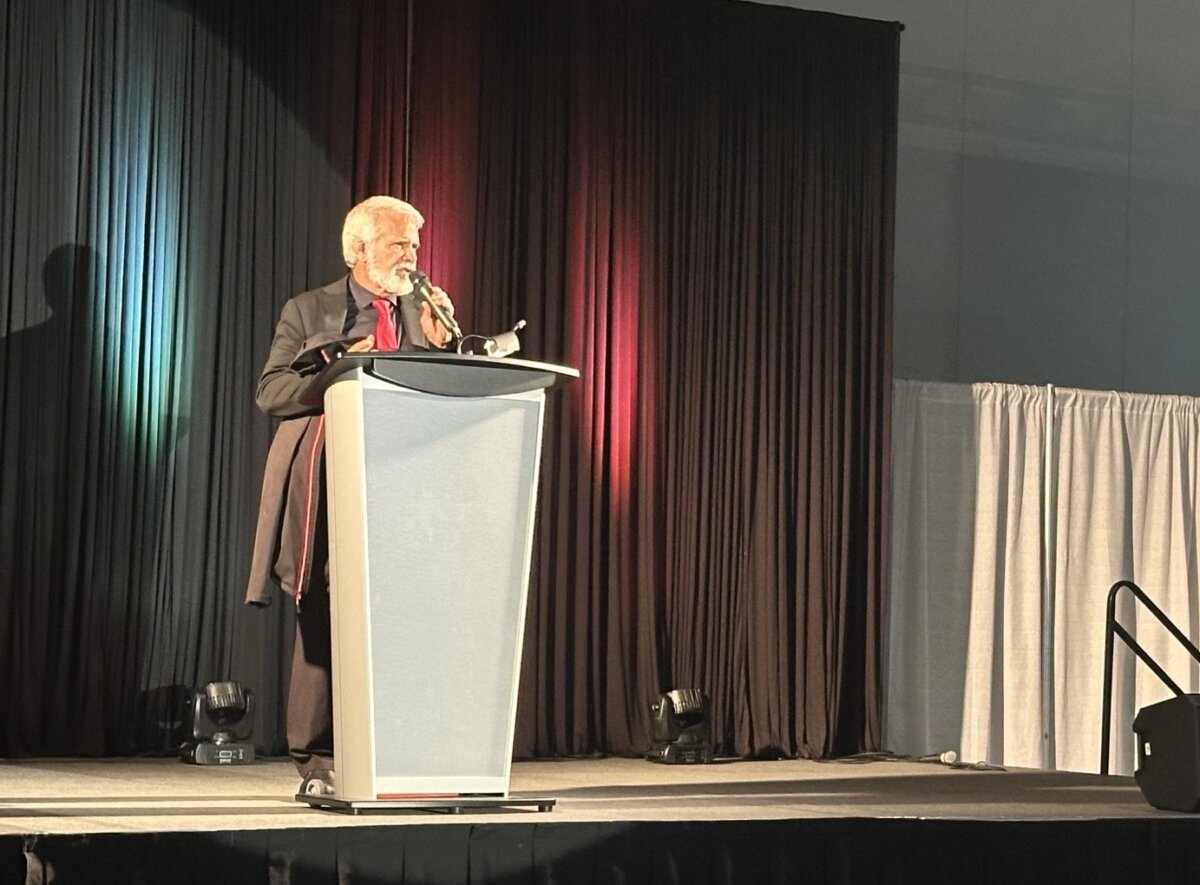

Outspoken U.S. researcher Dr. Robert Malone said that the late Charlie Kirk was someone who was willing to engage with those with opposing views, and he encouraged others do the same.
Malone was one of the many speakers on day two of the 2025 Reclaiming Conference organized by the group We Unify in Calgary, running from Sept. 19–21.
During his talk on Sept. 20, Malone described Kirk as “an individual who was committed to engaging everyone with an open heart on virtually any topic.” Kirk was assassinated while speaking at Utah Valley University on Sept. 10.
“He was a Christian youth minister who actively reached out and was willing to engage in open dialog with the people that disagreed with him,” Malone said, adding engaging with those of differing opinions was a “core thing to keep in all of our hearts.”
Trained at Northwestern University and Harvard University, Malone was an early researcher in the field of mRNA vaccines decades ago, but advocated against their use during COVID.
During his speech in Calgary, Malone noted the “power of civil protest” and referenced the truckers’ convoy in 2022, saying it “got the attention of the entire world.” He also noted that many of the leading protesters had their bank accounts frozen when the government invoked the Emergencies Act to stop the encampments.
“They deployed it before they intended, and woke the entire world up about the problems and the risks associated with the banking system,” he said.
Malone noted the protesters “acted peacefully.”
“They acted together with their families, and they changed the world,” he said. “The power of civil protest is amazing.”
He said that change had to begin with individuals “taking control of their own lives” and their culture.
Malone also touched on the issue of medical assistance in dying (MAID) in Canada, saying it was based on “utilitarian bioethics.”
He said it was “just a short little step” to start justifying that those who no longer contribute to society should choose MAID for the benefit of the nation, and that it is a moral failing.
 Friends Read Free
Copy
Facebook
Tweet
Friends Read Free
Copy
Facebook
Tweet