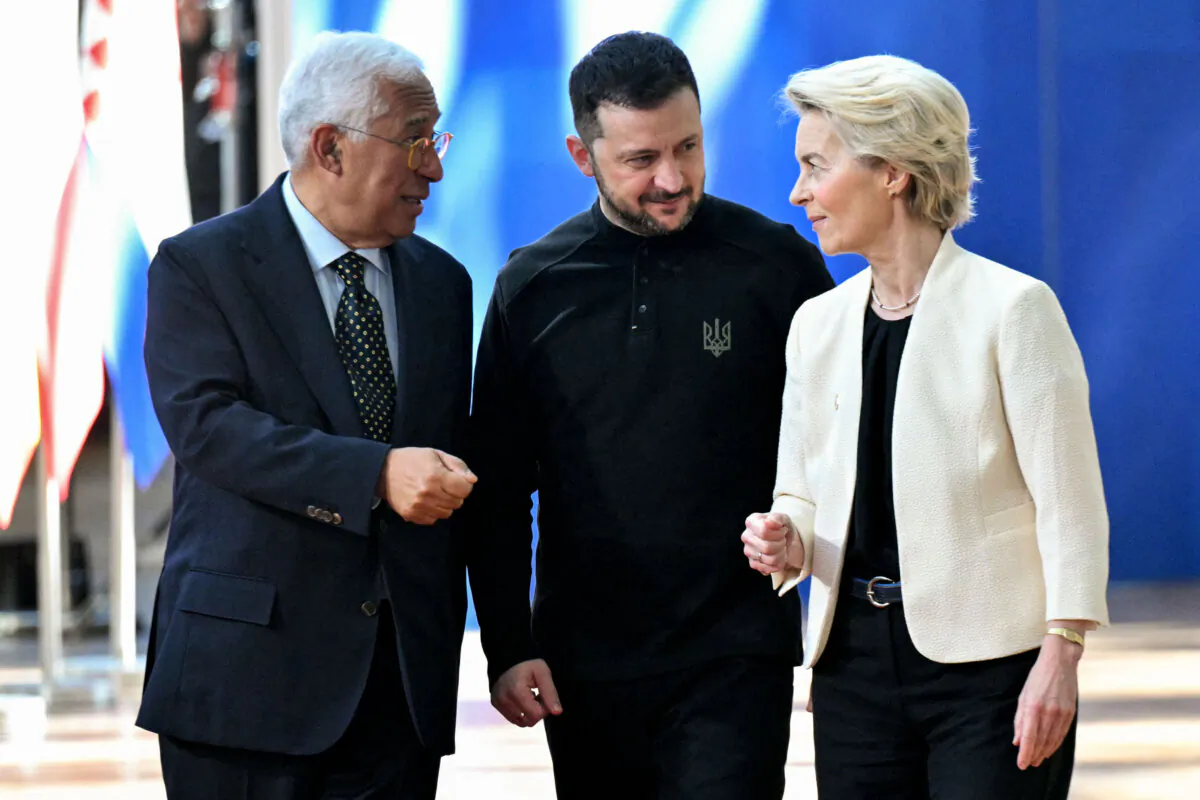

The European Union will borrow money for a 90 billion euro ($105 billion) loan to Ukraine to fund the country’s defense over the next two years, rather than use frozen Russian assets, the 27-nation bloc said on Dec. 19.
Member states also gave consent for the European Commission, the bloc’s executive arm, to keep working on a so-called reparations loan based on Moscow’s immobilized assets, but were unable to get that scheme off the ground for now due to objections from several countries.
“Today, we approved a decision to provide €90 billion to Ukraine for the next two years,” European Council President António Costa said in the early hours of Dec. 19 after hours of talks in Brussels. “As a matter of urgency, we will provide a loan backed by the EU budget. This will address the urgent financial needs of Ukraine. And Ukraine will only repay this loan once Russia pays reparations.”
Both options, the use of frozen Russian assets and using the EU budget to back the loan, initially seemed unworkable, with decisions of that nature requiring unanimity among EU member states. Hungary, which maintains closer ties with Moscow than other EU nations, remains opposed to both options.
Costa said the EU reserves the right to “make use of the immobilized assets to repay this loan.”
“At the same time, we gave a mandate to the Commission to continue working on the Reparation Loan based on Russian immobilized assets,” he added.
Hungary, Slovakia, and the Czech Republic agreed to let the scheme go ahead as long as it was agreed that they would not be held financially liable for the loan.
Hungarian Prime Minister Viktor Orban said in a post on X that the decision not to use Russian frozen assets meant that the EU had “managed to avert the immediate risk of war.”
“This plan would have dragged Europe into war and imposed a financial burden of 1000 billion [Hungarian forints] ($3 billion) on Hungary. We succeeded in protecting Hungarian families from this,” he said.
Discussing the eventual decision to fund the loan via the EU budget, he said that 24 member states “decided to grant a war loan to Ukraine for the next two years.”
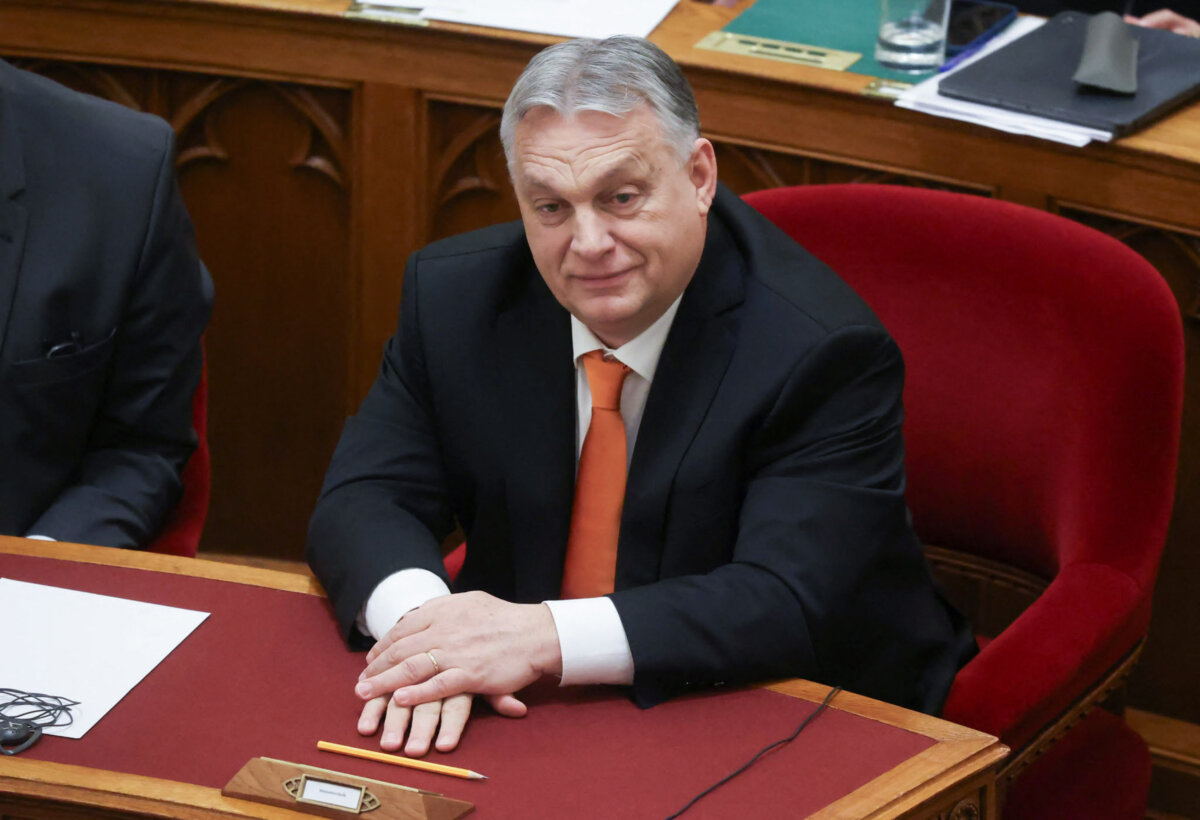
“If Ukraine is unable to repay the loan, those European countries will have to cover the repayment,” Orban said.
“Thankfully, the V3 cooperation is active once again: Hungary, Slovakia, and the Czech Republic have decided not to get on that train. By doing so, we spared our children and grandchildren from the burden of this massive €90 billion ($105 billion) loan. Hungary’s share of the war loan would have been more than 400 billion [Hungarian forints] ($1.2 billion).”
V3 refers to the Visegrad Group of countries, comprising Hungary, Slovakia, the Czech Republic, and Poland. The latter took a different tack from the other three nations by agreeing to back the loan.
While Budapest’s objection to the use of Russian assets was a stumbling block, the EU was also unable to provide sufficient financial and legal guarantees to Belgium, where the majority of the assets are held.
Belgian Prime Minister Bart De Wever set out his conditions for approving the use of the frozen assets in October, saying he would remain opposed to the loan until he secured three guarantees from the EU: full mutualization of risk, that every member state would help foot the bill if the money had to be repaid, and that every country that had immobilized Russian assets would move together.
Following the decision not to use the immobilized assets, De Wever said on Dec. 19 that the EU avoided chaos and remained united.
“There were so many questions on the reparations loan, we had to go to plan B. Rationality has prevailed,” he told reporters.
The EU leaders said Russian assets, totalling 210 billion euros ($246 billion), 185 billion euros ($217 billion) of which are held in Belgium, will remain immobilized until Moscow pays war reparations to Ukraine.
If Moscow ever takes such a step, Ukraine could then use the money to pay back the loan.
“This is good news for Ukraine and bad news for Russia, and this was our intention,” German Chancellor Friedrich Merz said.
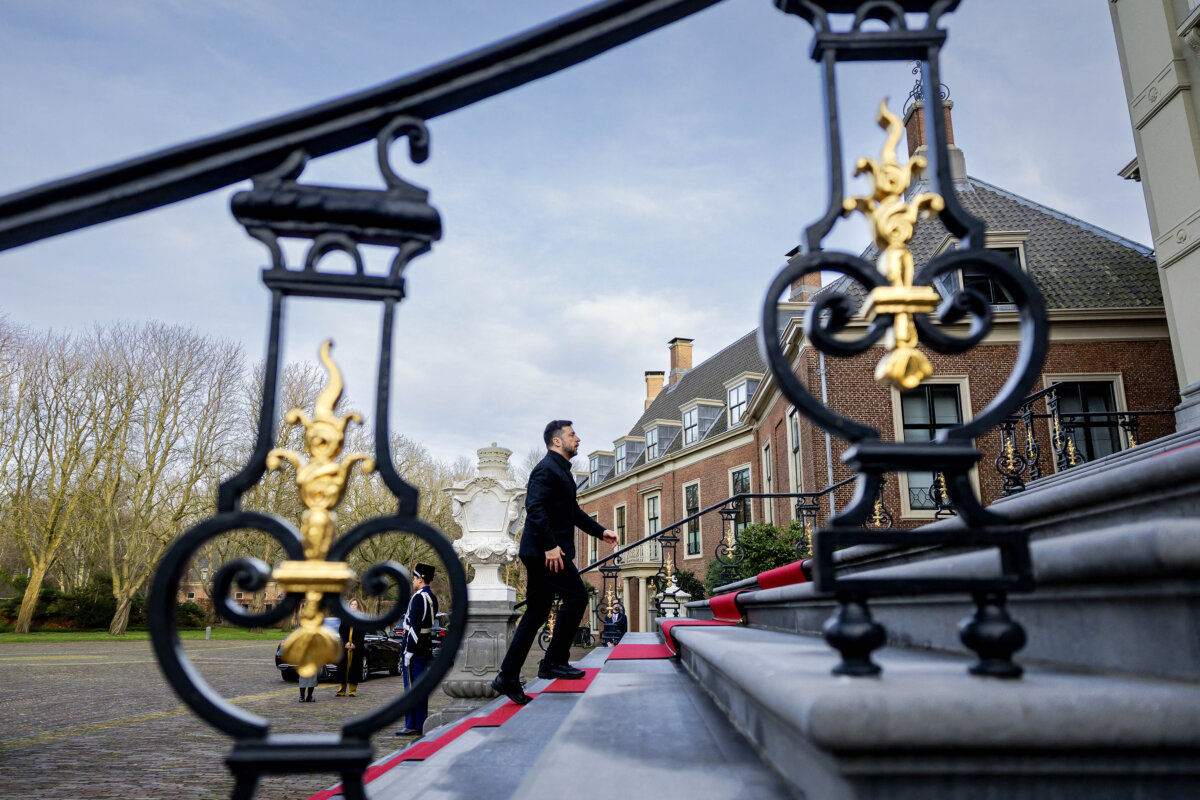
In the wake of the funding agreement, Ukrainian President Volodymyr Zelenskyy, who had been present at the meeting, thanked the EU for its continued support.
“This is significant support that truly strengthens our resilience. It is important that Russian assets remain immobilized and that Ukraine has received a financial security guarantee for the coming years,” he said in a post on X.
“Thank you for the result and for unity. Together, we are defending the future of our continent.”
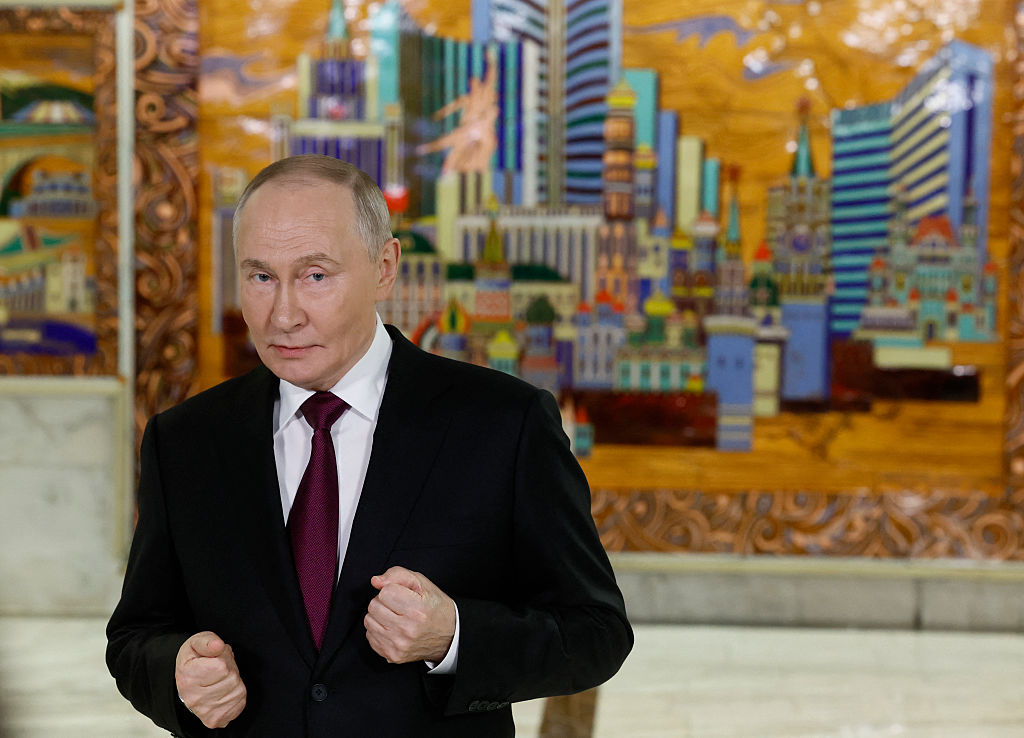
Russian President Vladimir Putin described the ongoing efforts by the EU to use Moscow’s frozen assets as “robbery.”
“Theft is an inappropriate definition. Theft is the secret theft of property. But here, they’re trying to do it openly; it’s robbery,” Putin said during his “Year in Review” press conference, according to Russian state news agency TASS.
He added that, in the event its assets were seized, Russia would defend itself in the courts, in a jurisdiction independent of political decisions, and warned that asset confiscation by the EU would undermine confidence in the eurozone.
Reuters contributed to this report.
 Friends Read Free
Copy
Facebook
Tweet
Friends Read Free
Copy
Facebook
Tweet