
European Union foreign ministers gathered in Brussels on March 16 to address the escalating global impact of the Iran war, with the effective closure of the Strait of Hormuz dominating talks.
The meeting comes as U.S. President Donald Trump intensifies pressure on allies to help secure the vital shipping lane, through which about 20 percent of global oil supply normally passes.
Trump said on March 15 that he had asked roughly seven countries dependent on the waterway to contribute to its protection. A day before that, Trump said he hopes China, France, Japan, South Korea, and the UK will deploy ships to help patrol the Strait of Hormuz while U.S. forces continue targeting what remains of Iran’s naval capabilities.
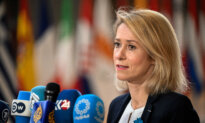
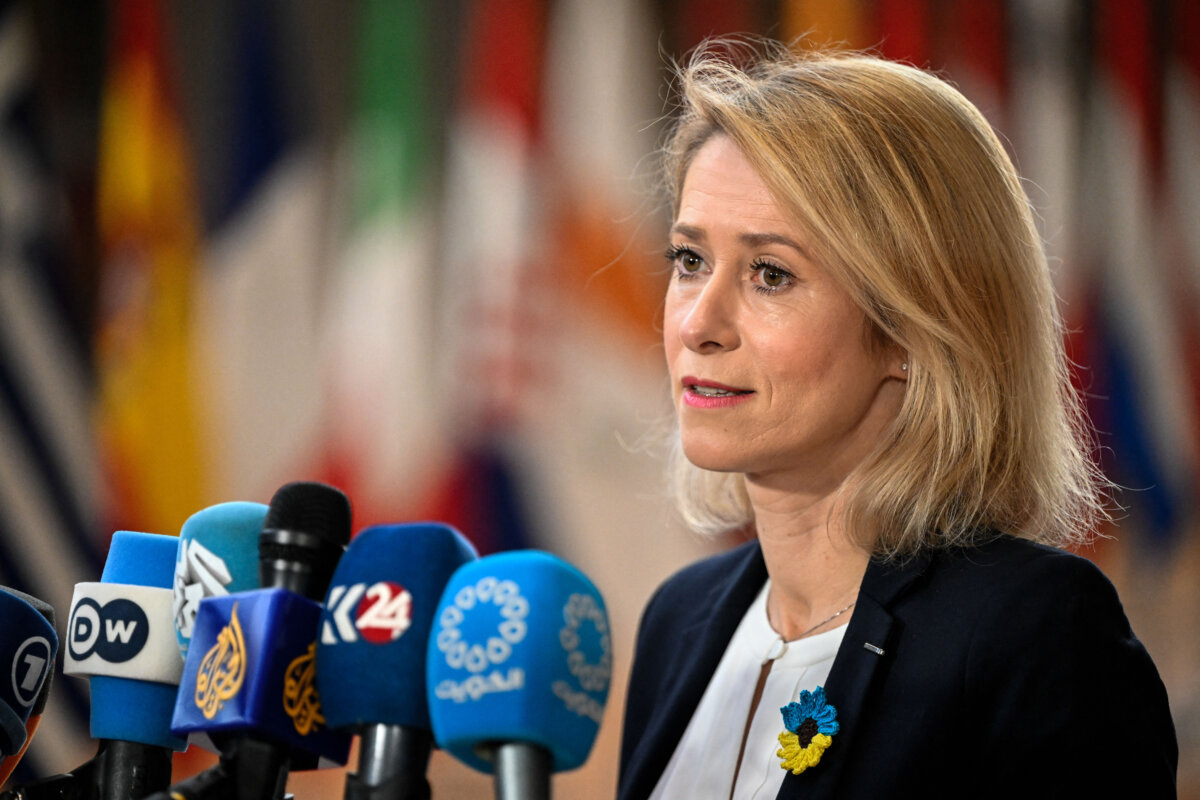
Ahead of the meeting on March 16, EU foreign policy chief Kaja Kallas said the bloc was exploring ways to help restore maritime traffic through the strait.
Kallas said she had discussed with U.N. Secretary-General Antonio Guterres whether a maritime arrangement similar to the wartime Black Sea grain deal could be replicated to allow oil and gas shipments to resume.
The Black Sea deal was a wartime agreement that allowed Ukraine to safely export food despite Russia’s naval blockade. Brokered in 2022, the deal created a protected maritime corridor from Ukrainian ports on the Black Sea.
The Hormuz closure poses risks far beyond energy markets, she added, noting that fertilizer exports could also be disrupted.
“If there is a lack of fertilizers this year, there’s going to be also food deprivation next year,” she said.
Ministers were also set to consider whether to expand the mandate of the EU’s naval mission Aspides, which currently protects vessels from Houthi attacks in the Red Sea.
Any decision would require member-state backing, Kallas said.
Global Response
British Prime Minister Keir Starmer discussed the impact of the continued closure of the Strait of Hormuz on international shipping and the reopening of the passageway with Trump and Canadian Prime Minister Mark Carney, Downing Street said on March 15.
Starmer has said London was working with other nations, including in Europe, to develop a “viable, collective plan” to reopen the Strait of Hormuz.
“Ultimately, we have to reopen the Strait of Hormuz to ensure stability on the market. That is not a simple task,” he said during a press conference on March 16. “So we’re working with all of our allies, including our European partners, to bring together a viable, collective plan that can restore the freedom of navigation in the region as quickly as possible and ease economic impact.”
Starmer said no decisions had been made and stressed that any action would need to be agreed by as many partners as possible, adding that discussions were ongoing but had not yet reached that stage and that he had spoken about the issue with Trump.
Some U.S. allies have signaled reluctance to commit naval forces. Japanese Prime Minister Sanae Takaichi told parliament on March 16 that Tokyo had made no decision to dispatch ships, citing constitutional constraints. Australia said it would not send its navy.
South Korea has said it would carefully review Trump’s request.
NATO
Trump has also warned that NATO faces a “very bad” future if its members fail to come to Washington’s aid in keeping the Strait of Hormuz open.
He suggested in a March 15 interview with the Financial Times that allies could contribute in sending minesweepers, as he noted that Iran has been putting mines in the water to create a nuisance.
EU officials said on March 16 that NATO is unlikely to play a direct role in securing the Strait of Hormuz because the waterway lies outside the alliance’s formal area of responsibility.
Kallas said that while there has been prior contact with NATO, operations in the Gulf are “out of NATO’s area of action,” adding that “there are no NATO countries in the Strait of Hormuz.”
German Foreign Minister Johann Wadephul likewise said on March 16 he had seen no indication the alliance had taken any decision on the issue or would assume responsibility for the passage, emphasizing that any such move would require a separate political mandate.
Wadephul, who had returned from a regional tour, said that Middle Eastern leaders were deeply alarmed by Iranian attacks on countries not directly involved in U.S.-Israeli operations.
He urged Washington and Tel Aviv to clarify when they would consider their military objectives achieved, saying that would enable planning for a broader regional security framework involving neighboring states and eventually Iran.
At the same time, he described Iran as posing “a significant threat” to regional stability and global commerce and advocated sanctions against those responsible for blocking the strait.
Disruptions to Gulf shipping, he warned, could push up food prices worldwide because fertilizers are transported through the region.
Starmer said that reopening Hormuz has “never been envisaged to be a NATO mission” and would instead require an alliance of partners.
 Friends Read Free
Copy
Facebook
Tweet
Friends Read Free
Copy
Facebook
Tweet