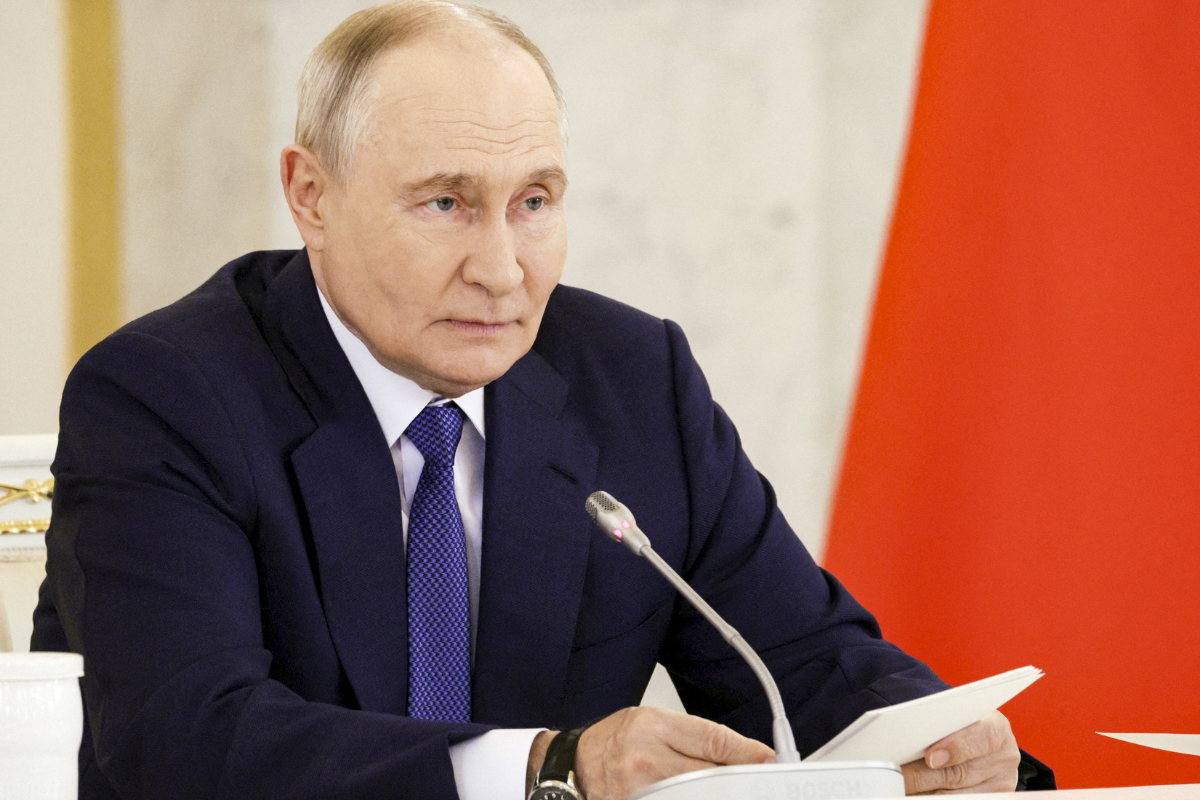

Russian President Vladimir Putin warned on Sept. 11 that European countries sending troops to Ukraine would mean “a war with Russia.”
Putin’s warning was made after the war between Russia and Ukraine resumed this week following a three-day ceasefire that allowed U.S. peace envoys to hold meetings in Moscow and Kyiv as the Trump administration pushes for an end to the war.
“Now they’re talking about how they’re considering sending troops into Ukraine,” Putin told reporters Friday at the 18th BRICS Summit in India. “That means a war with Russia.”
Putin said that European countries were frightening their own citizens by warning about an “imaginary threat” from Russia. He said Russia did not present any threat to Europe, adding that “there is no such threat and never has been.”
“We do not threaten European countries, and we have no intention of threatening them,” he told reporters at the BRICS summit.
A group of more than 30 countries supporting Ukraine, known as the “coalition of the willing,” met with Ukrainian President Volodymyr Zelenskyy in Paris last September. After the meeting, French President Emmanuel Macron announced that 26 countries offered to provide security guarantees, including sending troops to Ukraine as a “reassurance force” following the end of the war. Macron noted that the troops would include land, air, and naval forces.
The French president said the reassurance force “does not have the will or the objective of waging war against Russia,” but would attempt to “prevent any new major aggression and to involve the 26 states very clearly in the lasting security of Ukraine.”
Just one day after that coalition meeting, Putin warned that foreign troops would be considered “legitimate targets” if they were deployed to Ukraine before a final peace agreement was achieved.
“And if decisions are reached that lead to peace, to long-term peace, then I simply do not see any sense in their presence on the territory of Ukraine, full stop.”
On Sept. 8, Russian presidential aide Yury Ushakov told Russian news outlets that Putin had a phone call with President Donald Trump after U.S. peace envoys Steve Witkoff and Jared Kushner held peace talks in Moscow and Kyiv.
Following the call, Trump told reporters on Sept. 9 that Putin wants to make a deal to end the war between Russia and Ukraine.
However, fighting between Russia and Ukraine resumed almost immediately after the U.S. peace envoys departed from Kyiv after last weekend’s negotiations. Russia launched drone and missile strikes against Kyiv on Sept. 8 and has continued to carry out strikes throughout the week.
Eight people were killed and dozens were wounded on Sept. 12 in Russian strikes against Ukraine.
Russia had launched almost 500 attack drones since Saturday morning, Zelenskyy said in an afternoon statement the same day on X.
The Ukrainian president suggested that Russia had essentially expanded the war in recent days from the front lines to include Ukraine’s economy.
“The Russians are burning warehouses with food and gas stations, pharmaceutical facilities and ordinary passenger trains, residential buildings and civilian businesses,” he wrote.
Over the past few days, Russian attacks have targeted an American company that produced sunflower oil, a Polish company that manufactured plumbing fixtures, and a steel plant owned by an Indian business, Zelenskyy said.
“Russia wants to kill the Ukrainian economy and, through that, break our resistance,” he added.
 Friends Read Free
Copy
Facebook
Tweet
Friends Read Free
Copy
Facebook
Tweet