
EV owners can recover the cost of buying their cars in less 10 years, according to recent testimony to a parliamentary committee on climate misinformation.
Aman Gaur, head of policy advocacy at the Electric Vehicle Council, said EV owners could save thousands of dollars if they drive frequently, according to the peak body’s analysis.
“People living in the outer suburbs often are driving 15 to 20,000 kilometres a year because public transport in the outer suburbs is not that good,” Gaur told the Select Committee on Information Integrity on Climate Change and Energy.
“People living closer to the centre of cities may be driving sometimes 10 to 15,000 kilometres.
“Using that as a benchmark, and using the comparator between metropolitan petrol prices versus the price of charging at home with rooftop solar or even with a good tariff, we found earlier this year that a person could save up to $3,000 (US$1,970) if they were driving 15-20,000 kilometres.”
While the level of savings varied depending on different factors, Gaur said it was possible for EV owners to recoup the vehicle price.
“If you’re buying a used EV or even a new EV these days, for about $30,000, you can get back the entire value of that purchase in less than 10 years,” he said.
“So not only are you helping to make your suburb cleaner in terms of the air pollution, not only is it a better drive for you, but you can actually have a vehicle that has earned back its upfront cost in 10 years.”
According to the EV news website, The Driven, Tesla is still Australia’s number one EV brand in terms of sales, with drivers favouring Model Y and Model 3.
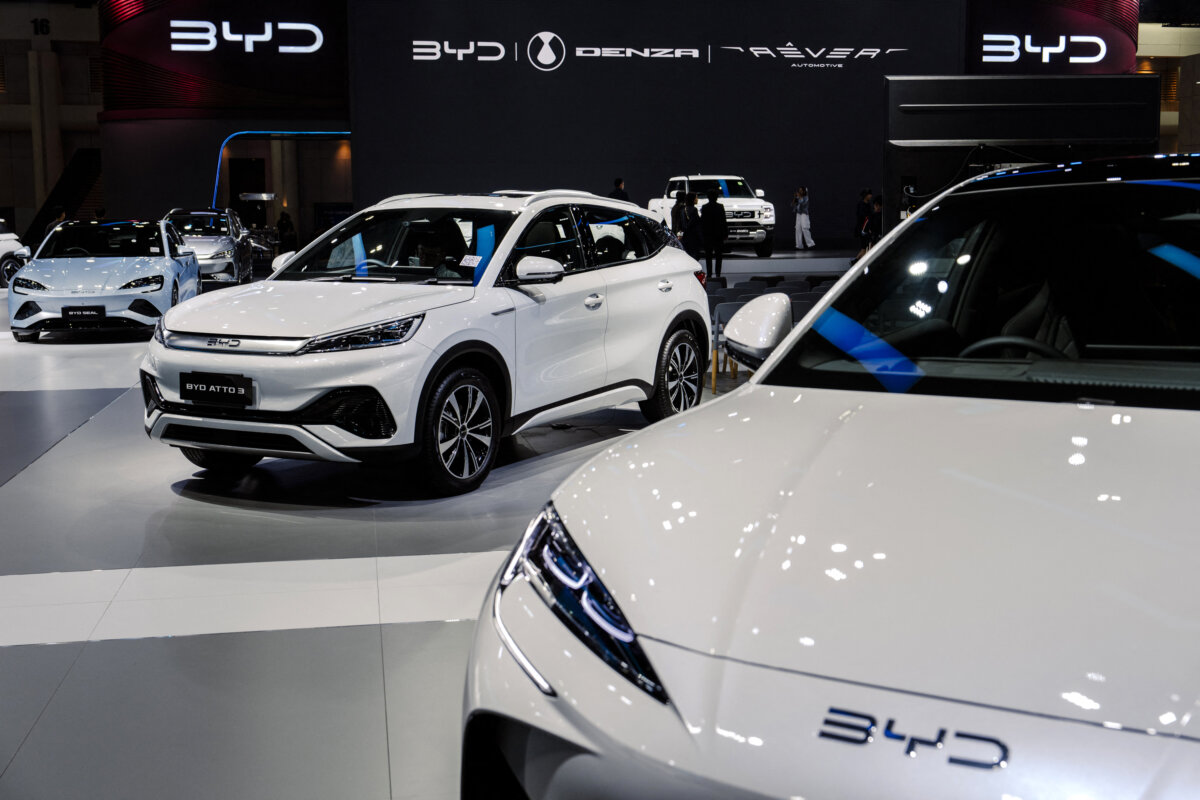
However, the company is facing increasing competition from Chinese manufacturer BYD, which has flooded the Australian market with cheaper models in the $20,000–$30,000 price range.
Senator Questions Claims that EVs Are Cheaper to Drive
One Nation Senator Malcolm Roberts asked Gaur about a 2024 article on the automotive website Car Expert, in which the authors conducted a drive test from Melbourne to Sydney to see whether it costs more to drive a petrol car or an EV.
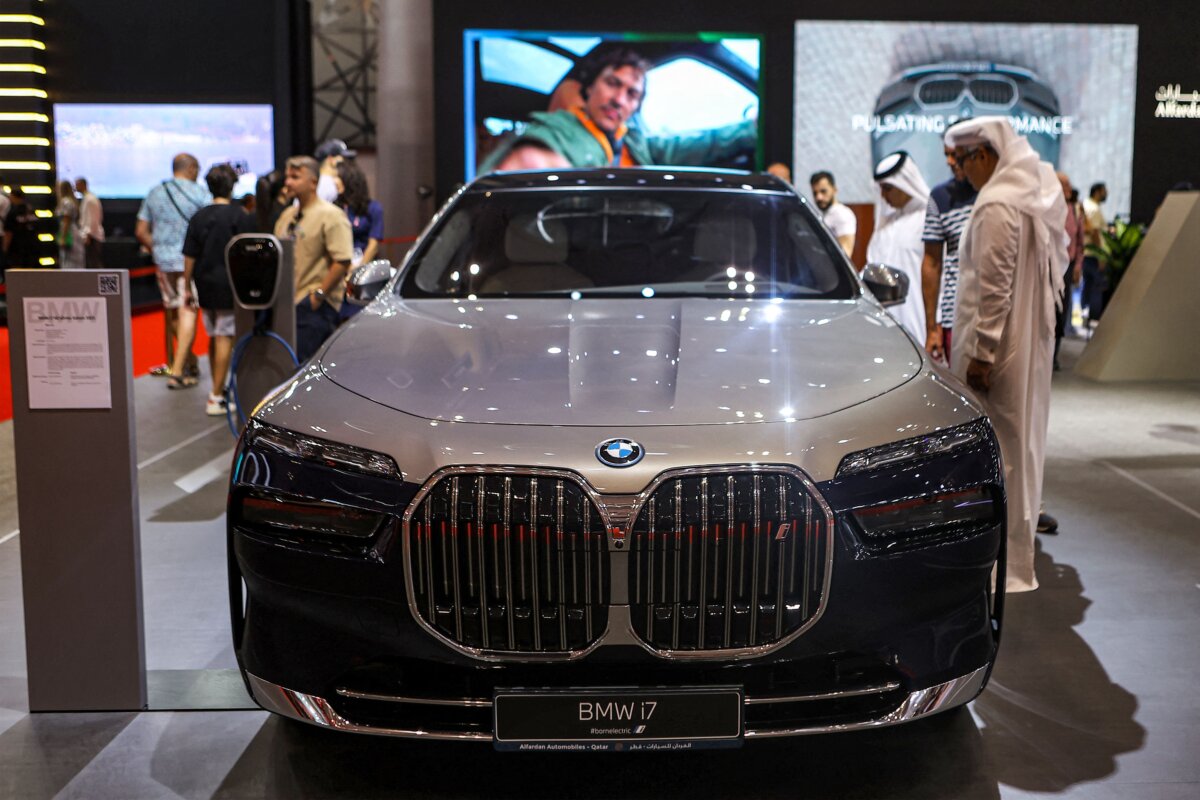
A petrol BMW 740i was compared with an electric BMW i7 M70 and they found that the EV consumed 203.03 kWh for the entire trip, costing $131.92, while the petrol car consumed 56.16 litres of fuel, costing $117.88.
In addition, the EV had to stop for over two hours to charge, while the petrol car only spent six minutes to refuel.
“According to this independent study, the trip was both cheaper and far quicker on petrol. The driver of the EV had to wait on the side of the road for the EV to be charged. Are you aware of that?” Roberts asked.
“It surprised me because we’ve been told the reverse. But it also surprised the two journalists who drove the cars.”
In response, Gaur said he was not aware of the article but cited stories from people who told him they saved money with EVs.
“I often travel in rideshare electric vehicles. I often talk to the drivers—who drive more than the 10,000 to 20,000 kilometres I quoted earlier because it’s part of their job—and they tell me that, without a doubt, the main reason they turned to driving an EV as their rideshare car is how much money they’re saving,” he said.
“So I’m going to choose to believe the dozens of people who drive for a living, to earn a crust, over a hypothetical article that I haven’t read.”
People Can Make Money With Their EVs Too: Peak Body
In addition, Gaur said people could earn extra income with their EVs and solar panels via vehicle-to-grid (V2G) technology, which allows EVs to both draw electricity from the grid and also supply power too.
With this system, an EV’s battery acts as a power source, charging with solar or grid electricity during low-demand periods, and discharging it back to the grid during peak hours.
However, for V2G technology to work, a special type of charger and support from the power grid are required.
Currently, South Australia is the only jurisdiction to have approved the installation of V2G chargers, while other states are testing the waters.
“For people who aren’t aware of this, vehicle-to-grid technology is basically the idea that EVs are not just cars but big batteries on wheels, and an EV is usually five times the size of a home battery,” Gaur said.
“Because it’s that big, it means that you can take the energy that’s in that car and put it back into your home, or you can put it back into the grid and earn income as a result of it.
“Some of the work we’ve done around this shows [that] with the right tariff setting and the right size of EV, you can earn up to a net $1,500 per year on top of that.”
 Friends Read Free
Copy
Facebook
Tweet
Friends Read Free
Copy
Facebook
Tweet