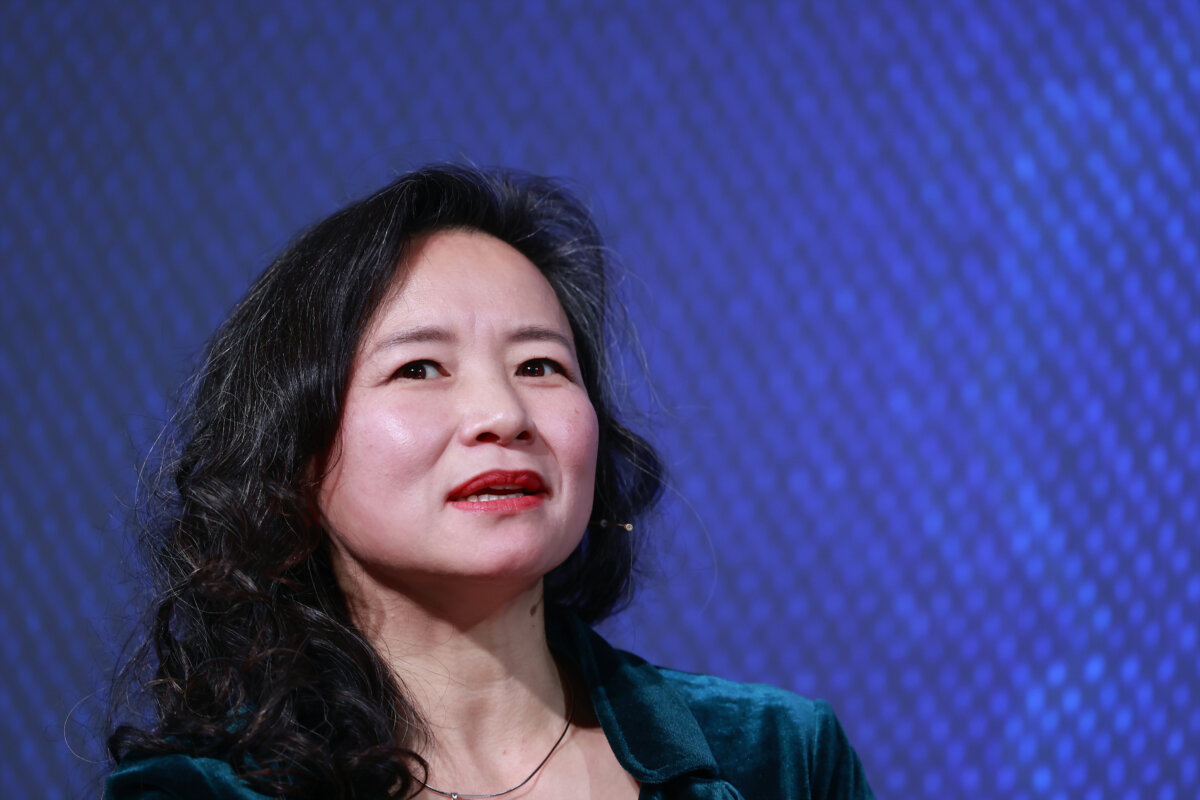
BRISBANE, Australia—After 1,154 days behind bars in China, journalist Cheng Lei says she now savours every ounce of freedom—whether it’s skydiving, scuba diving, or simply holding an egg in her hand.
Lei also has a message to her fellow countrymen: Australia’s comfortable lifestyle may blind individuals to the true meaning and value of suffering.
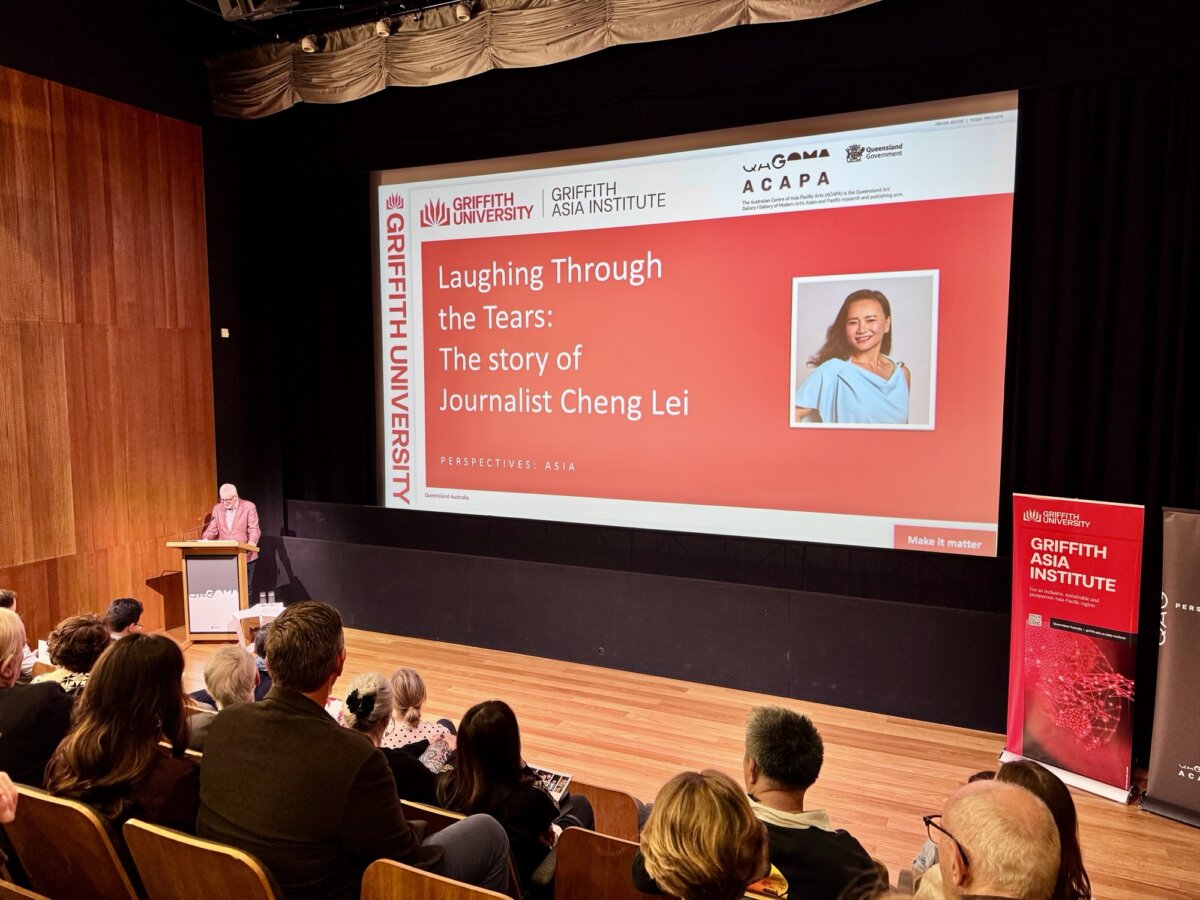
“So how do you get through 1,154 days with very, very little? As it turns out, we do become stronger when we lose almost everything,” Lei told an audience at the Gallery of Modern Art in Brisbane on Sept. 4.
“Because I think modern life actually helps us too much to be lazy,” the journalist said at the launch of her book, “Cheng Lei, A Memoir of Freedom,” with the Griffith Asia Institute.
“Because when everything is pleasant, then anything that’s remiss is going to feel terrible,” Lei added.
The mother-of-two was detained by the Chinese Communist Party (CCP) in 2020 in an escalation of its coercion against the Australian government after former Prime Minister Scott Morrison called for an inquiry into the origins of COVID-19.
Throughout the year, the CCP had imposed a series of arbitrary trade restrictions on Australian exports to the country including beef, timber, barley, and wine.
Lei had been a news anchor for the English-language state-owned China Global Television Network (CGTN) from 2012 to 2020, and was a migrant to Australia at the age of 10.
She was detained on the pretense of “carrying out criminal activities endangering China’s national security,” and accused of breaking a government media release embargo—by just seven minutes—by sharing it with a fellow reporter.
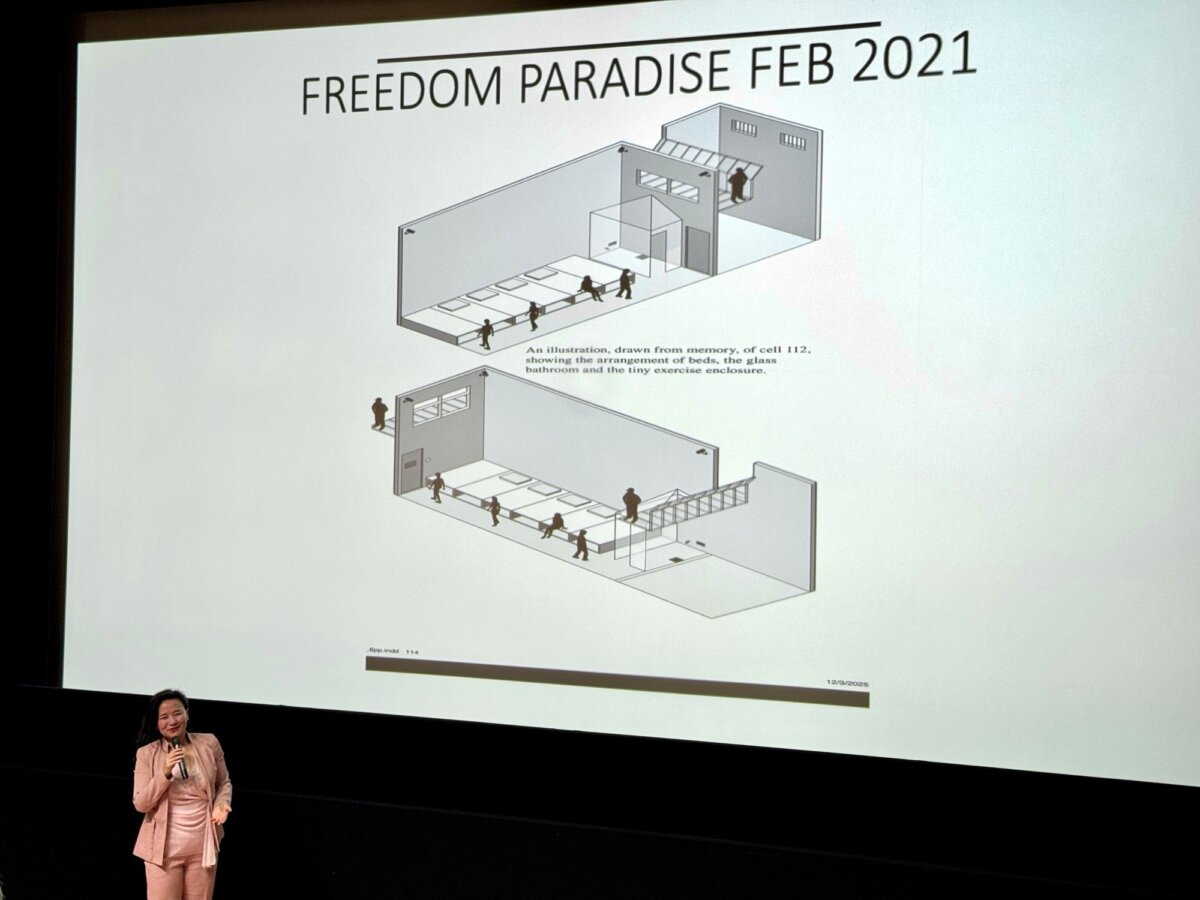
Lei went on to be held for six months under “RSDL” or Residential Surveillance at a Designated Location, before being formally arrested in February 2021 on allegations of “suspicion of illegally supplying state secrets overseas.”
RSDL involved sitting for 13 hours a day in the same position while being watched by two guards constantly, even needing permission to scratch her face or use the bathroom, which they also watched.
The CCP would eventually grant Lei her release in 2023 following attempts to “normalise” relations between the Australian government and the CCP.
The Lesson of Eggs and Suffering
During detention, Lei recalled how Thursdays were a highlight of the week, and that was because the detention facility would deliver a hard-boiled egg to supplement what little they ate—inmates were always hungry.
“But one day, the door opened before we were there, and there were no eggs,” Lei said.
“So we were devastated, and we talked about this, ‘Why are they doing this? Is this because we didn’t behave? Did we laugh too hard?'”
“And then a little while later, the door opened again, and they said, ‘Oh, we’ve got two eggs left,’ which they cut into halves so the four of us could have half an egg each, and all of a sudden our spirits soared.”
Lei said that episode stayed with her, making her reflect on how it is so easy to take things for granted. Lei revealed she was subject to 35 arbitrary “rules” from her captors.
“I think in our lives of comfort and freedom, we don’t realise that we have so many ‘eggs’ at our disposal, and maybe we need to lose a few eggs to feel true joy,” she said.
The journalist also took up yoga, finding it offered a form of exercise that did not need equipment, and while she found it could be painful—breathing exercises were needed to get through it—after breaking through the pain barrier she would experience a sense of elation.
“I think we sometimes strive for happiness and to avoid pain—when we can [actually] be very serene about pain, frustration, joy, boredom and everything that we experience.”
Lei also managed to read 300 books during her detention.
“It is really, really hard, but now that I’ve lost freedom, I cannot begin to explain to you how valuable it is,” she said.
“It is our statement on humanity, and yet so many of us don’t realise its preciousness, and we squander it. We don’t use it to the max.”
Lei has now experienced skydiving, has obtained a scuba diving license, and has travelled to South and North America, Europe and soon Africa.
“We need to exercise our freedom to the max,” she said.
Lei was also reflective on her previous life and critical of those who continue to promote the CCP.
On the one hand, in response to questions about the three remaining Australian judges who sit on Hong Kong’s Court of Final Appeal, Lei said it lent “second-hand legitimacy” to the CCP.
“I think the Australian judges have drunk too much of the CCP Kool-Aid and are playing a horrible role. That’s not Australian,” Lei said.
“I’m also disturbed when on my Instagram I see old CNBC [media] colleagues who are still working in Hong Kong, [and] I guess talking up Hong Kong business and what they’re doing there.
“We all have a voice, and we all play a role and, there is karma.”
Lei’s memoir is for sale online.