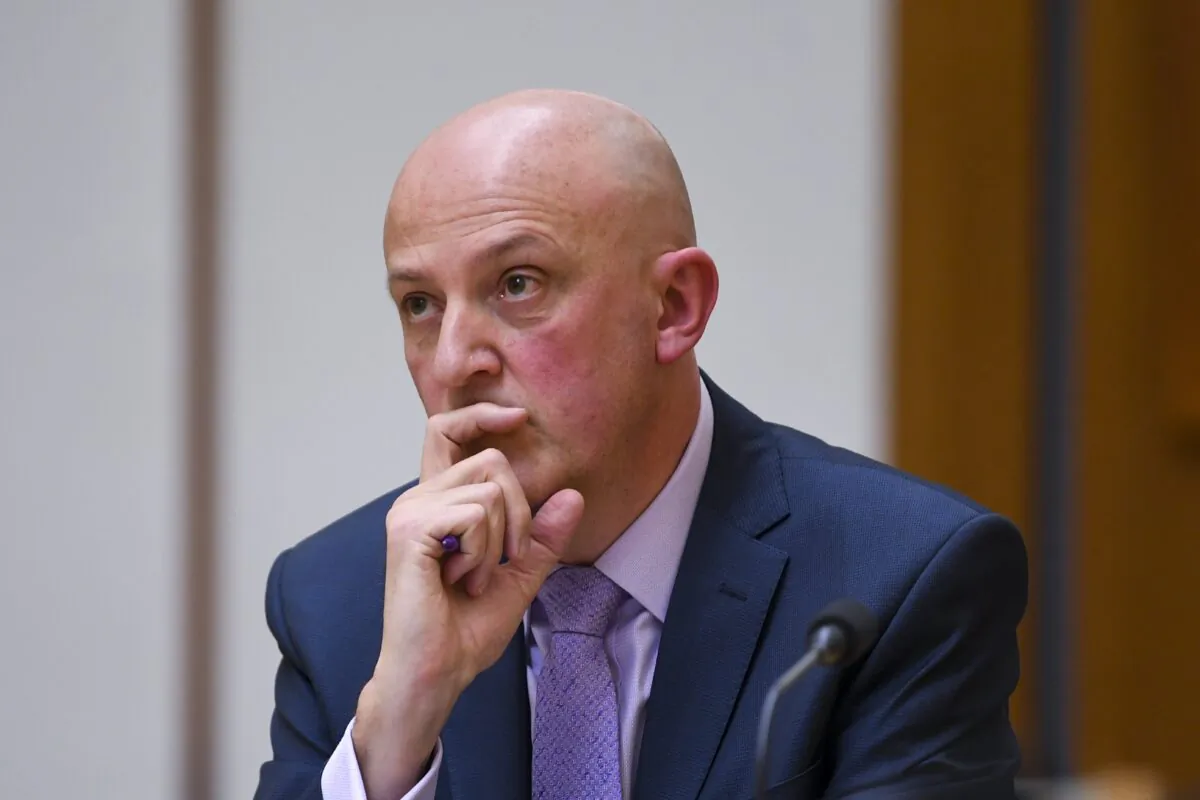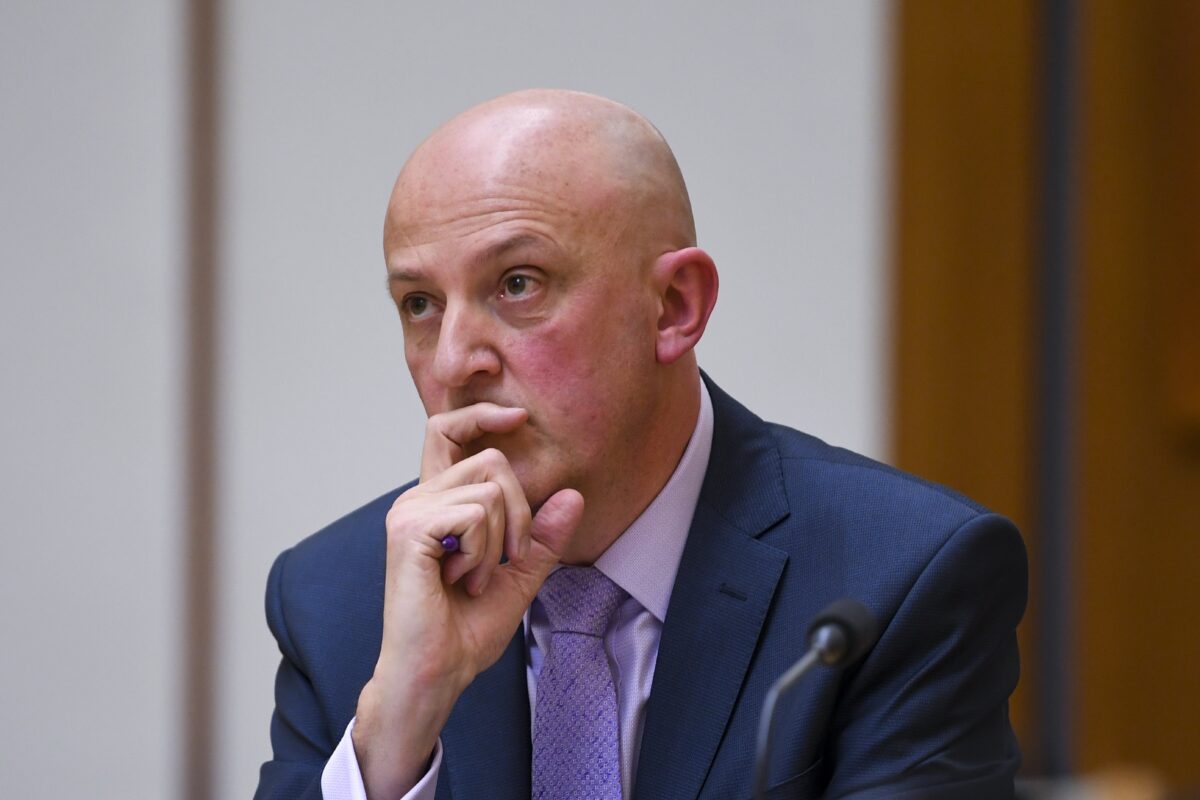

Foreign nations are actively attempting to recruit Australia’s elected officials, public servants, members of military, academics, and business leaders, according to the nation’s top intelligence boss.
Australian Security Intelligence Organisation (ASIO) Director-General of Security Mike Burgess made the stark warning during the 26th Annual Hawke Lecture.
“You would be genuinely shocked by the number and names of countries trying to steal our secrets,” he said.
“The obvious candidates are very active—I’ve previously named China, Russia, and Iran—but many other countries are also targeting anyone and anything that could give them a strategic or tactical advantage, including sensitive but unclassified information.”
Burgess said foreign actors were especially focused on gaining covert insight into Australia’s decision-making processes, particularly around the AUKUS security pact.
“In particular, we are seeing foreign intelligence services taking a very unhealthy interest in AUKUS and its associated capabilities,” he said.
He warned that spies were also working to steal Australia’s intellectual property and research, along with obtaining information on people who have access to sensitive data who could be targeted for recruitment.
Concerningly, overseas powers are attempting to map Australia’s most critical infrastructure areas in order to target them in case of conflict.
Australia’s military capability is not safe either—with hostile elements seeking to undermine and exploit vulnerabilities within.
Even science, Antarctic research, green technologies, and private sector projects are not safe from the world’s prying eyes.
“Foreign intelligence services can obtain this material in person—convincing, coercing, or seducing insiders to impart sensitive information—and through technology, most commonly by hacking,” Burgess said.
“Often it’s a combination of both, where cyber-espionage enables in-person espionage or in-person espionage begets cyber-espionage.”
24 Plots Foiled in 3 Years
ASIO has disrupted 24 major espionage and foreign interference disruptions in the past three years alone.
In one incident, a government employee with security clearance was caught handing over official documents on free trade negotiations.
In another, a foreign intelligence service tried to plant one of its agents in a media outlet to influence the reporting.
Foreign entities have also tried to buy land near sensitive military sites.
One foreign intelligence service was also encouraging family members to apply for Australian government jobs, while in another incident, a visiting academic linked to a foreign government broke into a restricted tech lab and filmed what was inside.
“Some may yet result in police charges so I won’t go into further detail,” Burgess said.
“But they are just the tip of an espionage iceberg.”

Making it Easy
Burgess says many workers with access to sensitive information are making it “all too easy” for foreign spies by listing the projects they’re working on publicly.
“On just one professional networking site, the profiles of more than 35,000 Australians indicate they have access to sensitive and potentially classified information,” he warned.
“Around 7,000 reference their work in the defence sector, including the specific project they are working on, the team they are working in, and the critical technologies they are working with.
“Close to 400 explicitly say they work on AUKUS, and the figure rises above 2,000 if you include broader references to ‘submarines’ and ‘nuclear.'”
Burgess said more than 2,000 workers boast online about having a security clearance, while 1,300 claim to work in national security.
“While these numbers have fallen since I first raised the alarm two years ago, this still makes my head spin,” he said.
“Surely these individuals, of all people, should understand the threat and recognise the risk?
“I get that people need to market themselves, but telling social media you hold a security clearance or work on a highly classified project is more than naïve; it’s recklessly inviting the attention of a foreign intelligence service.”
Spies will often target a subject offering consulting opportunities, promising to pay thousands for reports on Australian trade, politics, economics, foreign policy, defence and security.
If a target accepts, they are often moved over to an encrypted messaging app.
Subjects may even be offered overseas trips.
“This form of espionage is low-cost, low-risk, low-effort – and conducted at scale. Hundreds of friend requests can be sent each day,” Burgess said.
Burgess says espionage is costing Australia, with cyber spies stealing nearly $2 billion in trade secrets and intellectual property in 2024 alone.
The security boss is calling on people to use common sense.
That is—do not advertise having access to sensitive information, update software regularly and never use “password” as a password.
 Friends Read Free
Copy
Facebook
Tweet
Friends Read Free
Copy
Facebook
Tweet