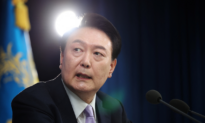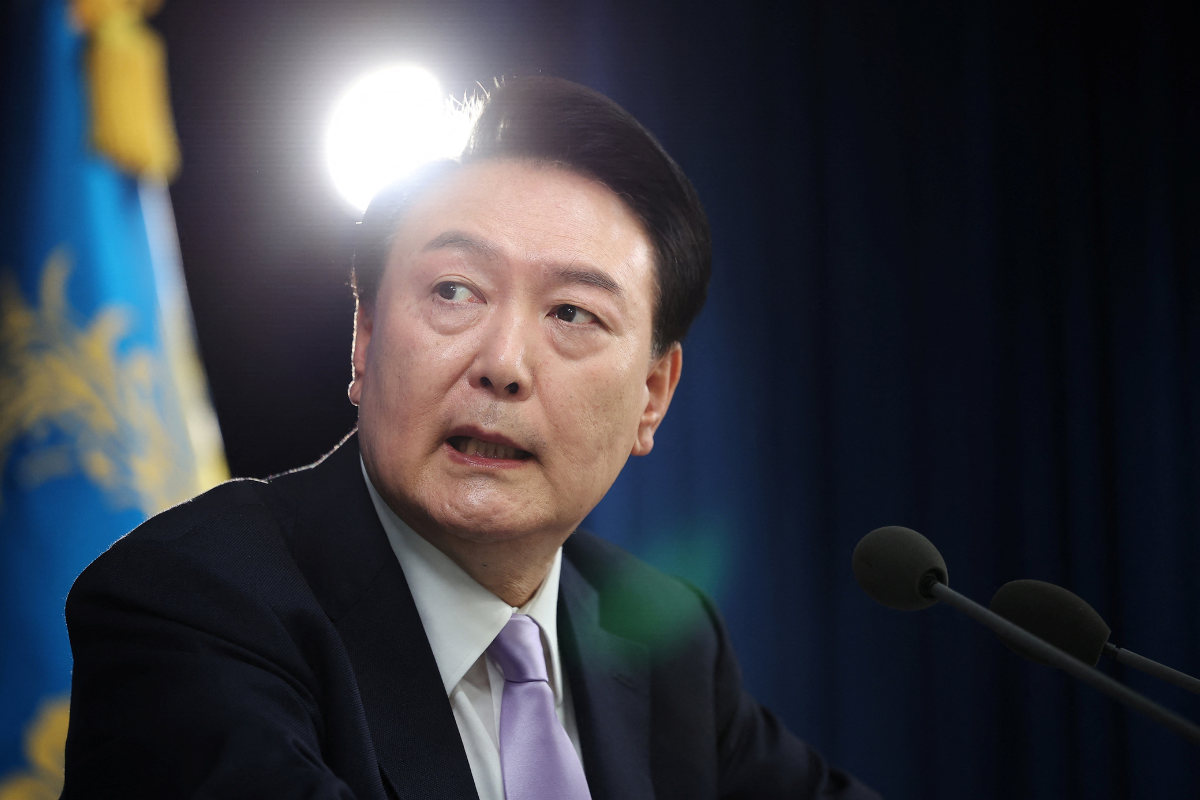

A South Korean court on Jan. 16 sentenced former President Yoon Suk Yeol to five years’ imprisonment in the first verdict related to his failed imposition of martial law in December 2024.
During the televised proceedings, Seoul Central District Court found 65-year-old Yoon guilty of mobilizing the presidential security service to prevent authorities from detaining him, fabricating official documents, and failing to follow the legal process required for declaring martial law.
Yoon attempted to impose martial law on Dec. 3, 2024, but backed down after six hours amid public protest and after the parliament voted to overturn the decree.
At the time, Yoon said he was aiming to protect the constitution because the opposition, which controlled the parliament, was sympathetic to communists and North Korea.
The lead judge on the three-judge panel said, “The defendant abused his enormous influence as president to prevent the execution of legitimate warrants through officials from the Security Service, which effectively privatised officials … loyal to the Republic of Korea for personal safety and personal gain.”
Yoon’s defense team said they believe the ruling was politicized and reflected “the unliberal arguments by the independent counsel.” They said the ruling “oversimplified the boundary between the exercise of the president’s constitutional powers and criminal liability.”
His lawyers said the former president would appeal the ruling.
Weeks following Yoon’s failed martial law attempt, authorities issued a warrant to detain him after he failed to comply with three summonses for questioning. On Jan. 3, 2025, Yoon barricaded himself inside the presidential residence, and the security service blocked investigators.
Authorities detained Yoon in a second attempt on Jan. 15, 2025, with the operation involving more than 3,000 police officers. He was then indicted on Jan. 26, 2025, on charges of leading an insurrection.
On April 4, 2025, he was removed from office after South Korea’s Constitutional Court voted to uphold the Dec. 14, 2024, parliamentary vote to impeach him.
The Constitutional Court’s decision triggered a snap election, and in June 2025, Lee Jae-myung, a former Democratic Party of Korea leader who led the impeachment bid against Yoon, won the presidency.
Prosecutors Seek Death Penalty
Yoon is currently being held in Seoul Detention Center on the outskirts of the capital. He faces eight trials for various criminal charges related to the martial law declaration and other alleged scandals during his time in office.
Prosecutors this week called for the death penalty for the former president in relation to one trial where he faces charges of masterminding an insurrection by declaring martial law without legal justification.
On Jan. 13, during the final hearing of that trial, assistant special counsel Park Eok-su told Seoul Central District Court, “The nature of the crime is serious, as he mobilized physical resources that should have been used only in the interest of the national collective.”
In his final 90-minute statement to the court, Yoon said it was within presidential powers to call for a state of emergency and that doing so cannot constitute an insurrection.
The former president said, “It was not a military dictatorship that suppresses citizens, but an effort to safeguard freedom and sovereignty, and revive the constitutional order.”
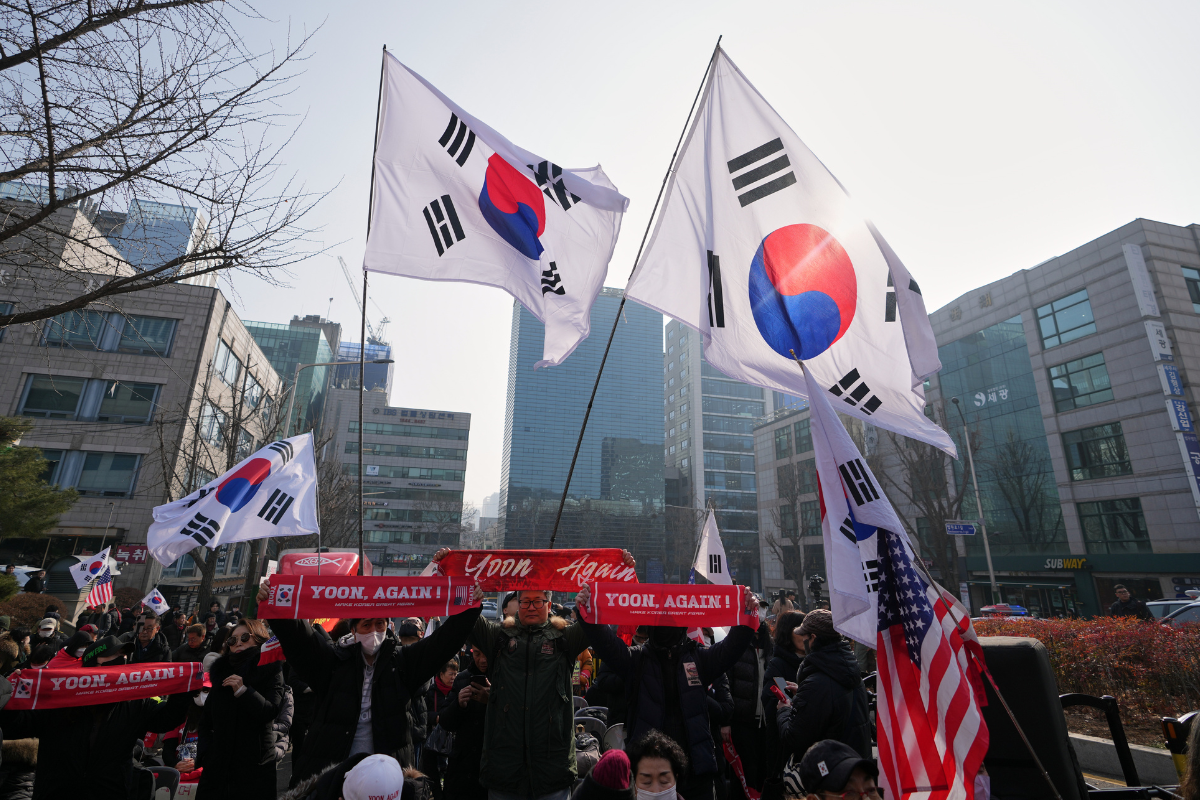
Seoul Central District Court is expected to return a verdict on the rebellion charges, which carry a sentence of either life imprisonment or the death penalty, on Feb. 19.
The most recent death sentence in South Korea was handed down in 2016, but the country has not executed anyone since 1997, after President Kim Dae-jung introduced a moratorium on executions in 1998.
Park SungBae, a lawyer who specializes in criminal law, said there is little chance that the court would hand Yoon the death penalty, adding it was likely the former president would receive a life sentence or a sentence of 30 years or more in prison.
Park said the court would take into account the brief duration of the decree and that there were no casualties, but also that Yoon has not shown remorse for his actions.
Yoon denies all charges.
The Associated Press and Reuters contributed to this report.
 Friends Read Free
Copy
Facebook
Tweet
Friends Read Free
Copy
Facebook
Tweet