
France has adopted a new energy law expanding nuclear power as part of a broader effort to phase out fossil fuels.
Under the new PPE3 framework, France aims to phase out fossil fuels by 45 percent within five years and coal-fired power plants by the end of 2027, according to the government’s energy planning document.
The law was pushed through by government decree on Feb. 13.
France’s largest party by vote share, the right-wing National Rally, stated that it will challenge the energy law in court and in parliament, saying it was adopted unlawfully and effectively pushed on France by the European Commission.
“We need to stop our internal family squabbling. We need both nuclear and renewables,” French Finance Minister Roland Lescure told reporters.
“Nuclear is the backbone of our electricity system.”
Lescure said the first new reactor under the program is expected to be inaugurated by 2038.
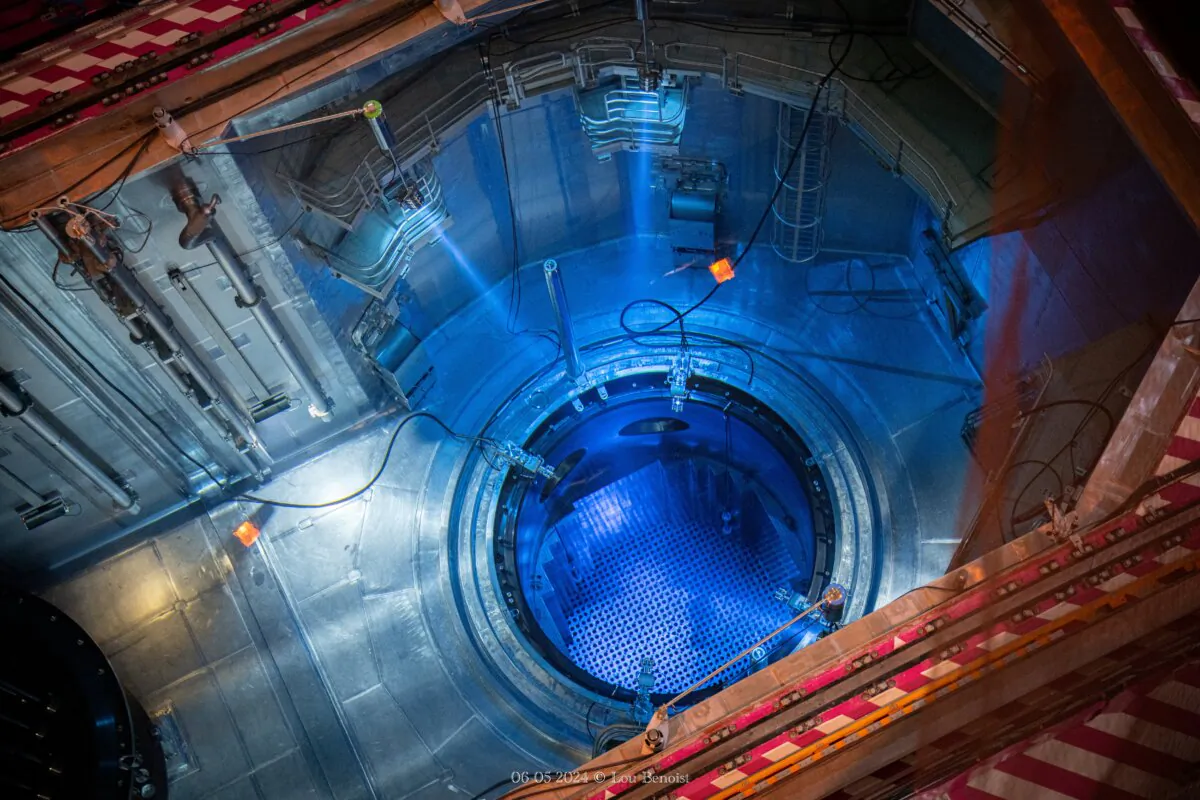
France boasts a very active and longstanding nuclear power program; its first commercial nuclear reactor connected to the electricity grid in 1963. France generates about 70 percent of its electricity from nuclear power, the highest share worldwide.
In a government statement posted on Feb. 13, France set out its long-term energy strategy.
The plan provides for the construction of six new EPR2 nuclear reactors, with an option for eight additional reactors at a later stage. First commissioning of the new reactors is scheduled to begin in 2038.
The strategy also includes consolidating and extending the life of France’s existing nuclear fleet of 57 reactors, alongside measures to optimize output from the current system.
The government is targeting nuclear electricity production of 380 terawatt-hours (TWh) by 2030.
The revised French energy plan sets an offshore wind target of 15 gigawatts (GW) by 2035, framed as “measured and realistic” to align with industrial capacity and grid/infrastructure constraints.
The target is lower than that of both the UK and Germany.
A target of 43 to 50 GW of offshore wind capacity by 2030 is central to UK policy, aligned with the Climate Change Act 2008, which requires the government to set a legally binding target of net-zero greenhouse gas emissions by 2050. The UK is one of the very few countries to embed net-zero objectives in law through a statutory obligation.
Germany’s official offshore wind targets are also significantly higher than France’s, with at least 40 GW of offshore wind capacity by 2035 under current policy frameworks.
Marine Le Pen, head of the National Rally’s parliamentary group, criticized the law and claimed that PPE3 was adopted “under pressure” from the European Commission.
She said she would take procedural and legal action against the government’s energy decree.
“Basically, this PPE 3 confirms an explosion in costs, and therefore energy prices in France, causing cascading disastrous effects on our entire economy and the purchasing power of families,” Le Pen said in a Feb. 21 statement.
In a Feb. 21 post on X, she said: “It will cost hundreds of billions of euros in surcharges, taxes, and other subsidies, to the detriment of the French people’s purchasing power and the competitiveness of our businesses.
“This isn’t a revival of nuclear power but a massive acceleration of land and sea wind turbine installations that destroy our landscapes, along with Chinese-manufactured photovoltaics.”
Reuters contributed to this report.
 Friends Read Free
Copy
Facebook
Tweet
Friends Read Free
Copy
Facebook
Tweet