
Explainer
Last week, Ontario Education Minister Paul Calandra introduced a bill that would give him sweeping powers to intervene when a school board has, in his words, “lost its way.” One key change would require school boards to get approval from the minister before renaming an existing school—a move that follows the Toronto District School Board’s decision earlier this year to rename three schools named after historical Canadian figures.
The main goal of the bill, called Bill 33 or the “Supporting Children and Students Act, 2025,” is to expand government oversight of school boards and allow faster intervention when concerns arise, particularly around financial mismanagement.
However, it also includes provisions to address non-financial issues, such as setting rules for school renaming, requiring university admission policies to be “merit-based,” and allowing local police to engage with students to create a culture of “mutual respect.”
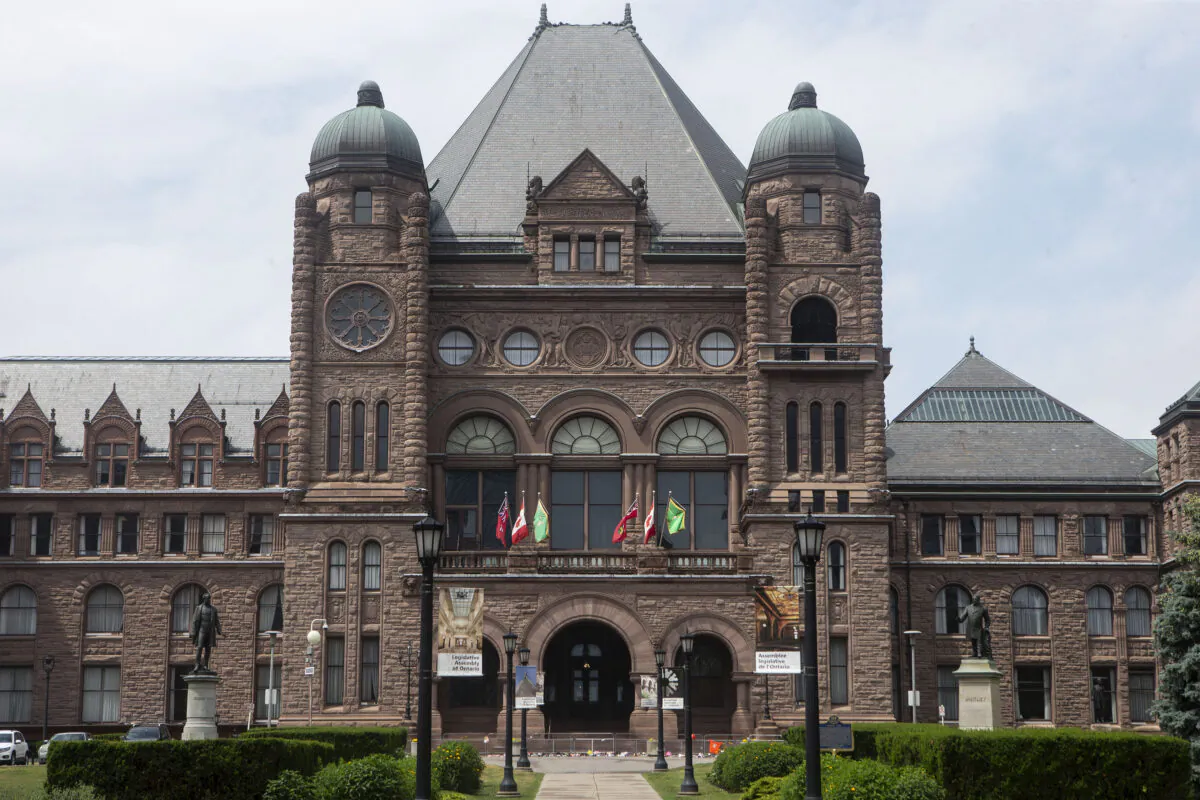
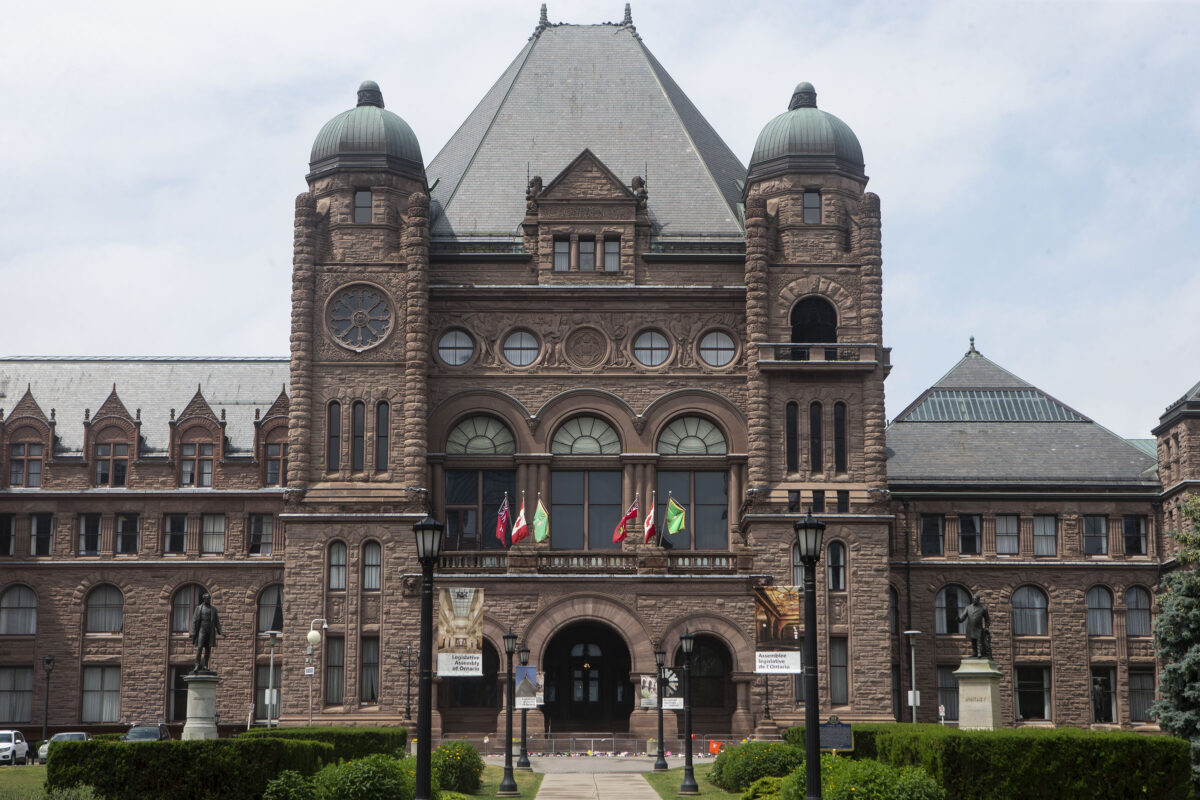
The Opposition NDP argues the bill gives the minister more power “without any guardrails or accountability,” while “doubling down on policing schools” and “silencing student voices.” Meanwhile, the Elementary Teacher’s Federation of Ontario has described the legislation as a step toward “taking power from democratically elected trustees and replacing community decision-making with directives from Queen’s Park.”
The bill, which passed first reading on May 29, proposes amendments to four pieces of legislation, including the Child, Youth and Family Services Act, 2017; the Education Act; the Ministry of Training, Colleges and Universities Act; and the Ombudsman Act.
Here are some key proposals under Bill 33.
Renaming Schools
In introducing the bill on May 29, Calandra said he wanted to ensure taxpayer dollars were invested into delivering “high quality education.” He said a number of school boards had veered away from that objective, with some “wasting resources on endless discussions just to change school names.”
“Our plan would establish ministerial authority to oversee school naming and to limit the time, money, that boards spend on that,” Calandra said.
The minister cited the case of the Toronto District School Board (TDSB), which he says has spent “thousands of dollars” to determine whether to change the names of three schools.
In February, TDSB voted in favour of renaming three schools bearing the names of Canada’s first prime minister Sir John A. Macdonald, British politician Henry Dundas, and Egerton Ryerson, the founder of public education in Ontario.
The board said the decision was based on a recommendation “on the potential impact that these names may have on students and staff based on colonial history, anti-indigenous racism and their connection to systems of oppression.”
The board had announced its plans to conduct a city-wide review of school names in 2021, and in 2023 trustees approved the revision of the school naming and renaming policy.
Minister Calandra noted that the TDSB’s spending on school renaming came as it was also reporting potential teacher layoffs and swimming pool closures due to funding pressures.
“That is not something that they should be spending money on—spending valuable taxpayers’ dollars on,” Calandra said. “So that authority will be vested in the minister of education.”
Under the new bill, school boards would need approval from the education minister to rename existing schools, and the minister would have the authority to reject proposed names. If the bill passes, it would require boards to apply for approval for any name changes made on or after Jan. 1, 2025, which would apply to the TDSB.
The Epoch Times sought comment from the TDSB but did not hear back by publication time.
Increased Government Oversight
Bill 33 would allow the minister to order an investigation or take control of a school board faster when concerns about its practices involve “matters of public interest.”
The province has for some time been probing a number of school boards over “financial mismanagement.” In a recent move, the province assigned a supervisor to oversee a London-area school board, while launching financial investigations at an Ottawa school board and two Toronto-area school boards, including the TDSB.
In introducing the new bill, Calandra said that under the current legislation, it can take months for the minister to step in when there are concerns about a school board’s actions, because intervention depends on a third-party investigation and a recommendation from that party.
The new bill allows the minister to direct an investigation if he “has concerns about a matter of public interest,” which the province says includes whether boards, board members, and directors of education are carrying out their duties in an “appropriate manner,” in accordance with the Education Act.
The bill would also allow the minister to issue directions to a school board on matters considered to affect the public interest, and to take control of the board if it fails to comply. It would also give the minister the authority to establish policies and guidelines respecting school boards’ expense regulations.
During his May 29 announcement, the minister cited examples of what he described as mismanagement of funds, including school board trustees in one case travelling to Italy to purchase art for a school, and another board spending nearly $40,000 on a staff retreat.
He described the latter as a “highly egregious waste of taxpayer dollars,” and said that if the proposed bill had been in place, the ministry would have been able to “step in much sooner in order to make change.”
Police Presence and ‘Merit-Based’ Admissions
The bill would also require school boards to give access to local police services into school premises and implement school resource officer programs, which the minister says would help “build relationships between youth and police, and actively promote a positive behavior,” while creating a “culture of mutual respect.”
Some teacher groups have opposed school resource officer programs. In a May 29 statement on Bill 33, the Elementary Teachers’ Federation of Ontario raised concerns about their return, citing an Ontario Human Rights Commission report which argues that “police in schools may subject Black and other racialized children, and particularly Black boys, to a higher level of surveillance that could ultimately significantly impact their mental health and education.”
The education minister said having school resource officers in the classroom is “extraordinarily important” and that he disagreed with those who suggested otherwise. “I have absolute faith in our police services to work with us and work with school officials to ensure that it is a program that works as it is intended to work,” he said.
Mark Baxter, president of the Police Association of Ontario, expressed support for the province’s initiative, saying that school resource officer programs play “a crucial role in fostering trust, safety, and mentorship within our schools.”
If passed, the implementation of school resource officer programs would begin in the next school year.
In addition, Bill 33 seeks to require all publicly assisted colleges and universities to have “clearly outlined, merit-based admissions policies” in an apparent contrast to diversity, equity, and inclusion guidelines. However, the minister did not elaborate on this amendment when announcing the bill on May 29.
 Friends Read Free
Copy
Facebook
Tweet
Friends Read Free
Copy
Facebook
Tweet