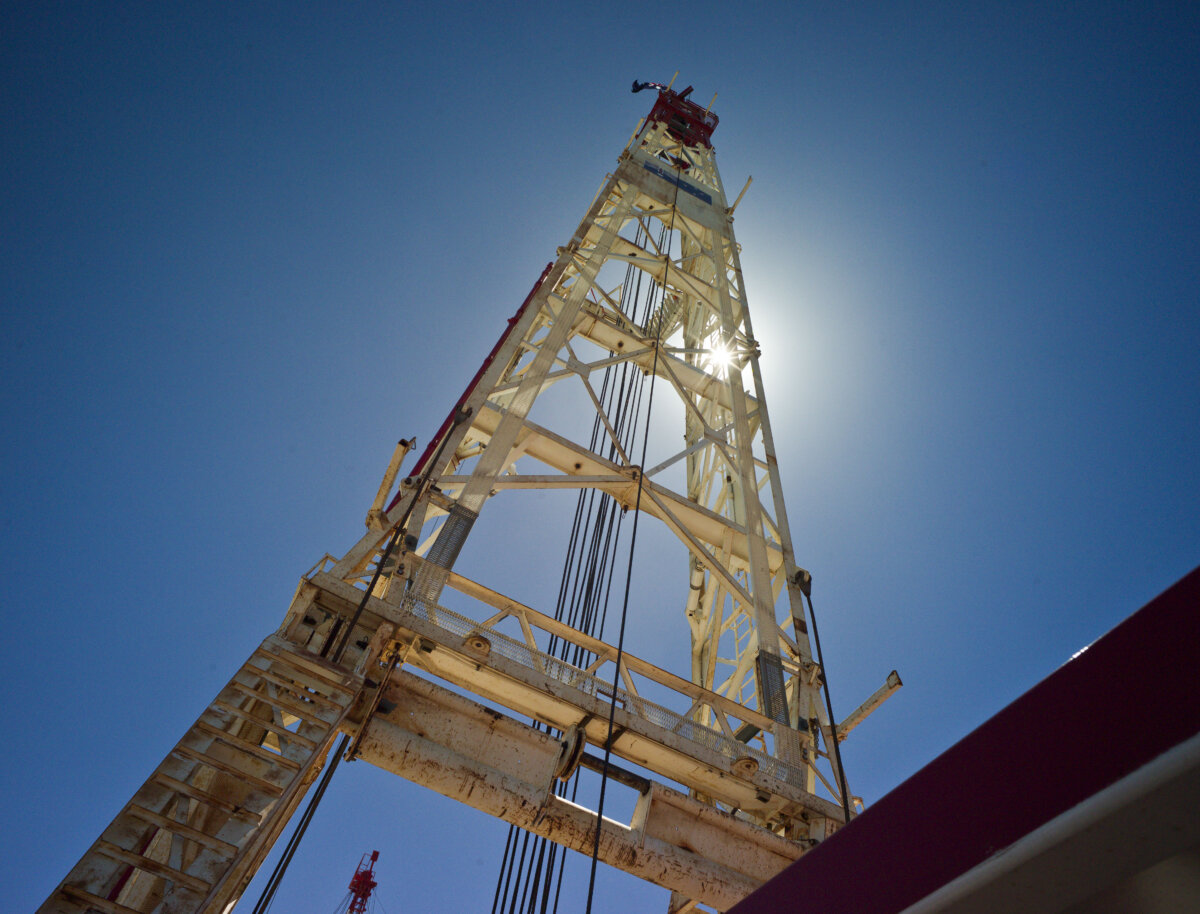

In the wake of the 2026 Iran war and the subsequent disruption of global supply chains, Australia’s search for domestic fuel security has centered on a remote patch of Queensland: the Taroom Trough.
With the closure of the Hormuz, the world’s most critical oil transit point, Australia currently finds itself in a precarious position.
The nation currently consumes 1.1 million barrels per day, importing roughly 90 percent of its refined fuel from overseas facilities in South Korea and Singapore.
This vulnerability has transformed regional exploration from a commercial venture into a matter of national resilience.
Key Points
- The Discovery: Initial drilling at the “Canyon 1H” well has produced high-quality “light” crude oil, which is easier and cheaper to refine into transport-grade petrol.
- The Scale: The Taroom Trough covers approximately 750 square kilometres, with geology mirroring the Permian Basin in the U.S., the region that drove American energy self-sufficiency.
- The Conflict: The oil sits directly beneath the Great Artesian Basin, raising significant environmental concerns regarding the protection of Australia’s most vital inland water source.
- The Timeline: Experts warn that even with aggressive investment, scaling the field to a level that impacts national supply could take a decade or more.
Geological Rewards vs. Environmental Risk
The technical potential of the region is significant.
Graham Young, from the Australian Institute of Progress, notes that results from Omega Oil and Gas have confirmed the presence of 49.5 API light crude.
“The potential is there, but it might not be recognised for any number of reason,” Young told The Epoch Times.
The primary reason is a massive geological hurdle: the Great Artesian Basin. This underground water system is the lifeblood of rural Australia, providing the only reliable fresh water across much of the arid interior.
“The oil is under the basin, and it needs to be brought to the surface,” Young said.
“Even if the engineering says this is feasible, will the communities that depend on artesian water accept this?”
The Economic Risk
Beyond environmental tensions, Young highlighted the economics of the Trough remain daunting.
Each well costs between $15 million and $20 million to drill. For the region to become a major contributor to national supply, thousands of these wells would eventually be required.
“The wells are expensive to drill,” Young said. “It will require a lot of oil to justify the expense.”
He also highlighted “sovereign risk” as a major deterrent for the multi-billion dollar investment needed.
He cited Queensland’s recent hike in coal royalties and federal proposals for a 25 percent hike on gas exporters as signals that may spook international energy majors.
“It will also need major oil producers involved,” he said. “Even the Omega field on its own, which won’t produce enough to make us self-sufficient, is going to be somewhere in the region of $4 to $5 billion.”
The Path to Self-Sufficiency
While Australia was self-sufficient through Bass Strait oil until the 1990s, returning to that status will not happen overnight.
“Even in areas with known and established geology, it can take a long time to bring a field to capacity,” Young said.
“You could look at Senex in the Surat Basin which acquired acreage from Central Petroleum and has Gina Rinehart as a shareholder and took about eight years to scale up.”
To accelerate this, the Queensland government announced competitive tenders on March 5 for 18 new exploration areas.
Minister for Natural Resources and Mines Dale Last stated that the new exploration areas will cover more than 7,000 square kilometres.
“Queensland is positioning itself at the forefront of the next generation of resource development,” he said in a statement.
While Premier David Crisafulli said the move was another step to let the world know Queensland was “open for business.”
“Last year we opened a package of exploration areas for tender—a critical step in unlocking future energy supplies,” Crisafulli told state parliament on March 5, 2026 (pdf).
“This includes three new gas exploration areas near the Queensland-South Australia border, as well as a 750-kilometre exploration tenement in the Taroom Trough. It presents the potential to open up Australia’s first new oil province since the 1970s.”
What Lies Beneath
A critical factor in Australia’s energy future is the type of oil available.
While Australia holds an estimated 17.5 billion prospective barrels, there is a stark difference between “prospective” and “demonstrated” resources.
Much of the reserve is immature oil shale, which must be heated to extreme temperatures to be converted into a usable product, a process that is far more energy-intensive and expensive than extracting shale oil (ready-to-use crude trapped in a rock).
A 2025 study by Geoscience Australia concluded that the nation’s crude oil resources are small by world standards and are being depleted faster than they are being replenished.
With production currently dwarfed by consumption, the Taroom Trough represents one of the few remaining opportunities to reverse Australia’s energy dependency.
 Friends Read Free
Copy
Facebook
Tweet
Friends Read Free
Copy
Facebook
Tweet