
Germany’s economy ministry cut its growth forecasts in half for 2026 and 2027 amid the Iran war.
“The economic recovery expected for this year will once again be slowed down by external geopolitical shocks,” German Economy Minister Katherina Reiche said in an April 22 post on Facebook presenting Germany’s spring forecast.
The government expects 0.5 percent growth for 2026, down from an earlier projection of 1 percent, and cut its 2027 growth outlook to 0.9 percent from 1.3 percent.
The Federal Ministry for Economic Affairs and Climate Action noted that the conflict in the Middle East, with the closure of the Strait of Hormuz, has “especially” led to shortages and a rise in the price of energy and other commodities, which also affect companies and private households in Germany.
The ministry now expects inflation to increase to 2.7 percent this year and 2.8 percent in 2027, up from 2.2 percent last year.
“The further economic development is associated with considerable uncertainties and depends significantly on the developments of the conflict in the Middle East,” the ministry stated.
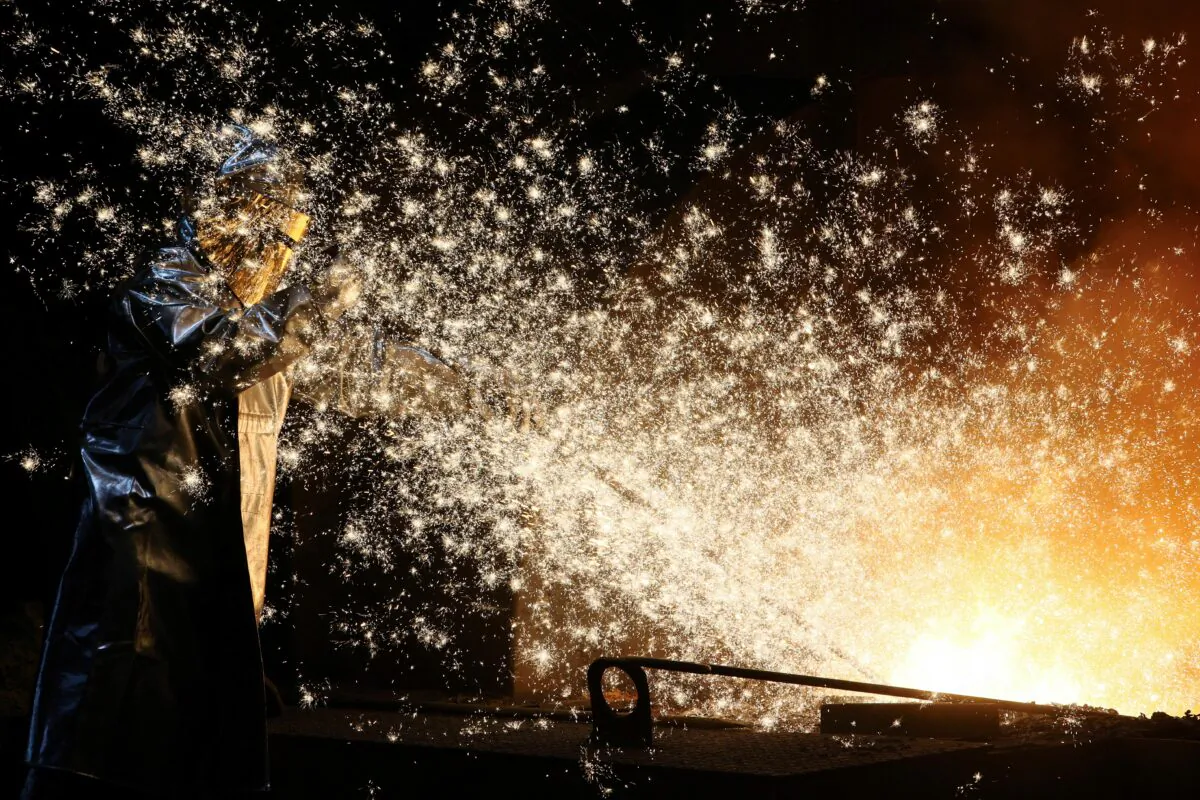
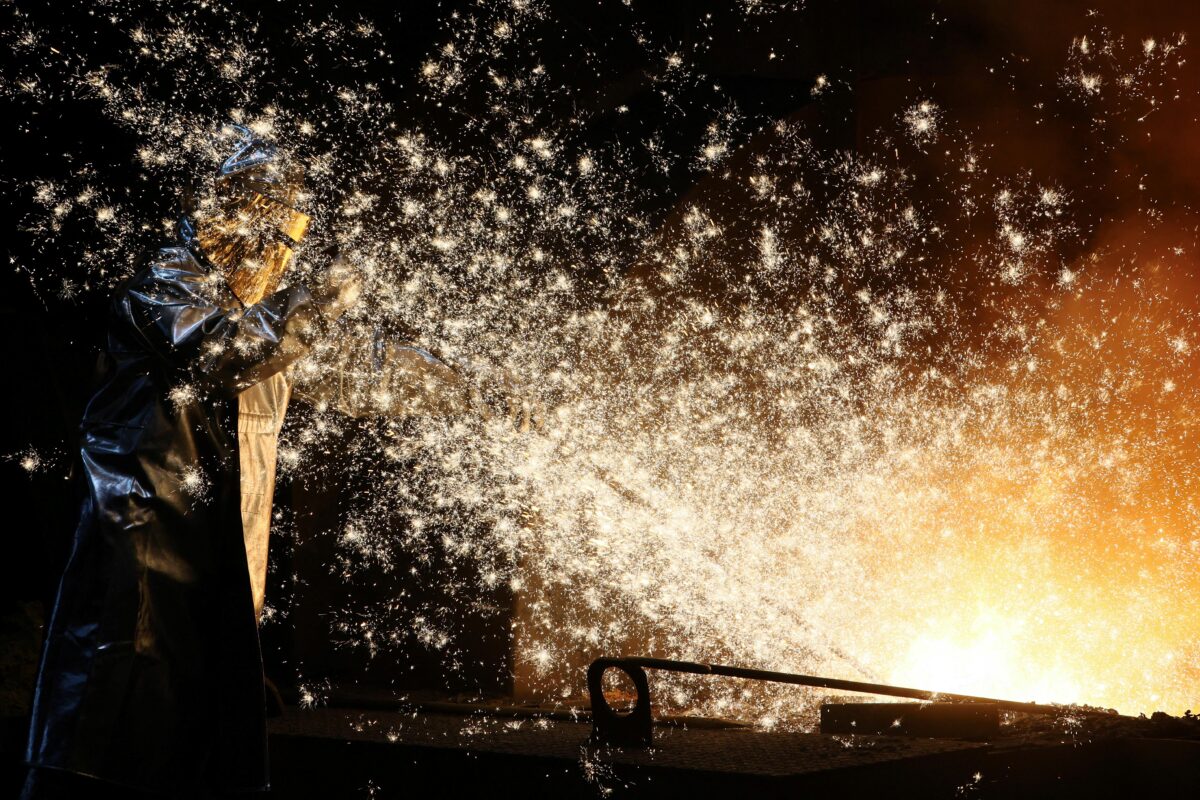
Germany, Europe’s largest economy, known for its skilled labor force and high-end exports, was already facing significant hurdles prior to the Iran conflict.
Since the United States and Israel launched strikes on Iran on Feb. 28 and the Iranian regime began targeting commercial ships in response, shipping through the Strait of Hormuz, which runs along Iran’s coast, has slowed to a near standstill.
In Germany, a combination of energy crises, political instability, and declining competitiveness has already been threatening Germany’s long-standing status as the major industrial force of the European Union.
After two years of contraction in 2023 and 2024 and stagnation in 2025, the country has been struggling with the loss of affordable Russian gas, historic Volkswagen plant closures, and fierce competition from cheaper Chinese electric vehicles.
The economic turmoil has also revived questions about the country’s constitutionally enshrined debt brake.
Introduced in 2009 under Chancellor Angela Merkel to prevent burdening future generations, the debt brake leaves no room for structural borrowing, apart from exceptional circumstances, under which it is then allowed structural deficit spending of up to 0.35 percent of gross domestic product.
During the COVID-19 lockdown, Germany borrowed about 470 billion euros ($489 billion), suspending its debt brake.
Because the economic outlook has been downgraded, the government will be able to borrow an additional 2.7 billion euros ($3.17 billion) for its 2027 budget, as growth is now expected to be weaker than initially forecast.
German Finance Minister Lars Klingbeil is aiming to complete the first draft of the 2027 budget by the end of this month.
On April 20, the Federation of German Industries (BDI), which represents 39 German industry associations, stated that the conflict in Iran had added fresh downside risks, including costlier energy, broader price pressures, and disruptions to shipping and logistics.
“Since 2022, industrial production in Germany has fallen every year. For 2026, we no longer expect a recovery, but stagnation,” BDI President Peter Leibinger said.
Across the EU, production is expected to grow only slightly by 0.5 percent this year due to the war, it stated.
The European Commission on April 22 stated that it wants to wean off gas completely.
EU energy commissioner Dan Jorgensen said the Iran war’s damage to Middle Eastern gas infrastructure meant that prices would remain higher than expected for “a couple of years.”
“Even a best case scenario where the war ends very soon is still a bad scenario,” he said.
“We really do need to get rid of our dependency on gas as fast as possible. So for us, this means speeding up more clean energy.”
Reuters contributed to this report.
 Friends Read Free
Copy
Facebook
Tweet
Friends Read Free
Copy
Facebook
Tweet