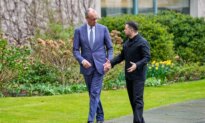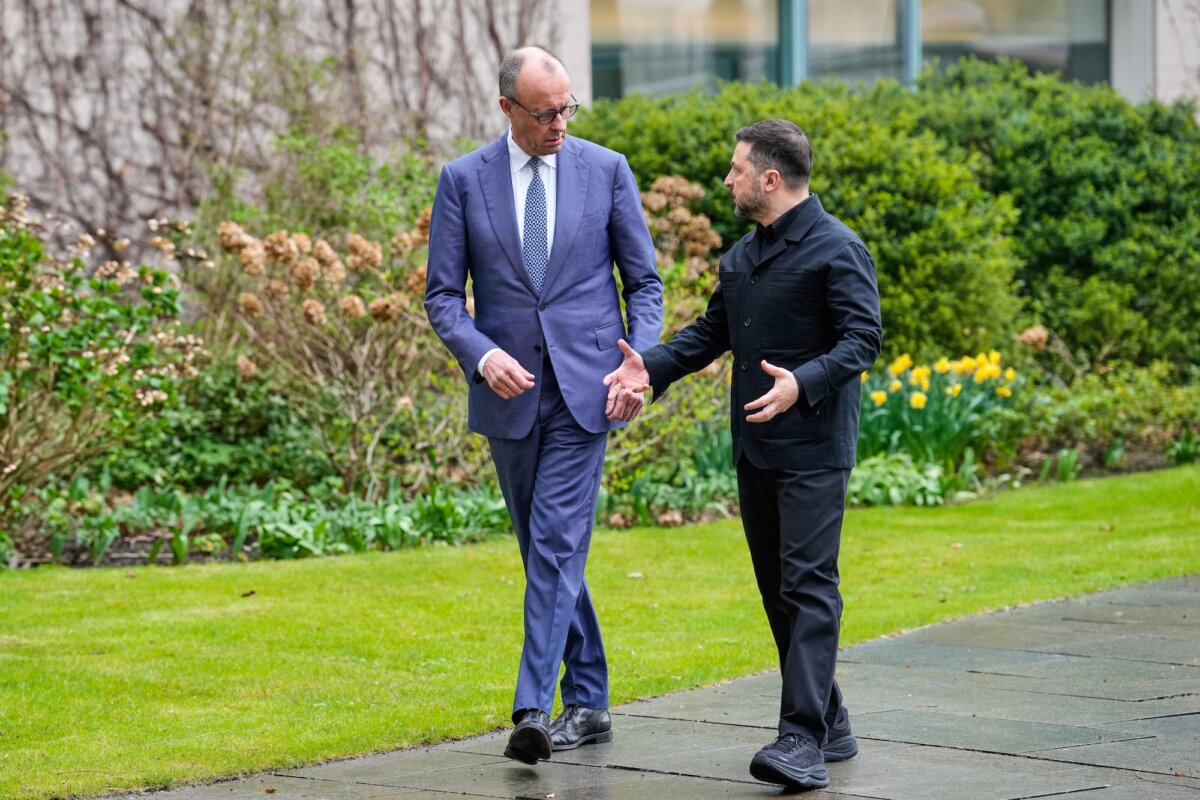

German Chancellor Friedrich Merz has proposed granting Ukraine associate EU membership, which he said could help facilitate a deal to end the war with Russia.
In a May 18 letter to EU leaders, viewed by The Epoch Times, Merz suggested that Ukraine could be allowed to participate in summits and ministerial meetings of the 27-nation bloc, without the ability to vote on decisions.
His letter comes as the 27-nation bloc considers whether to attempt to launch its own negotiations with Russian President Vladimir Putin.
Ukraine has long sought EU membership, first expressing its long-term aspiration to join the bloc in 1993, just two years after it became independent with the break-up of the Soviet Union.
Ukraine formally applied for membership in February 2022, just days after Russia escalated the ongoing conflict between the countries with a full-scale invasion.
The consensus among European officials is that it is unrealistic for Ukraine to achieve full membership in the next few years, although a 2027 date was penciled into a 20-point peace plan discussed among the United States, Ukraine, and Russia.
‘Security Guarantee’
The German leader proposed that EU members commit to applying the bloc’s mutual assistance clause to Ukraine “in order to create a substantial security guarantee.”
Analysts say such a route into the EU could help Ukrainian President Volodymyr Zelenskyy sell an unfavorable peace settlement to Ukrainians, particularly if the country does not regain control of all its territory lost to Russia, or join the NATO military alliance.
Merz’s proposal could represent a middle ground between quick accession and Ukraine’s current status as a candidate country at the beginning of the process.
The process for joining the EU is long and bureaucratic, involving detailed negotiations and legal reforms to meet the bloc’s democratic and economic demands.
Candidate countries must align their laws across 35 policy areas, ranging from justice to farming and fishing.
“My proposal reflects Ukraine’s particular situation, a country at war. It will help facilitate the ongoing peace talks as part of a negotiated peace solution,” Merz wrote, adding this was “essential not only for Ukraine’s but for the entire continent’s security.”
‘Not Membership Light’
He said this “would not be a membership light,” and would “go far beyond” the Association Agreement that currently governs EU–Ukraine relations.
Accession to the EU requires the consent and ratification of each of the bloc’s 27 members, a process that could pose significant obstacles.
The German chancellor outlined the benefits Ukraine might receive as an associate member, a category that does not exist under current EU rules, including a Ukrainian non-voting associate commissioner of the European Commission and non-voting representatives at the European Parliament.
Merz suggested a “snap-back” mechanism could be put in place in the event that Ukraine reneges on rule-of-law standards or the accession process.
He said the proposal will not affect the status of other candidate countries and suggested the bloc “look into innovative solutions” for those that have long sought to join the EU.
Merz plans to discuss his ideas with fellow European leaders, writing, “My aim would be to reach an agreement soon, and to set up a dedicated Task Force to work out the details.”
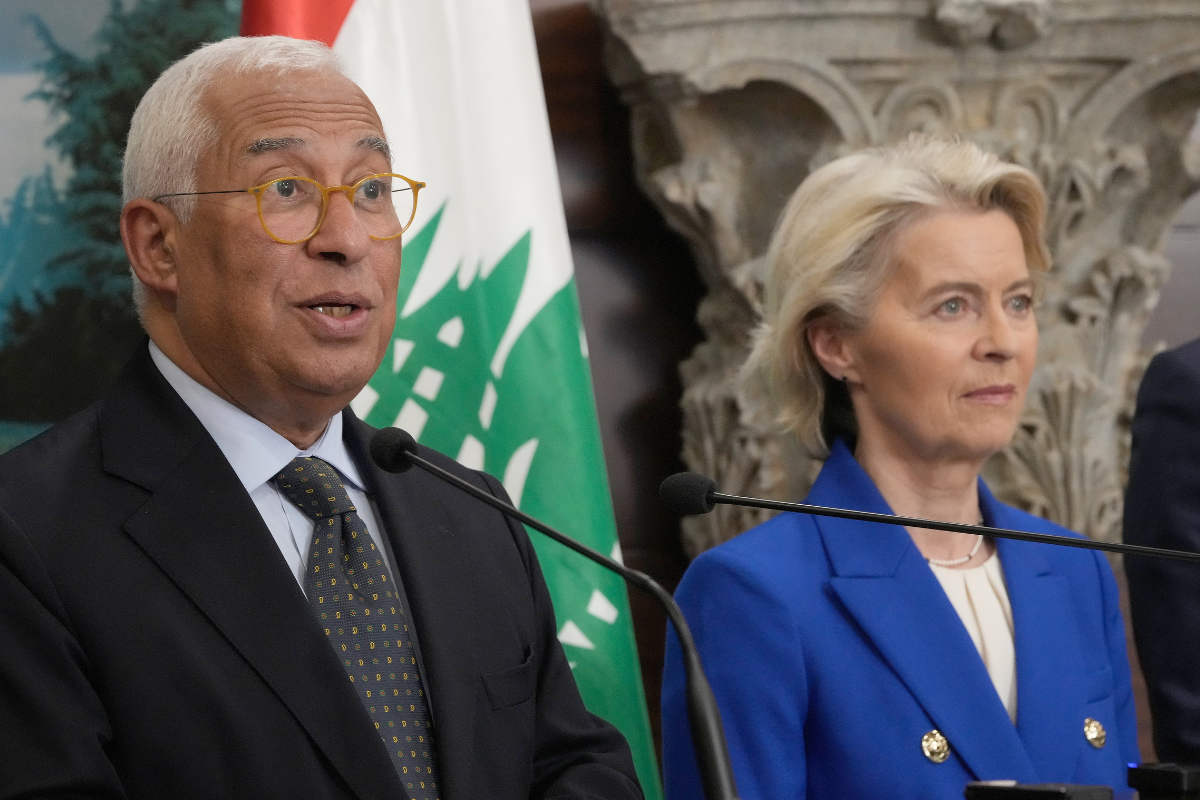
European Council President António Costa said last month that official membership talks with Ukraine should be opened “without delay,” while European Commission President Ursula von der Leyen has been consistently supportive of the Ukrainian application to join.
Zelenskyy on Wednesday welcomed signs of possible progress in the accession negotiations, saying in an address that it is “very important for us. Ukraine has fulfilled everything necessary for this progress.”
Hungarian Obstacle
In past remarks, Hungary’s then-Prime Minister Victor Orban said that Ukraine is “not ready” to become a full EU member, pointing to endemic corruption in Ukraine, along with Kyiv’s alleged mistreatment of ethnic Hungarians, to support his assertion.
With a new pro-EU government in place following the April election, Hungary’s position could change.
The German leader said that his approach should be extended to other countries waiting in line to join, including those in the Western Balkans, where EU leaders are set to hold a summit next month.
Merz suggested that his proposal “will help facilitate the ongoing peace talks as part of a negotiated peace solution. This is essential not only for Ukraine’s but for the entire continent’s security.”
Zelenskyy sees EU membership as a security guarantee for Ukraine’s stable future once the war ends.
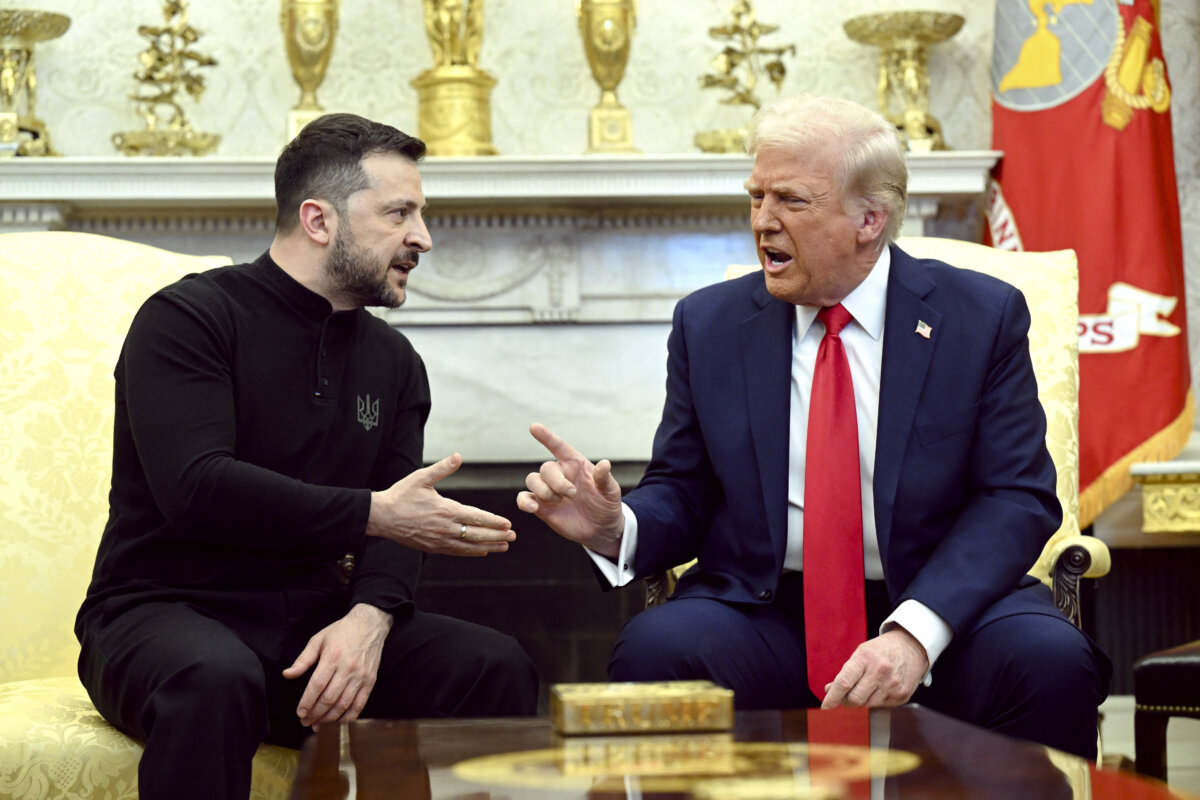
U.S. President Donald Trump has criticized the idea of NATO membership for Ukraine, calling the proposal “completely unhinged.”
Russian President Vladimir Putin has repeatedly stated that he considers NATO’s expansion to Ukraine a threat to his nation’s security. Putin says he has no objection to Ukraine joining the EU since this is not a military alliance.
EU–Russia Talks Proposed
Earlier this month, Costa said that “we need, in the right moment, to have talks with Russia to address our common issues on security.”
He said such negotiations need not “disturb” U.S.-led talks, but that Europe should address its own security concerns.
European media have recently speculated about possible EU negotiators, including former German Chancellor Angela Merkel, former European Central Bank chief Mario Draghi, and another former German chancellor and Russian speaker, Gerhard Schröder.
Putin has suggested that he might talk to Schröder, but some officials oppose this because of the German’s ties to the Russian energy sector and alleged closeness to the Russian president.
Zelenskyy has welcomed a European role, saying on Sunday that “Europe must be involved in the negotiations. It is important for Europe to have a strong voice and presence in this process, and it is worth determining who will represent Europe specifically.”
Reuters and The Associated Press contributed to this report.
 Friends Read Free
Copy
Facebook
Tweet
Friends Read Free
Copy
Facebook
Tweet