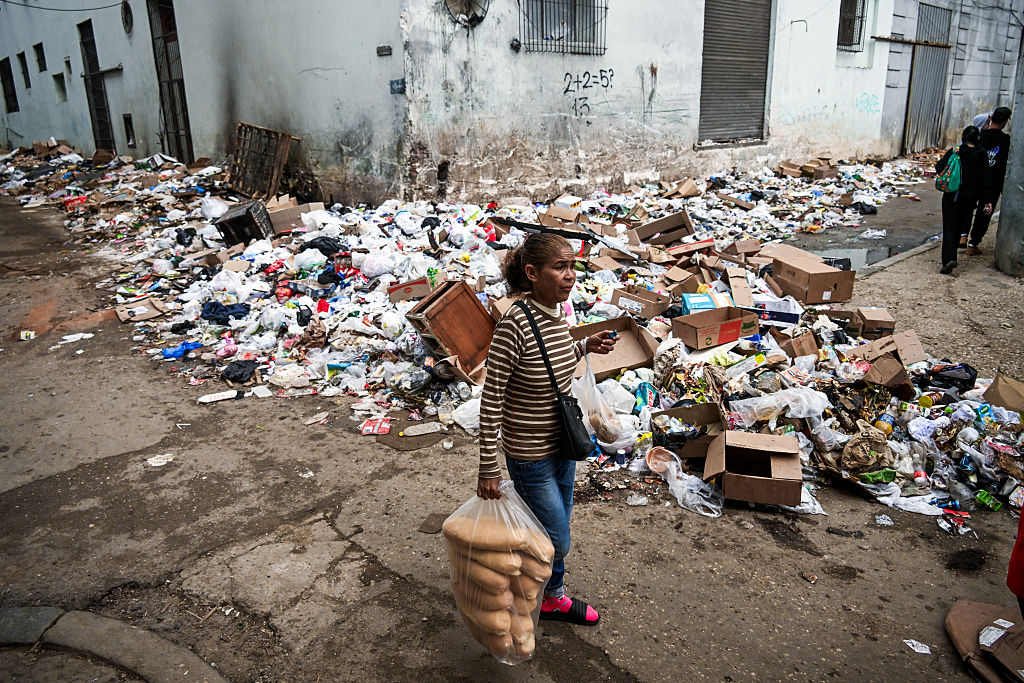

Ottawa is warning Canadians in Cuba of a worsening situation on the ground as shortages bring increased unpredictability.
The communist-ruled Caribbean island is typically a destination of choice for thousands of Canadian travellers fleeing the cold during the winter months.
The Canadian government issued an update to its Cuba travel advisory this week which cautioned travellers on shortages of basic necessities.
“The situation is unpredictable and could deteriorate, disrupting flight availability on short notice,” says the travel advisory issued by Global Affairs Canada.
The advisory warns individuals to exercise a “high degree of caution” in Cuba, noting that shortages can also affect beach resorts. These include shortages of electricity, fuel, and basic necessities such as food, water, and medicine.
Canadian visitors to Cuba dropped sharply last year in the first quarter. The country remained the fourth most popular travel destination for Canadian residents with 219,000 visitors, according to Statistics Canada. Only Mexico, the Dominican Republic, and China had more Canadian travellers.
Canada’s warning about the situation in Cuba came around the same time the U.S. embassy in Havana issued a security alert on Feb. 3. The alert says the electrical grid is getting “increasingly unstable” with prolonged scheduled and unscheduled power outages occurring daily and also hitting the capital. The embassy also noted a fuel shortage leading to long lines at gas stations.
“Take precautions by conserving fuel, water, food and mobile phone charge, and be prepared for significant disruption,” says the alert.
The country has been under rolling black-outs for an extended period and while tourist resorts can mitigate the impacts with generators, fuel is increasingly scarce as a result of recent U.S. measures amid increased pressure on Cuba from Washington.
U.S. President Donald Trump signed an executive order on Jan. 29 to use the International Emergency Economic Powers Act to impose tariffs on any country shipping oil directly or indirectly to Cuba.
To use these powers, Trump declared a national emergency, accusing Cuba of taking “extraordinary actions that harm and threaten the United States.”
“The regime aligns itself with — and provides support for — numerous hostile countries, transnational terrorist groups, and malign actors adverse to the United States,” Trump said, naming countries Russia, China, and Iran, and terrorist groups Hamas and Hezbollah.
Trump had dealt a blow to Cuba by capturing allied Venezuelan Leader Nicolás Maduro in early January. Venezuela’s socialist regime has close ties to Cuba and was its main oil supplier.
Shipments of Venezuelan oil to Cuba stopped amid the U.S. administration aiming to take over the Venezuelan oil industry and imposing a blockade in the Caribbeans.
Mexico was another key oil supplier to Cuba and became its main source of imports following U.S. actions on Venezuela.
Trump said on Feb. 2 that Mexico had agreed to stop sending oil to Cuba. This was disputed on Feb. 4 by the head of the Mexico’s state-own energy company Pemex. Victor Rodriguez said Pemex would honour its contract with Cuba and continue with exports of crude and refined oil products as long as they’re available.
Rodriguez was speaking alongside Mexican President Claudia Sheinbaum at her morning press conference, who said that humanitarian oil shipments to Cuba far outstripped commercial obligations.
“The problem we have now is that the United States is going to impose tariffs on any country that sells to Cuba, so we are exploring all diplomatic avenues to resolve this problem, because we don’t want it to affect Mexico either,” she said.
Reuters contributed to this report.
 Friends Read Free
Copy
Facebook
Tweet
Friends Read Free
Copy
Facebook
Tweet