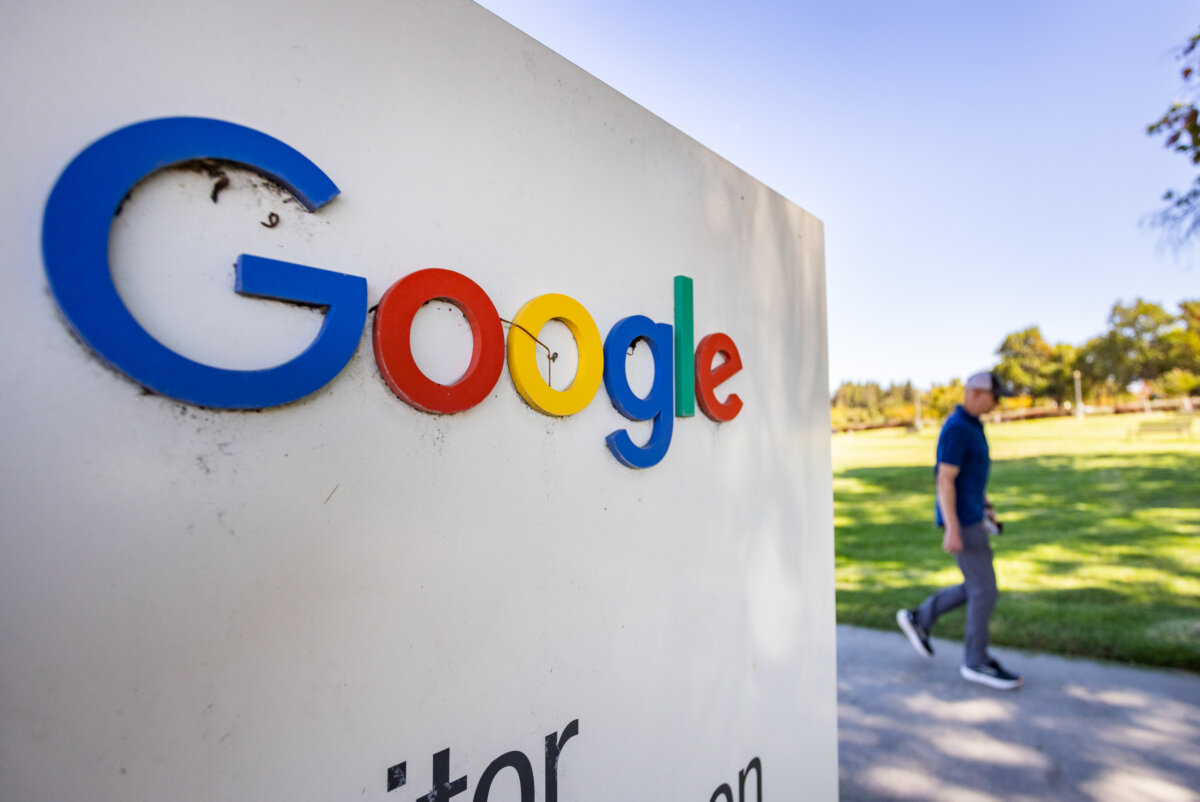

Google can keep its Chrome browser, a judge ruled in Washington this week, settling a five-year antitrust case that threatened to break up the tech giant.
At the U.S. District Court for the District of Columbia on Sept. 2, District Judge Amit Mehta ruled in the case that Google must open up its market-sharing capabilities to rivals and forbade the company from creating exclusive contracts.
Google is also allowed to retain its Android operating system, which, along with Chrome, is crucial to its online business strategy.
The Department of Justice’s (DOJ’s) Antitrust Division filed the lawsuit in October 2020 along with 11 state attorneys general, including those from Arkansas, Florida, Georgia, Indiana, Kentucky, Louisiana, Mississippi, Missouri, Montana, South Carolina, and Texas.
A landmark ruling in United States v. Google a year ago determined that Google was a monopolist due to its violation of antitrust law by using payments to browser developers, mobile device manufacturers, and wireless carriers to become the default search engine and prevent people from trying alternatives.
Devices had come preloaded with Google as the default search engine, forcing rivals out of the market.
U.S. Attorney General Pamela Bondi hailed the ruling as a win for accountability over monopolies.
“This decision marks an important step forward in the Department of Justice’s ongoing fight to protect American consumers,” she said in a statement on Sept. 2.
The DOJ had initially sought divestiture of Chrome by Google as a remedy, but Mehta’s order denied that because Chrome does not operate as an independent business and, therefore, it could result in product degradation “and thereby impact users.”
Google cheered the judge’s decision but was adamant it had done nothing wrong.
“Competition is intense and people can easily choose the services they want,” the company said in a statement, attributing the outcome of the case to a rise in artificial intelligence (AI).
“Today’s decision recognizes how much the industry has changed through the advent of AI, which is giving people so many more ways to find information.”
Although Google is allowed to continue paying companies for the distribution of its search engine on browsers, the ruling forbids it from entering into exclusive contracts with its services—including Google Search, Chrome, Google Assistant, and the Gemini app—that would make them the only available option for users.
The order also instructed Google to make certain search index and user-interaction data available to rivals to create a more competitive market, which the DOJ in its statement said had been “frozen in place for over a decade.”
With the rise of AI, it would also prevent Google from having the same monopolistic tendencies with its GenAI products.
Mehta’s ruling appears to have been influenced by the development of AI, with the emergence of platforms such as OpenAI’s ChatGPT in recent years, which has seemingly leveled the playing field.
The plaintiffs argued that for years, Google had controlled about 90 percent of the online search market and 95 percent of search on smartphones.
On Aug. 5, 2024, Mehta concluded that Google was a monopolist by violating Section 2 of the Sherman Act.
The Sherman Act is an antitrust law designed to ensure fair trade between competitors, with Section 2 involving monopolization.
The case has been seen as the most significant antitrust trial of the century.
Reuters contributed to this report.
 Friends Read Free
Copy
Facebook
Tweet
Friends Read Free
Copy
Facebook
Tweet