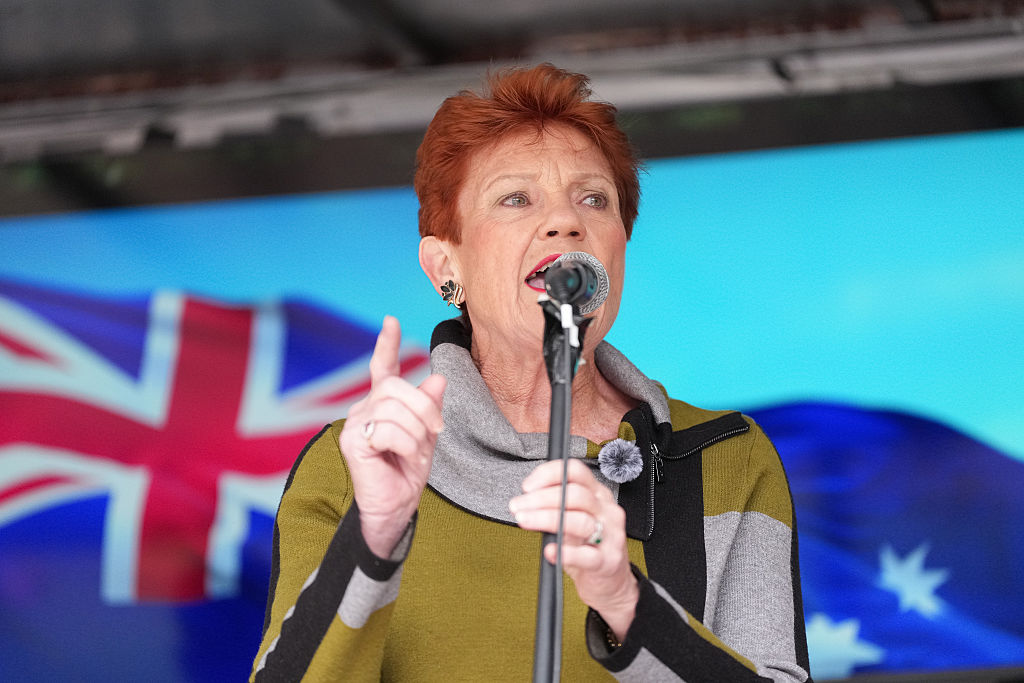

One Nation Leader Pauline Hanson has questioned Labor’s ability to defend Australia amid rising threats from the Chinese Communist Party (CCP).
During a session of the Senate Foreign Affairs, Defence and Trade Legislation Committee’s budget estimates hearing, Hanson argued that Australia needed to invest more in defence “to ensure that we can actually defend ourselves.”
“I like to think that we do have America on our side as our ally, because I tell you the truth, I don’t have confidence in either your government or previous governments that have not put enough into our country to provide the practical defence that we may need,” she said.
“And especially when we can have a Chinese ship coming out into our waters, and there are concerns about that.”
Hanson’s comments came after an incident in early 2025, when three Chinese warships changed course and sailed within Australia’s exclusive economic zone after conducting live-fire naval drills in waters between Australia and New Zealand.
The fleet subsequently spent several weeks operating around Australia, passing near key defence facilities before returning to international waters.
At the time, the Coalition criticised the Labor government for what it described as an inadequate response to the CCP.
Hanson also raised concerns about “ageing equipment” she observed during five parliamentary programs with the Australian Defence Force (ADF).
“It is pathetic for a country of our size,” she said.
Defence Funding to Reach $887 Billion by 2035–36
Following the release of the 2026–27 federal budget, Defence Minister Richard Marles defended the government’s investment in defence, claiming it was the largest increase in defence spending in peacetime history.
The budget includes an extra $14 billion (US$10 billion) over the next four years and $53 billion over the next 10 years.
When combined with the government’s earlier 2024 defence investments, the total extra funding provided by Labor rises to $30 billion over the next four years and $117 billion over the decade.
This brings the government’s total defence spending to $887 billion by 2035–36, including $425 billion over the next decade to strengthen the Australian Defence Force’s self-reliance.
Hanson Raises Concerns About Veterans’ Healthcare
Hanson also criticised the 2026–27 budget measures affecting veterans’ healthcare, including the imposition of a cap on services available to veteran card holders.
“We’ve asked our Defence Force veterans to put their life on the line for this country, now the government wants to cap the amount of healthcare they receive in return,” she said in a Facebook post.
“While NDIS fraudsters are running out of control, the government is cutting nearly a billion dollars in healthcare funding from our veterans. This is Labor’s budget.”
As part of the budget, the government introduced a $5,000 annual cap on allied health services for Veteran Card holders, which will take effect on July 1, 2027.
In explaining the measure, the Department of Veterans Affairs said the cap “will help limit unnecessary over servicing, while still supporting veterans whose care needs go beyond the limit where this is clinically indicated.”
 Friends Read Free
Copy
Facebook
Tweet
Friends Read Free
Copy
Facebook
Tweet