

U.S. Secretary of War Pete Hegseth said that more American casualties can be expected in the ongoing war in Iran after seven service members were killed during Operation Epic Fury.
“There will be more casualties,” he said in an interview with “60 Minutes” aired on March 8. “And no one is, I mean, especially our generation knows what it’s like to see Americans come home in caskets … but that doesn’t weaken us one bit. It stiffens our spine and our resolve to say this is a fight we will finish.”
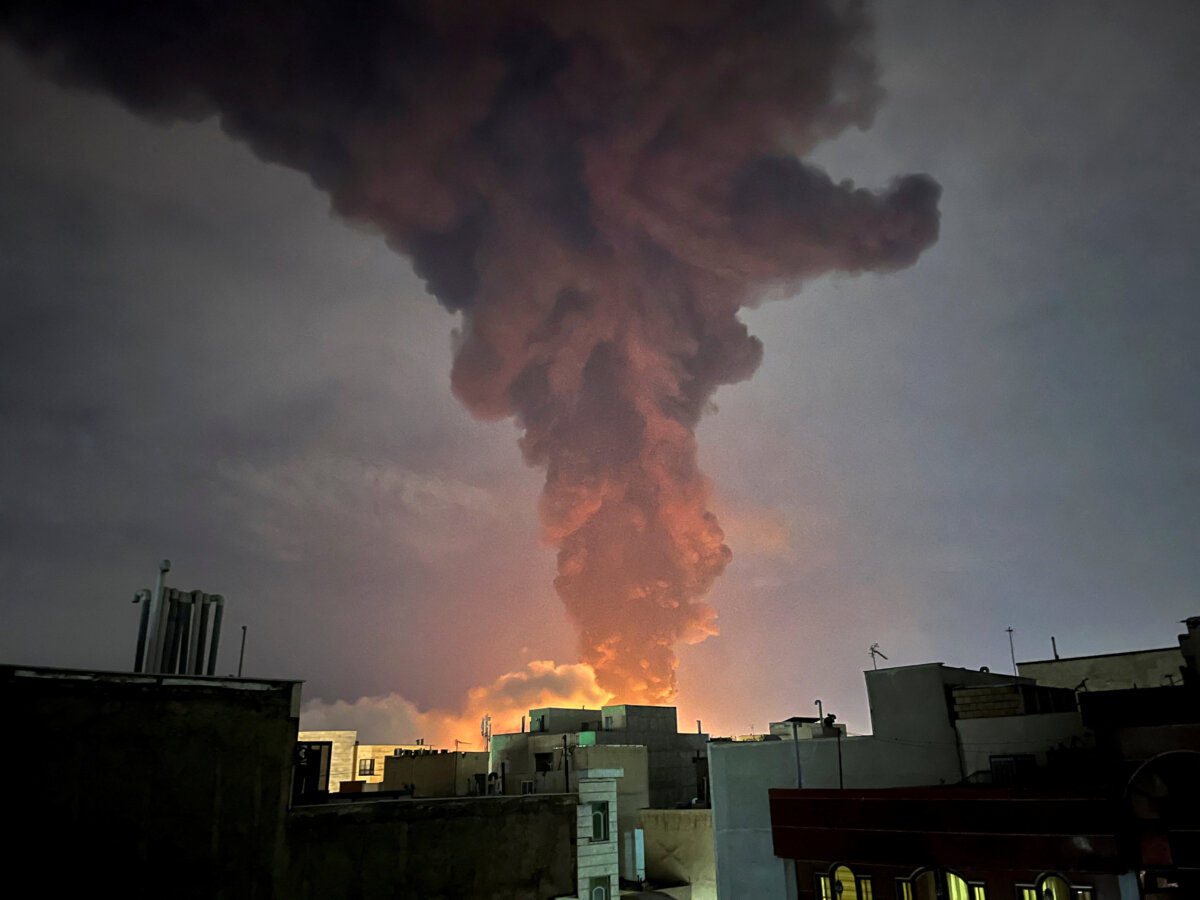
Joint strikes were launched by the United States and Israel on Feb. 28, removing much of Iran’s top leadership, including Ayatollah Ali Khamenei. His son, Mojtaba Khamenei, was named as his successor over the past weekend.
In response to the strikes, Iran has launched drones and missiles at countries in the region, including Saudi Arabia, Qatar, Kuwait, and Israel, among others.
Authorities have said that six U.S. service members were killed in a March 1 Iranian drone attack in Kuwait.
A seventh service member died of injuries that were sustained in an Iranian attack in Saudi Arabia on March 1, officials said. The Department of War said on March 8 that a National Guard soldier also died in a “non-combat related incident” in northern Kuwait.
Iranian Foreign Minister Abbas Araghchi said in an NBC News “Meet the Press” interview that the regime would not agree to a cease-fire because the country needs to “continue fighting for the sake of our people.”
“There needs to be a permanent end to the war,” Araghchi said on March 8. “Unless we get to that, I think we need to continue fighting for the sake of our people and our security.”
It comes as the U.S. Central Command issued a safety warning to Iranian civilians in the midst of the war, saying that the regime is “using heavily populated civilian areas to conduct military operations” before urging civilians to stay home.
“This dangerous decision risks the lives of all civilians in Iran since locations used for military purposes lose protected status and could become legitimate military targets under international law,” it said in a March 8 post on X. “Iranian forces are using crowded areas surrounded by civilians in cities such as Dezful, Esfahan and Shiraz to launch attack drones and ballistic missiles.”
The governments of Kuwait and Saudi Arabia both issued warnings and condemnations to Iran following strikes targeting their countries.
The Kuwaiti Ministry of Foreign Affairs said in a March 8 post on X that it condemns and denounces the “heinous Iranian attack that targeted a residential facility in the city of Al-Kharj in the sisterly Kingdom of Saudi Arabia” that resulted in two deaths over the past weekend.
“The ministry affirms Kuwait’s categorical rejection of such aggressive acts that target civilians and threaten the security and stability of the region, in flagrant violation of international law and its principles,” it added.

Saudi Arabia warned Tehran on Monday that it could be the “greatest loser” if it continues to attack Arab states. The Saudi statement came after a new drone attack apparently targeted its massive Shaybah oil field.
Elsewhere in the “60 Minutes” interview, Hegseth was asked about a strike that allegedly hit a girls’ school in Iran on Feb. 28. He said on multiple occasions that the U.S. military is investigating the matter.
“I will emphasize to you and to the world is that, unlike our adversaries, the Iranians, we never target civilians,” Hegseth said.
UNICEF, the U.N. agency for children, said in a March 5 statement it is “deeply concerned” about the impact that the war in Iran is having on children.
“Approximately 180 children have reportedly been killed and many more injured. Among the casualties are 168 girls killed when a strike hit the Shajareh Tayyebeh girls’ elementary school in Minab, in southern Iran, on 28 February, while classes were in session,” the agency said.
“Reports indicate that the majority of those killed were schoolchildren aged between 7 and 12. In addition, 12 children were killed in other schools across five different locations in Iran.”
The Epoch Times was unable to independently verify the figures.
The Associated Press contributed to this report.
 Friends Read Free
Copy
Facebook
Tweet
Friends Read Free
Copy
Facebook
Tweet