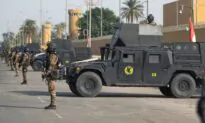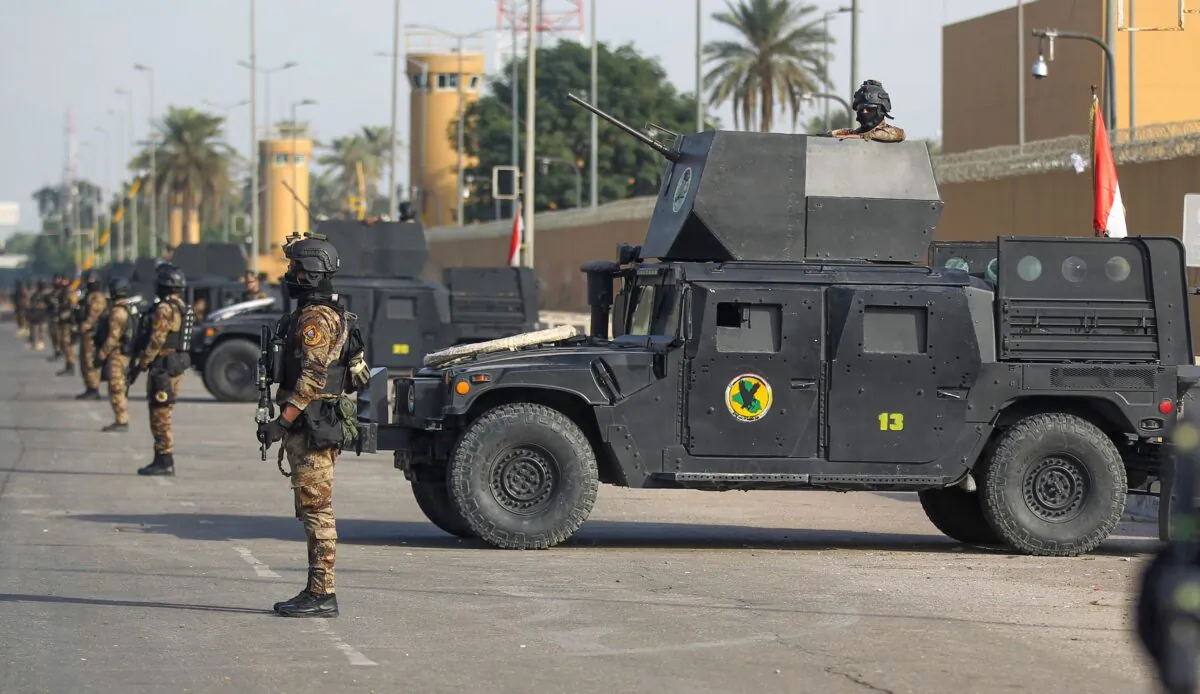

The U.S. Embassy in Baghdad has warned that Iranian-backed terrorist groups in Iraq are plotting attacks against U.S. citizens in Iraq.
“Iraqi terrorist militias aligned with Iran continue to plot additional attacks against U.S. citizens and targets associated with the United States throughout Iraq, including in the Iraqi Kurdistan Region,” the U.S. Embassy wrote in an April 20 post on X.
“Some elements associated with the Iraqi government continue to actively provide political, financial, and operational cover for these terrorist militias.”
Embassy staff have warned Americans living in Iraq not to come to the embassy or the consulate in Erbil, in the Kurdish region, but to contact them by email instead.
The embassy said U.S. citizens considering air travel should be aware of the ongoing risk from rockets, missiles, and drones in Iraqi airspace, even though commercial flights have resumed following the ceasefire between the United States and Iran.
“Do not travel to Iraq for any reason. Leave now if you are there,” the embassy stated.
On March 31, freelance American journalist Shelly Kittleson was abducted in Baghdad by the Iranian-backed terrorist group Kataib Hezbollah.
U.S. Secretary of State Marco Rubio confirmed on April 7 that Kittleson, who worked primarily for Al-Monitor, had been released.
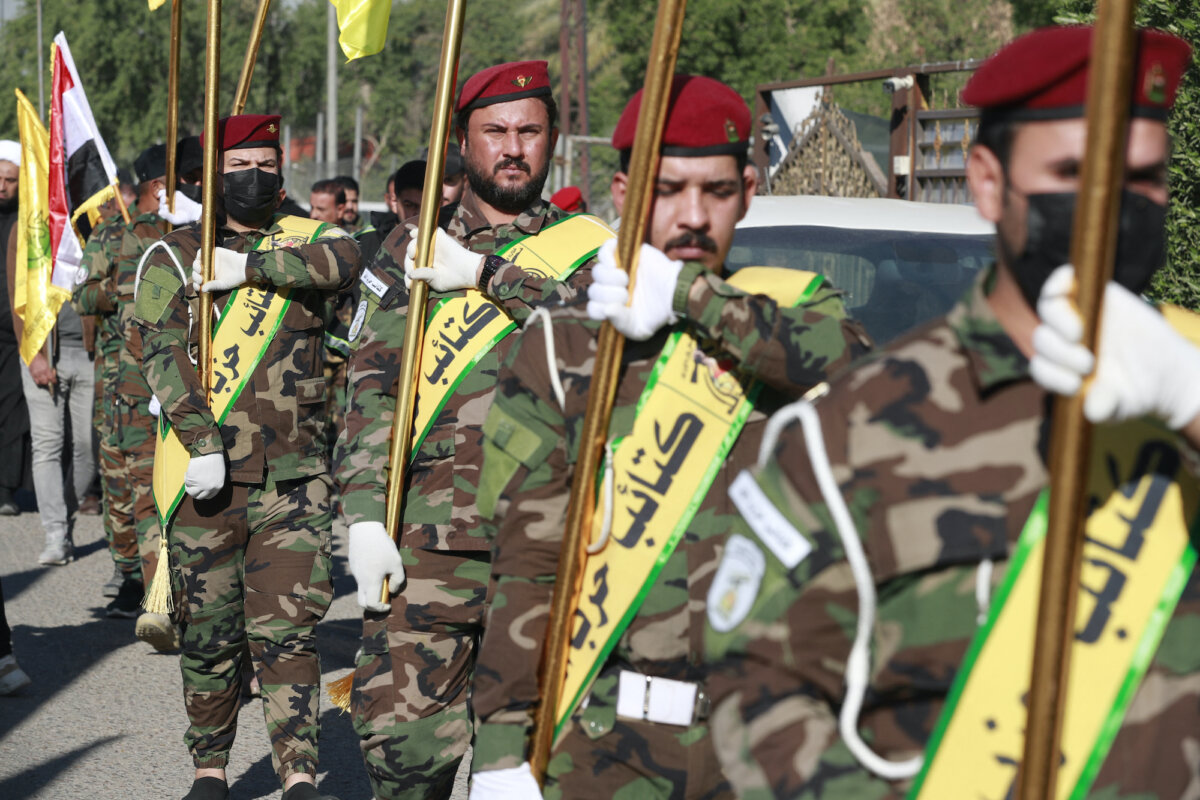
Kataib Hezbollah was designated as a terrorist organization by the U.S. government in 2009, while four others—Kata’ib Sayyid al-Shuhada, Harakat al-Nujaba, Harakat Ansar Allah al-Awfiya, and Kata’ib al-Imam Ali—were designated together in September 2025.
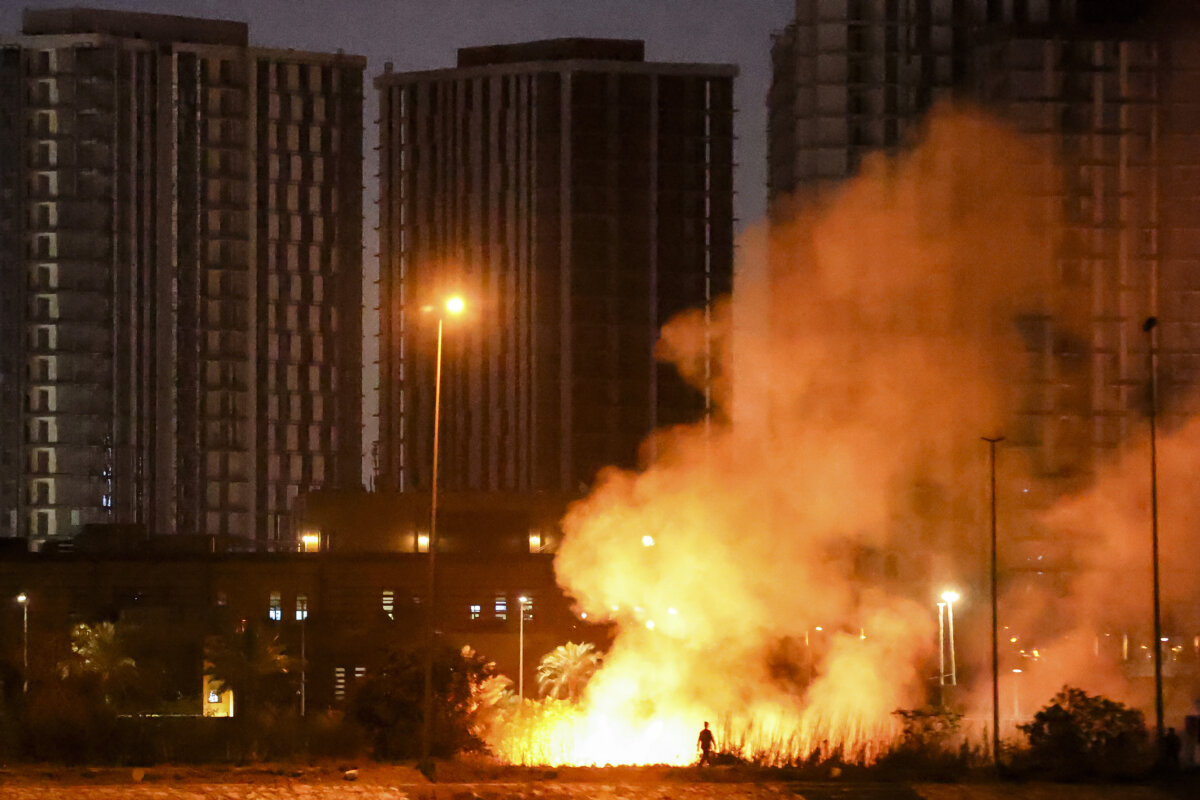
According to the Office of the Director of National Intelligence, Kata’ib Sayyid al-Shuhada split from Kataib Hezbollah and is under the direction of Iran’s Islamic Revolutionary Guard Corps (IRGC).
On April 9, U.S. Deputy Secretary of State Christopher Landau summoned Iraqi Ambassador Nizar Khirullah and called on Iraq to better protect U.S. diplomats in the country, following a drone attack near a U.S. diplomatic facility in Baghdad.
U.S. State Department spokesperson Tommy Pigott said there had been “egregious terrorist attacks by Iran-aligned militia groups” launched from Iraq against U.S. diplomatic personnel and facilities.
On April 8, the U.S. Embassy in Baghdad said that “Iraqi terrorist militia groups aligned with Iran” had conducted multiple drone attacks near the Baghdad Diplomatic Support Center and Baghdad International Airport.
Since the start of the Iran war, dozens of people have been killed in Iraq, including civilians, members of the police and army, U.S.-allied Kurdish Peshmerga fighters, and members of the Iran-affiliated Shi’ite Popular Mobilization Forces, according to Iraqi health authorities.
Shia Muslims form a majority in Iraq, but were suppressed by the country’s former leader, Saddam Hussein, who was ousted by a U.S.-led force in 2003.
Shia terrorist groups have become an increasing threat in recent years.
In 2020, U.S. President Donald Trump, during his first administration, authorized the killing of IRGC commander Qassem Soleimani in a drone strike in Baghdad.
In April 2024, Kataib Hezbollah denied that it had been involved in firing at U.S. forces in the region.
The denial came a day after two U.S. bases in northeastern Syria were targeted by missiles and drones allegedly fired from launchers in neighboring Iraq.
After the United States launched Operation Epic Fury on Feb. 28, U.S. forces clashed with Iran’s proxies in Iraq.
“AH-64s have been striking against Iranian-aligned militia groups to make sure that we suppress any threat in Iraq against U.S. forces or U.S. interests,” Gen. Dan Caine, chairman of the U.S. Joint Chiefs of Staff, said during a March 19 news briefing, referring to Apache attack helicopters.
 Friends Read Free
Copy
Facebook
Tweet
Friends Read Free
Copy
Facebook
Tweet