
Planned talks in Oman between Iran and the United States over Tehran’s nuclear program have been canceled after Israeli forces launched a massive air campaign targeting Iranian nuclear facilities and military sites, Oman’s foreign minister announced on June 14.
“The Iran–US talks scheduled to be held in Muscat this Sunday will not now take place. But diplomacy and dialogue remain the only pathway to lasting peace,” Badr al-Busaidi said in a Saturday post on social media.
The Omani official’s statement is the most explicit confirmation thus far that the sixth round of Iran-U.S. nuclear talks are now off. They were due to take place on June 15 in Oman’s capital.
Earlier on Saturday, Iranian officials said that talks with the United States over Tehran’s nuclear program were “meaningless” after Israel launched its attack, which Tehran accuses the United States of supporting.
“The other side acted in a way that makes dialogue meaningless. You cannot claim to negotiate and at the same time divide work by allowing the Zionist regime to target Iran’s territory,” Iran’s foreign ministry spokesperson Esmaeil Baghaei told the state-affiliated Tasnim news agency on June 14.
While Washington has denied involvement, Baghaei said it was “unimaginable” that Israel would carry out such an attack without a nod from the United States.
“Basically, the Zionist regime’s constant desire was to drag Western countries into conflict and entanglement in the region,” Baghaei said. “It seems that it has succeeded this time as well, and has somehow influenced a diplomatic process with this adventure. This actually shows that American policymakers are still heavily affected and influenced by this regime.”
President Donald Trump, who has repeatedly said that Iran must give up its nuclear enrichment program and called for a negotiated settlement, said in a post on social media that he had urged Iran to “make a deal” but they just “couldn’t get there,” with the president adding that “they have, perhaps, a second chance.”
In an earlier missive, Trump warned that the Israeli attacks would “only get worse” unless Iranian leaders act.
“Iran must make a deal, before there is nothing left, and save what was once known as the Iranian Empire. No more death, no more destruction, JUST DO IT, BEFORE IT IS TOO LATE. God Bless You All!”
Secretary of State Marco Rubio said in a statement Friday that Israel’s strikes were unilateral, while warning Iran not to target any U.S. interests or personnel.
Uncertainty about the fate of the U.S.–Iran nuclear talks was renewed after Israel launched multiple waves of air strikes across Iran on Friday, targeting its nuclear program, key military sites, and some residential areas.
Israeli Prime Minister Benjamin Netanyahu said in a speech Friday that Iran’s pursuit of a nuclear weapon presented “a clear and present danger to Israel’s very survival.”
He said that Iran has stockpiled enough enriched uranium to produce nine atomic bombs, and if not stopped, could produce its first nuclear weapon in just a few months.
Iran has repeatedly denied any pursuit of nuclear weapons, saying its program is civilian.
The Israeli strikes—code-named “Rising Lion”—hit nuclear and military infrastructure across Iran, including the Natanz enrichment facility, major airbases in Tabriz and Hamadan, Tehran-based defense sites, and underground missile complexes in Kermanshah.
While the impact of Israel’s assault remains unclear, Iran reported dozens of deaths, including top military commanders and nuclear scientists.
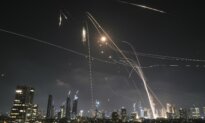
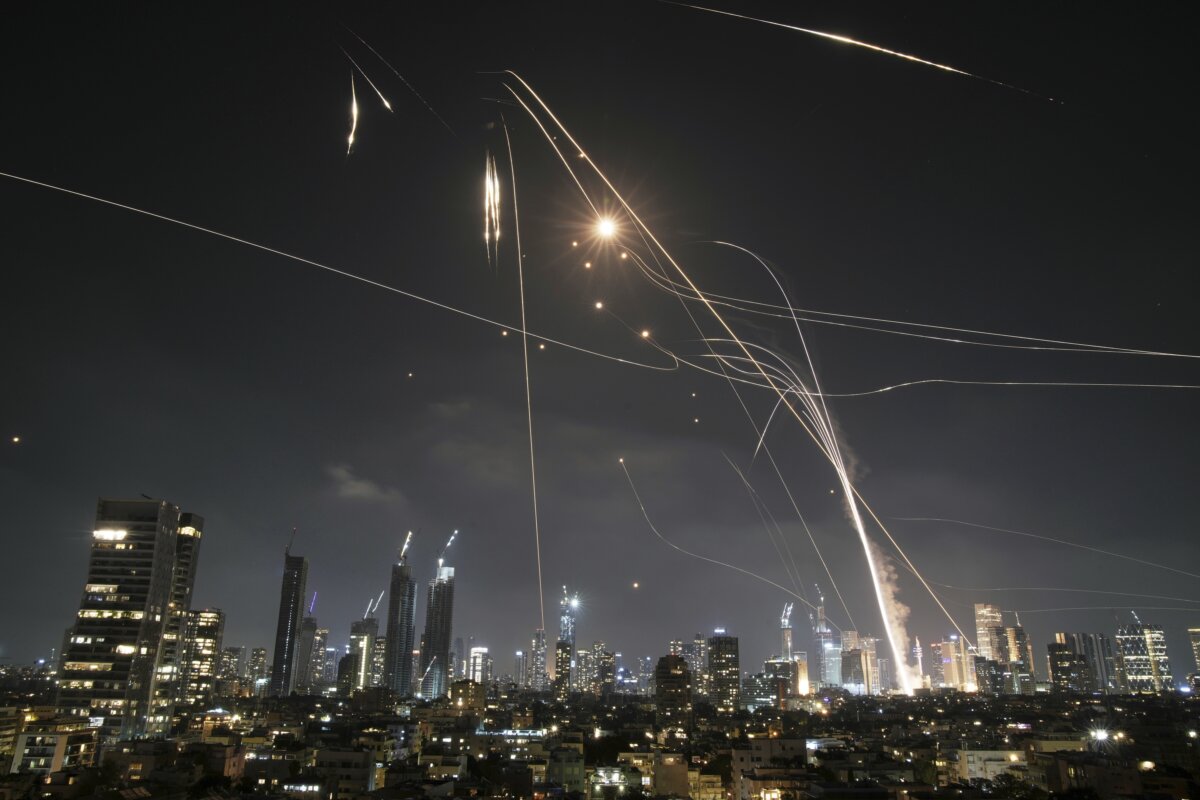
In retaliation, Iranian forces fired waves of missiles and drones, killing at least three people and wounding dozens in Israel.
Ryan Morgan contributed to this report.
 Friends Read Free
Copy
Facebook
Tweet
Friends Read Free
Copy
Facebook
Tweet