
Iran is considering charging transit fees on ships passing through the Strait of Hormuz, an Iranian lawmaker said on March 19, as officials in Tehran stepped up rhetoric over the strategic waterway.
Somayeh Rafiei, a member of Iran’s parliament representing Tehran, said lawmakers are working on a plan that would require countries to pay to pass through Hormuz.
“We in parliament are pursuing a plan according to which, if the Strait of Hormuz is used as a secure route for ship transit, energy passage, and the provision of food security, countries will be required to pay toll fees and taxes to the Islamic Republic of Iran,” she said, according to the state-aligned Iranian Students’ News Agency (ISNA).
Other Iranian officials have framed the idea as part of a wider postwar strategy to reshape control over the strait.
Mohammad Mokhber, a member of Iran’s Expediency Council and an economic adviser to to the Leader of the Islamic Revolution, said on March 19 that Iran intends to design a new framework for the waterway.
According to state-aligned Mehr News Agency, Mokhber said the new framework should counter what he described as domination by foreign powers.
He added that after the war Iran would introduce a new regime for the strait that could strengthen its regional position.
“We will sanction those domination-seeking arrogant powers using the Strait of Hormuz to not allow their ships pass through the Strait,” he said, adding that redesigning the governance of the waterway should be one outcome of the conflict.
Iranian Foreign Minister Abbas Araghchi has presented a similar idea in an interview with Al Jazeera’s “Talk to Al Jazeera,” released on March 18.
“In my view, after the war, a new mechanism for the Strait of Hormuz should be designed so ships can pass safely under clear regulations that consider the interests of Iran and the region,” Araghchi said. “We do not want to see war in the region again, nor the strait closed again.”
International Condemnation
The remarks by Iranian lawmakers came after Tehran attacked energy infrastructure in the Gulf region on March 18. QatarEnergy said attacks on the Ras Laffan industrial complex caused “extensive damage,” while the United Arab Emirates halted gas operations after intercepting missiles targeting key facilities. Saudi Arabia also reported downing Iranian drones aimed at its gas infrastructure.
U.S. President Donald Trump warned on March 18 that the United States would “massively blow up” Iran’s South Pars gas field if Tehran attacks Qatar again.
The Iranian strikes came after Israel hit Iran’s South Pars field earlier the same day, Trump said, calling the attack an action taken “out of anger” and without U.S. involvement.
Arab and Islamic foreign ministers on March 19 condemned what they described as Iranian “deliberate attacks” on multiple countries, calling on Tehran to halt missile and drone strikes targeting civilian areas and energy infrastructure.
In a joint statement, the ministers representing countries including Saudi Arabia, Egypt, Turkiye, Pakistan, and Qatar, said the attacks on Gulf Cooperation Council states, Jordan, Azerbaijan, and Turkey could not be justified “under any pretext.”
They urged Iran to respect international law and sovereignty, implement U.N. Security Council Resolution 2817, requiring an immediate cessation of hostilities, and refrain from threatening maritime navigation in the Strait of Hormuz or Bab al-Mandab.
The statement also warned that future relations with Iran would depend on non-interference in other states’ internal affairs while reaffirming support for Lebanon’s stability and condemning Israeli actions there.
Leaders of the UK, France, Germany, Italy, the Netherlands also issued a joint statement on March 19, condemning Iranian attacks.
The leaders said Iran had effectively closed the Strait of Hormuz with mines and missile and drone attacks. They called for an immediate halt to actions blocking commercial shipping under U.N. Security Council Resolution 2817.
Disruptions to shipping and energy supplies would have global consequences, especially for vulnerable countries, they warned. The group also expressed readiness to support efforts to ensure safe passage through the strait.
Strategic Chokepoint
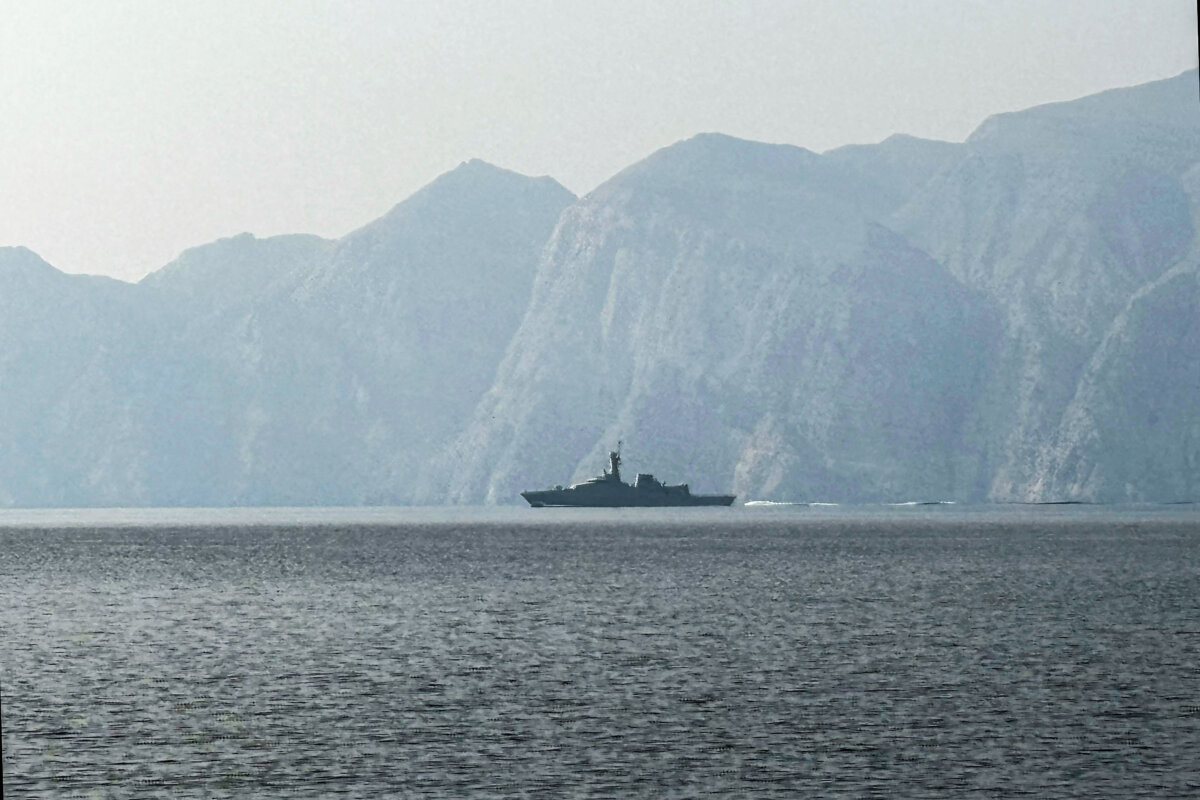
The Strait of Hormuz, located between Iran and Oman, carries roughly 20 percent of the world’s oil supply each day, making it one of the most important maritime chokepoints.
Shipping has been disrupted since U.S. and Israeli military operations against Iran began in late February, followed by Iranian missile and drone strikes on Israel and U.S. assets across the Gulf.
Washington maintains that its goals remain to destroy Iran’s missile launchers, as well as its defense industrial base and navy and to never allow Iran to get a nuclear weapon.
“These are not the media’s objectives, not Iran’s objectives, not new objectives. Our objectives—unchanged, on target and on plan,” said U.S. Secretary of War Pete Hegseth in a March 19 press briefing.
Since the onset of the conflict, traffic through the strait has dropped sharply and security incidents have also increased.
The United Kingdom Maritime Trade Operations agency said on March 17 it had received 22 reports of incidents affecting vessels in the Gulf region since Feb. 28, including 16 attacks and six cases of suspicious activity.
Between March 1 and 15, at least 89 vessels transited the passage, according to Lloyd’s List Intelligence. This includes 16 oil tankers, down from roughly 100 to 135 ships per day before the war. More than one-fifth of those vessels were linked to Iran, with Chinese- and Greek-affiliated ships among the rest, according to Lloyd’s.
Associated Press and Reuters contributed to this report.
 Friends Read Free
Copy
Facebook
Tweet
Friends Read Free
Copy
Facebook
Tweet