Iran has pushed back against a U.S.-backed cease-fire proposal and issued its own set of five conditions for ending the war, according to an Iranian regime official’s remarks to state media, which comes as the Trump administration pursues diplomatic contacts through intermediaries in an effort to settle the conflict diplomatically.
An anonymous senior Iranian political-security official told Press TV that Tehran would not accept externally dictated terms, saying that, “Iran will end the war when it decides to do so and when its own conditions are met.”
The official, who said that Iran’s military would continue inflicting “heavy blows” on its enemies until its demands are met, said Tehran’s conditions include a halt to “aggression and assassinations,” guarantees against future conflict, war reparations, an end to fighting across all fronts including Iran’s regional proxies, and recognition of its sovereignty over the Strait of Hormuz.
The comments come as U.S. officials, according to Israeli sources briefed on the matter who spoke to Epoch Magazine Israel, have advanced a 15-point proposal to Iranian figures via intermediaries that would require Iran to halt uranium enrichment, dismantle key nuclear facilities, curb its missile program, and stop supporting regional proxies in exchange for sanctions relief.
The Epoch Times has reached out to the White House for comment.
White House press secretary Karoline Leavitt told reporters at a March 25 briefing that talks are “ongoing,” when asked about the Iranian state TV’s report that Iran has rejected the U.S. proposal and whether negotiations have reached a “dead end.”
“They have not. Talks continue,” Leavitt said. “They are productive, as the president said on Monday, and they continue to be.”
Diplomacy Efforts Continue Amid Regional Strikes
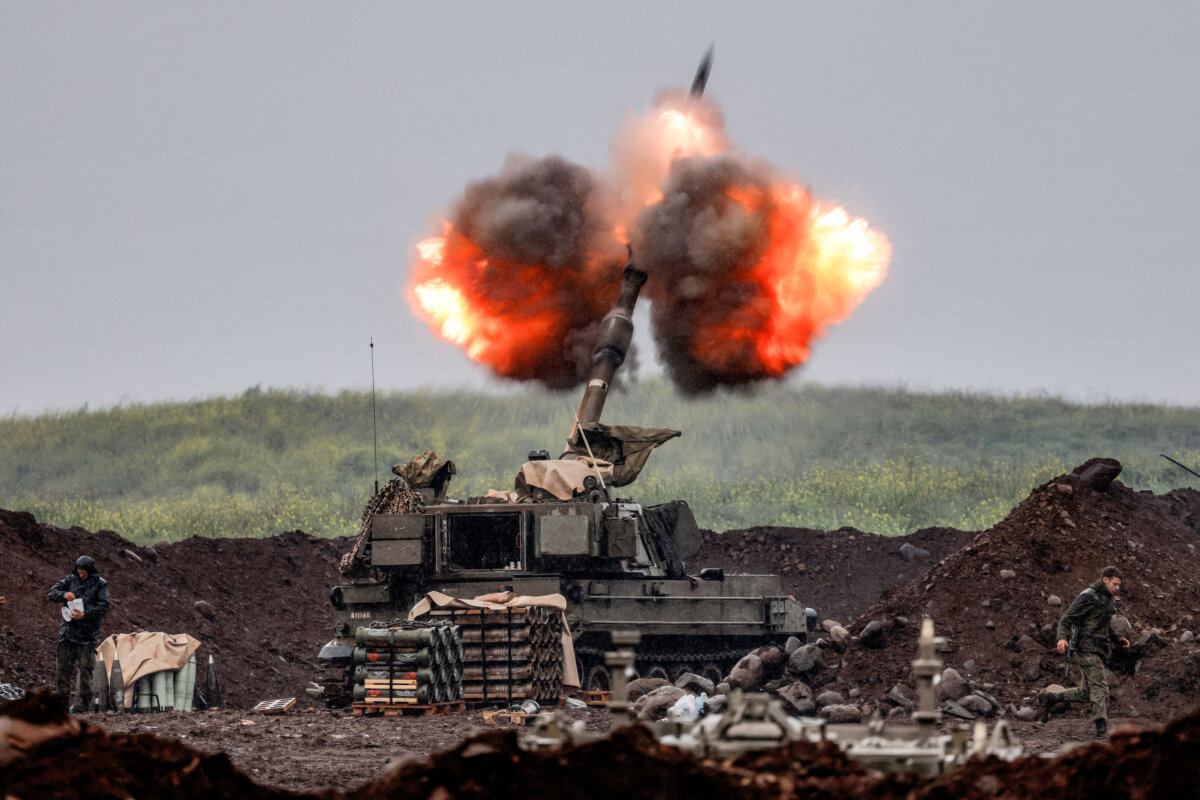
Alongside the diplomatic push, fighting across the region continued on March 25, with Iran launching fresh missile and drone attacks on Israel, and targeting energy infrastructure across the Persian Gulf.
Countries including Saudi Arabia and Kuwait reported intercepting drones aimed at key facilities, while Israel has continued strikes on Iranian military and industrial sites.
President Donald Trump, meanwhile, said on March 24 that the United States was engaged in negotiations with Iran on ending the conflict, which has disrupted shipments of oil and key commodities like fertilizer inputs, fueling price swings and raising concerns about global supply shortages.
The U.S. proposal, according to the Israeli sources, was conveyed to Iranian figures through Pakistan and shared with Israeli officials. The sources said Washington was awaiting a response from Tehran on whether it would agree to further talks.
It remains unclear who is engaging with the U.S. proposal on Iran’s side. Iranian parliamentary speaker Mohammad Bagher Ghalibaf previously publicly denied that any negotiations with Washington were taking place, and an Iranian military spokesman recently signaled there were no signs of de-escalation.
The Iranian regime issued its 5-point counterproposal via Press TV, confirmed by the Consulate General of Iran in India.
“Iran has rejected the U.S. proposal conveyed through a friendly regional mediator and is prepared to continue its defense and inflict heavy blows on the enemy,” the consulate statement said.
Iranian regime figures told the mediator that Iran will only accept a cease-fire once its conditions are accepted and that, until then, “no negotiations will be conducted.”
Proposal Meets Counterproposal
The 15-point framework outlined by U.S. officials includes a requirement that Iran commit never to pursue nuclear weapons, halt all uranium enrichment on its territory, and transfer its stockpile of enriched uranium to the International Atomic Energy Agency. It also calls for the dismantling of key nuclear facilities at Natanz, Isfahan, and Fordow, long viewed as central to Iran’s nuclear capabilities.
In addition to nuclear constraints, the U.S. proposal seeks to limit Iran’s ballistic missile program, including restrictions on the number and range of missiles and provisions that would confine their use strictly to self-defense. It also calls for Tehran to cease arming and financing allied groups across the Middle East, a longstanding demand from both Washington and its regional partners.
On maritime security, the U.S. plan calls for the Strait of Hormuz to remain open and be designated as a free international shipping lane—directly at odds with Tehran’s demand for recognition of its sovereignty over the waterway.
In exchange, the United States would lift sanctions imposed on Iran and revoke the so-called “snapback” mechanism that allows for the reimposition of international penalties.
Iran’s counteroffer, which includes a demand for “guaranteed and clearly determined” damages and war reparations, indicates that Iranian forces will continue to fight.
“Iran will end the war at a time of its own choosing and only if the conditions it has set are fulfilled,” the consulate statement said. “It will not allow Trump to determine the timing of the war’s end.”
The counterproposal also demands recognition of Iran’s sovereignty over the Strait of Hormuz as a “natural and legal right,” dovetailing with recent suggestions by Iran’s foreign minister that a new transit regime for the strait should be imposed after the war ends, one that considers the “interests of Iran and the region.”
Iran has been effectively blocking the Strait of Hormuz, a key waterway through which some 20 percent of the world’s oil is shipped.
During Wednesday’s briefing to reporters, the White House press secretary also addressed reports about the 15-point plan, saying that the White House has not confirmed the full proposal, and cautioning against taking “speculative points or speculative plans from anonymous sources” as fact.
“The White House never confirmed that full plan,” Leavitt said. “There are elements of truth to it, but some of the stories I read were not entirely factual. So I am not going to negotiate on behalf of the president here at the podium. What I will tell you is these talks are ongoing. We’re not going to get into the nitty-gritty details that have been exchanged between the United States and Iran at this time.”
Meanwhile, crude oil prices on Wednesday fell below $100 on rising hopes for a breakthrough in talks to end the conflict.
Brent crude dropped around 5 percent to around the $95 mark as investor sentiment turned more optimistic about the prospect of success of the U.S.-led diplomatic effort. They have since pared those declines to around 3 percent—or close to $97 per barrel—on news of Iran’s counterproposal.
 Friends Read Free
Copy
Facebook
Tweet
Friends Read Free
Copy
Facebook
Tweet