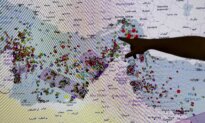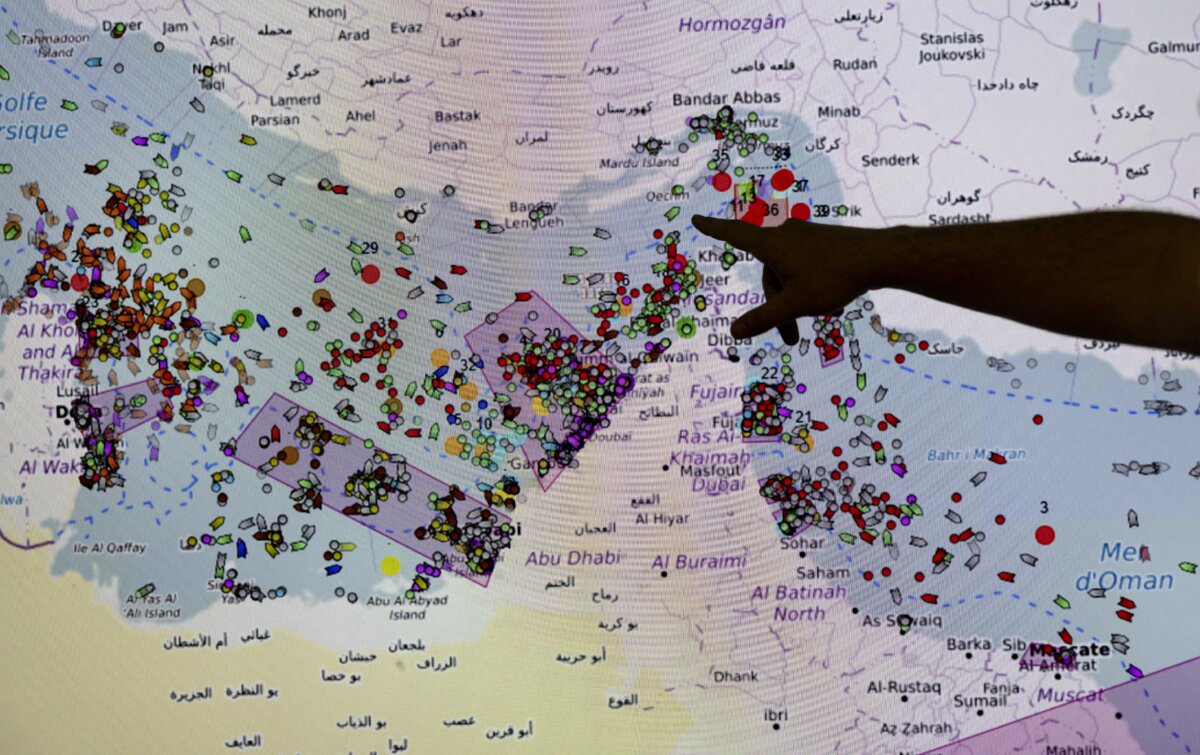

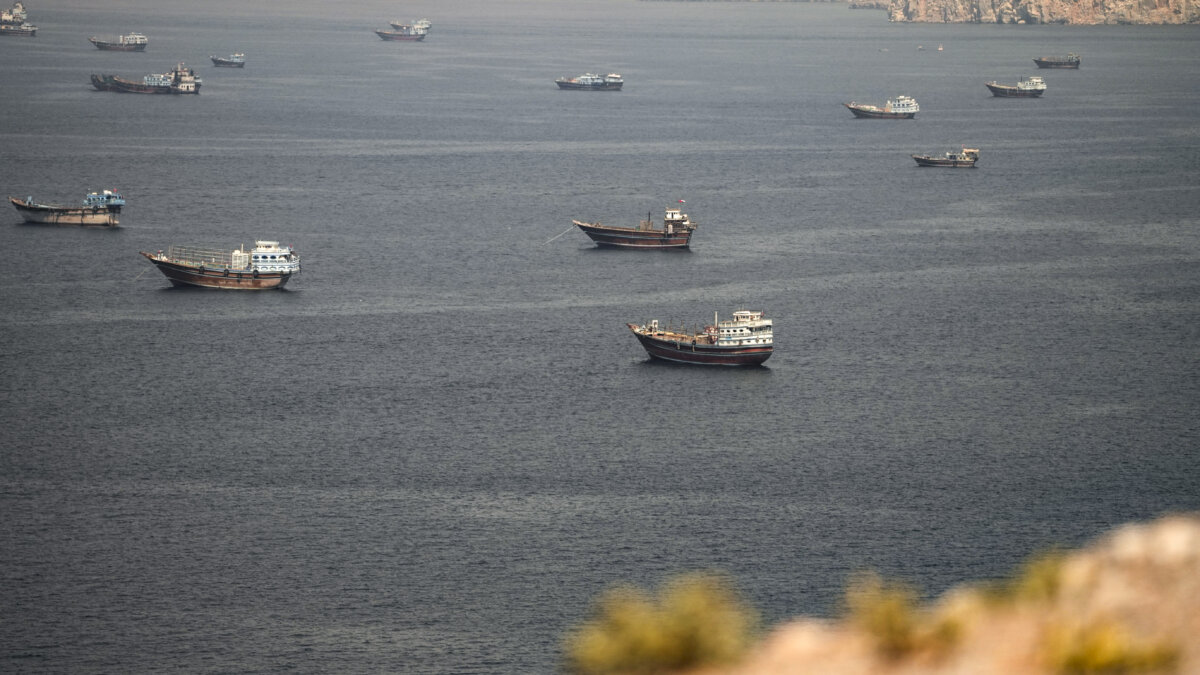
Iran’s military command on Thursday warned that oil tankers passing through the Strait of Hormuz must use Tehran’s approved routes or be met with a “powerful response,” raising tensions after the United States and the Iranian regime signed a temporary peace deal.
A day prior, Iranian state-run media reported that a cargo ship ran aground in the strait, a key waterway that allows for the transportation of about a fifth of the world’s traded oil, although few details about the incident have been released. State media said that the ship did not use its approved routes.
The strait emerged as one of the key issues in negotiations in ending the war, with the U.S. government saying Iran must reopen the waterway under a memorandum of understanding ending hostilities and setting up a 60-day time period on talks. Last week, however, Iran launched an attack on a ship, prompting the U.S. military to attack Iranian military targets over the weekend.
Tehran has insisted it must control the routes of the vessels and later charge fees for passage, upending decades of practice in the strait. Trump administration officials have pushed back against the regime’s assertions.
“The Strait of Hormuz is not a playground for the aggressive United States; rather, it falls under the indisputable sovereignty of the Islamic Republic of Iran,” the military command said through state-run media Thursday. “The security and stability of this vital waterway are a red line for the powerful Armed Forces of the Islamic Republic of Iran.”
It also said that “all oil tankers and commercial vessels are required to use the routes designated by Iran for any safe passage through the Strait of Hormuz,” adding a warning to vessels that do not comply with the regime’s demands.
“Any failure to comply, any deviation from the designated routes, or any disregard for the navigation protocols of the Islamic Republic of Iran in the Strait of Hormuz will be met with the immediate and powerful response of the Armed Forces and will endanger the safety of the violating vessels,” the statement said.
It wasn’t immediately clear what sparked the threat from Iran’s Khatam al-Anbiya military command. However, the U.S. military’s Central Command had put out a statement about having a meeting with officials from Mideast nations in Bahrain that said “leaders underscored their shared commitment to the free flow of commerce through the Strait of Hormuz.”
U.S. and Iranian negotiators met separately on Wednesday with Qatari and Pakistani mediators, with “positive progress made,” and they agreed to continue discussions, host Qatar said in a statement.
The next meeting will be scheduled “at the earliest possible time” after the funeral of Iran’s previous top leader, the late Ayatollah Ali Khamenei, according to Majed al-Ansari, a spokesman for Qatar’s Foreign Ministry. The funeral is set to start on Saturday in Tehran.
U.S. Mideast envoy Steve Witkoff and Jared Kushner, son-in-law and adviser to U.S. President Donald Trump, visited Qatar for talks seeking a permanent end to the war, alongside a top Iranian negotiator, Kazem Gharibabadi, officials said.
The Associated Press contributed to this report.
 Friends Read Free
Copy
Facebook
Tweet
Friends Read Free
Copy
Facebook
Tweet