

President Donald Trump on Feb. 6 said Iran wants to do a deal “very badly.”
“We are in no rush,” Trump told reporters aboard Air Force 1 en route to Palm Beach. “They are willing to do much more than they would have a year and a half ago. … But the results could surprise people.
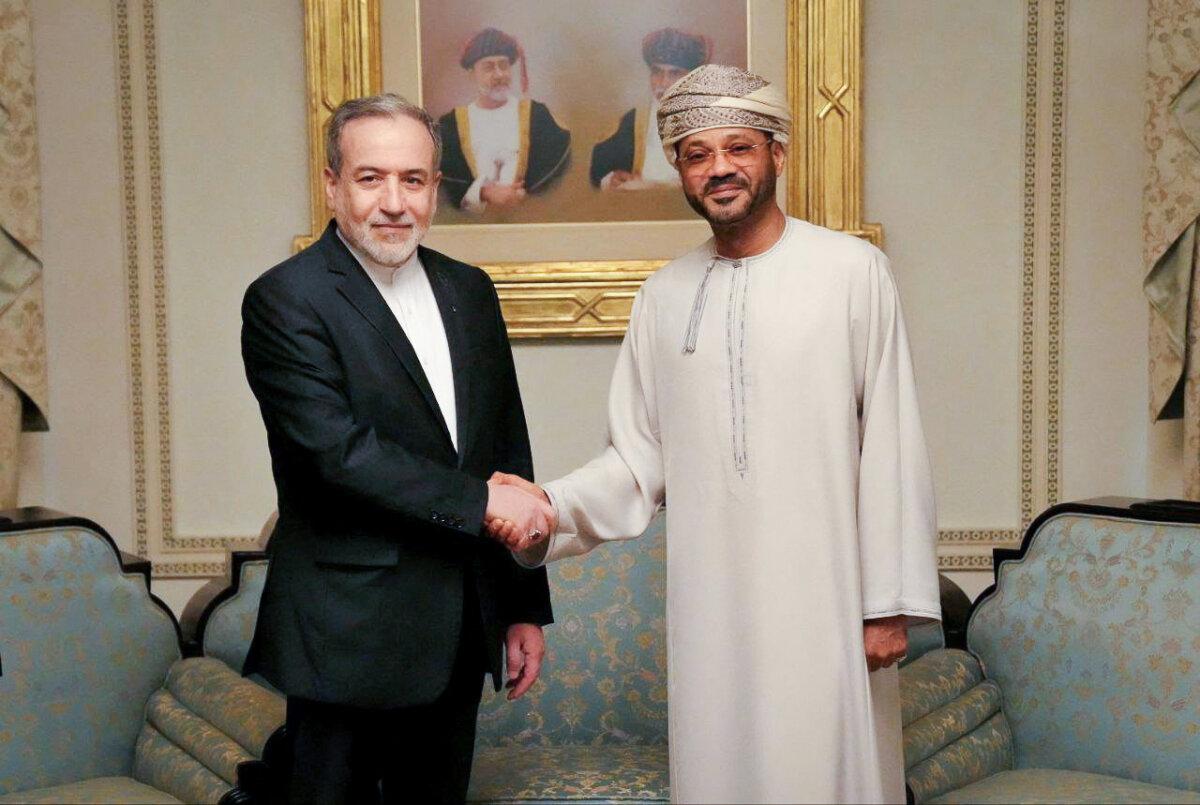
Trump’s comments come after Iran’s top diplomat described a “positive atmosphere” following a set of indirect talks with U.S. negotiators in Oman.
U.S. and Iranian delegations both arrived in the Omani capital of Muscat on Friday to discuss the future of Iran’s nuclear program and other regional security concerns.
Iranian Foreign Minister Abbas Araghchi said the indirect talks played out across multiple rounds over the course of about eight hours.
“After a long period without dialogue, our viewpoints were conveyed, and our concerns were expressed,” Araghchi said.
“Our interests, the rights of the Iranian people, and all matters that needed to be stated were presented in a very positive atmosphere, and the other side’s views were also heard.”
Araghchi said dialogue with the United States was off to a “good start,” and said Omani Foreign Minister Badr Albusaidi will help set the timing and format for further talks.
U.S. special presidential envoy Steve Witkoff and President Donald Trump’s son-in-law, Jared Kushner, led the U.S. delegation at the Muscat talks.
The White House did not respond to a request for comment about the talks by publication time.
According to previous statements from Iran, the talks likely largely pertained to the nation’s nuclear program.
Ali Shamkhani, an adviser to Iranian leader Ayatollah Ali Khamenei, told Lebanese outlet Al Mayadeen on Feb. 3 that Tehran was open to negotiations on its nuclear program, but only with Washington.
In remarks to the press on Feb. 4, U.S. Secretary of State Marco Rubio said negotiations with Tehran should go beyond Iran’s nuclear program.
“I think, in order for talks to actually lead to something meaningful, they will have to include certain things, and that includes the range of their ballistic missiles,” Rubio said.
“That includes their sponsorship of terrorist organizations across the region. That includes the nuclear program, and that includes the treatment of their own people.”
On Friday, the U.S. State Department announced a range of new sanctions targeting several Iran-linked oil tankers and their operators. The State Department described these tankers as part of a “shadow fleet” facilitating illicit fuel shipments.
The new sanctions targeted 14 vessels, 15 business entities, and two individuals accused of taking part in this shadow fleet operation.
Ali Shamkhani, an adviser to Iranian leader Ayatollah Ali Khamenei, told Lebanese outlet Al Mayadeen on Feb. 3 that Tehran was open to negotiations on its nuclear program, but only with Washington.
In remarks to the press on Feb. 4, U.S. Secretary of State Marco Rubio said negotiations with Tehran should go beyond Iran’s nuclear program.
“I think, in order for talks to actually lead to something meaningful, they will have to include certain things, and that includes the range of their ballistic missiles,” Rubio said.
“That includes their sponsorship of terrorist organizations across the region. That includes the nuclear program, and that includes the treatment of their own people.”
On Friday, the U.S. State Department announced a range of new sanctions targeting several Iran-linked oil tankers and their operators. The State Department described these tankers as part of a “shadow fleet” facilitating illicit fuel shipments.
The new sanctions targeted 14 vessels, 15 business entities, and two individuals accused of taking part in this shadow fleet operation.
In an interview with NBC News on Feb. 4, Trump said Khamenei “should be very worried.”
“We want peace in the Middle East,” Trump said, adding that if the United States hadn’t taken out nuclear facilities in Iran last year, there would be no peace in the region.
“The Arab countries could’ve never done that. They were very, very afraid of Iran,” the president said.
In June, the U.S. military and Israel launched air strikes on Iran’s nuclear facilities during a 12-day aerial war. Iran retaliated by firing missiles and drones at Israeli and U.S. assets in the region.
“Those beautiful B-2 bombers went in, and they hit their target … and obliterated it,” Trump said, referring to Iran’s nuclear program.
The president went on to say that Iran at the time of the strikes would have produced a nuclear weapon within one month if the United States hadn’t intervened. The regime in Iran was considering launching a new facility in another part of the country, Trump said, but the United States had found out about its plans.
He then warned Iran that if the regime attempted to restart its nuclear program, he would send bombers “right back.”
In recent days, Trump ordered a military buildup in the Middle East following protests in Iran that escalated into violent clashes with Iranian security forces. Thousands of protesters are reported dead or missing as a result of the ongoing clampdown.
Khamenei earlier stated that Iran “will strike a strong blow against anyone who attacks and harasses” its territory, according to multiple state media outlets, after Trump posted on Truth Social that “a massive armada” was being deployed to the region.
The president in recent weeks has repeatedly urged Iran’s Islamist regime to make a deal to constrain its nuclear program.
“As I told Iran once before, MAKE A DEAL!” Trump wrote in a Jan. 28 post on Truth Social. “They didn’t, and there was ‘Operation Midnight Hammer,’ a major destruction of Iran. The next attack will be far worse! Don’t make that happen again.”
Emel Akan, Jack Phillips, and Kimberly Hayek contributed to this report.
 Friends Read Free
Copy
Facebook
Tweet
Friends Read Free
Copy
Facebook
Tweet