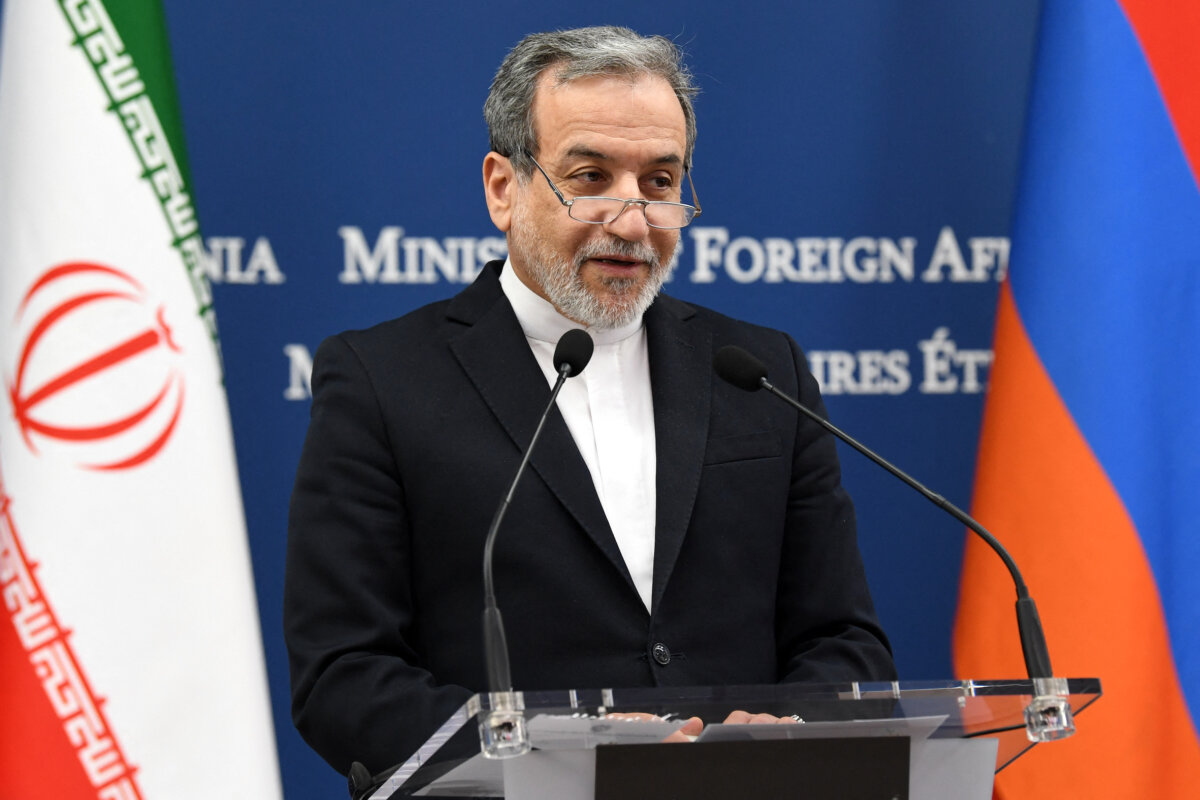

A top Iranian official expressed defiance in the midst of talks between the Washington and Tehran over the middle eastern country’s nuclear program, suggesting the Islamic regime won’t give up its nuclear enrichment aspirations.
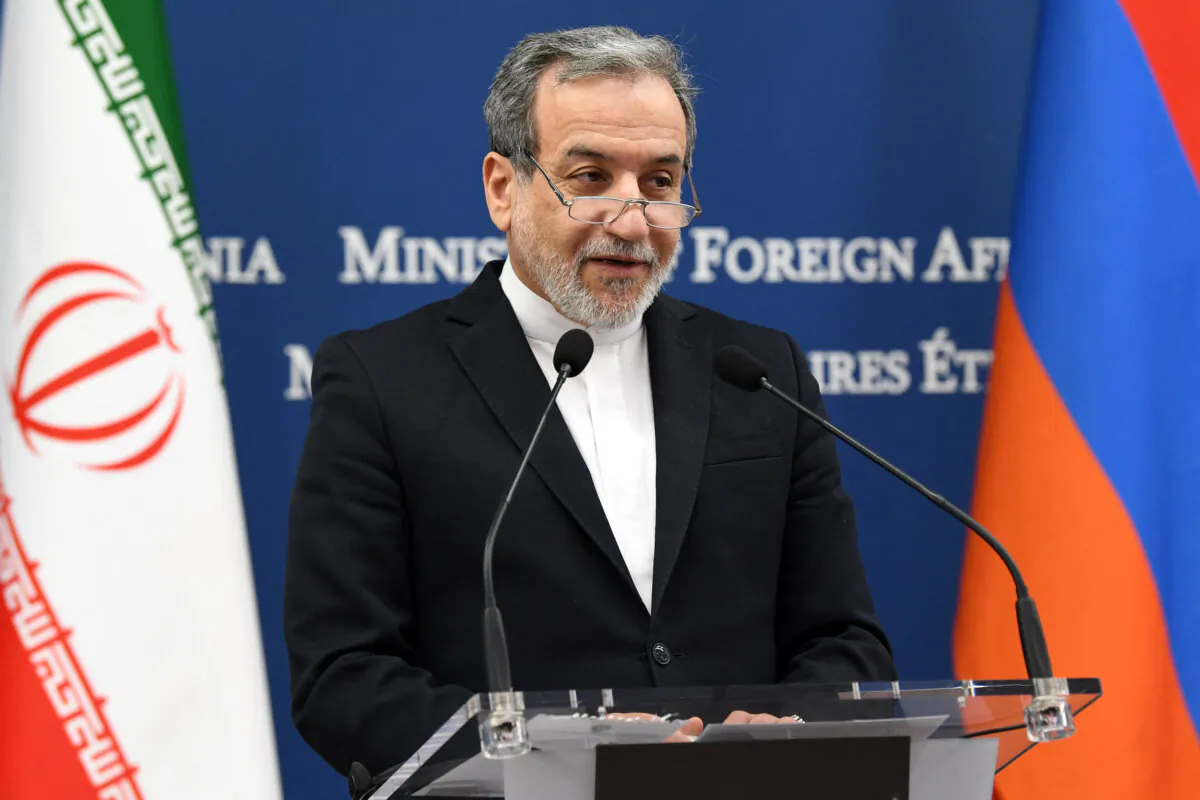
“We have firmly stated the country’s positions in the past and in this meeting,” said Iranian Foreign Minister Abbas Araghchi in a social media post on Sunday, according to a translation.
He added that Iran’s “access to sophisticated enrichment technology is the product of indigenous knowledge and the dedication of the country’s scientists, and as a scientific achievement and national pride, it cannot be ignored within the framework of the right to peaceful use of nuclear energy; the success of any negotiation depends on the recognition of this principle.”
The foreign minister told a forum on Sunday in Tehran that amid talks with the United States, “no one has the right to dictate our behavior,” according to an AFP reporter who attended the event.
“Their military deployment in the region does not scare us,” Araghchi also told the event, referring to a U.S. aircraft carrier positioned in the Arabian Sea.
In a post on social media, U.S. special envoy Steve Witkoff, who is attending the talks in Oman, wrote over the weekend that he met with sailors and Marines on the USS Abraham Lincoln.
“Proud to stand with the men and women who defend our interests, deter our adversaries, and show the world what American readiness and resolve look like, on watch every day,” the envoy said, adding that the carrier’s presence is meant to uphold the United States’ “message of peace through strength.”
Araqchi’s comments come as the U.S.–Iran talks started in Oman over the country’s controversial nuclear program as Tehran also seeks to have U.S. sanctions lifted. The United States, Israel, and European countries have long said Iran is seeking to build a nuclear weapon with its program, while Iran has said it’s for peaceful purposes.
Last week, President Donald Trump, during an interview, warned that the top Iranian leader, Ayatollah Ali Khamenei, should be “very worried” ahead of the talks. Days later, the Department of State issued new sanctions targeting an Iranian shadow oil transportation network.
“So long as [the] Iranian regime attempts to evade sanctions and generate oil and petrochemical revenues to fund such oppressive behavior and support terrorist activities and proxies, the United States will act to hold both the Iranian regime and its partners accountable,” the State Department said in a statement on Feb. 6.
The U.S. virtual embassy for Iran, meanwhile, sent out an alert to American citizens in Iran and advised them to leave the country through several land-crossing areas on the border.
Iran and the United States held five rounds of nuclear talks last year that stalled mainly due to disagreements over the level of uranium enrichment being conducted inside Iran. Most nuclear power plants only require their uranium-235 to be enriched to 3–5 percent, while weapons-grade uranium is usually enriched much higher.
In June, the U.S. military launched strikes on Iranian nuclear facilities at the end of a 12-day Israeli bombing campaign that also saw Iran fire barrages of missiles at American and Israeli assets in the region.
Iranian President Masoud Pezeshkian said in a social media post on Sunday that talks with the United States were a “step forward” and that Tehran wanted its rights under the Nuclear Non-Proliferation Treaty to be respected.
Reuters contributed to this report.
 Friends Read Free
Copy
Facebook
Tweet
Friends Read Free
Copy
Facebook
Tweet