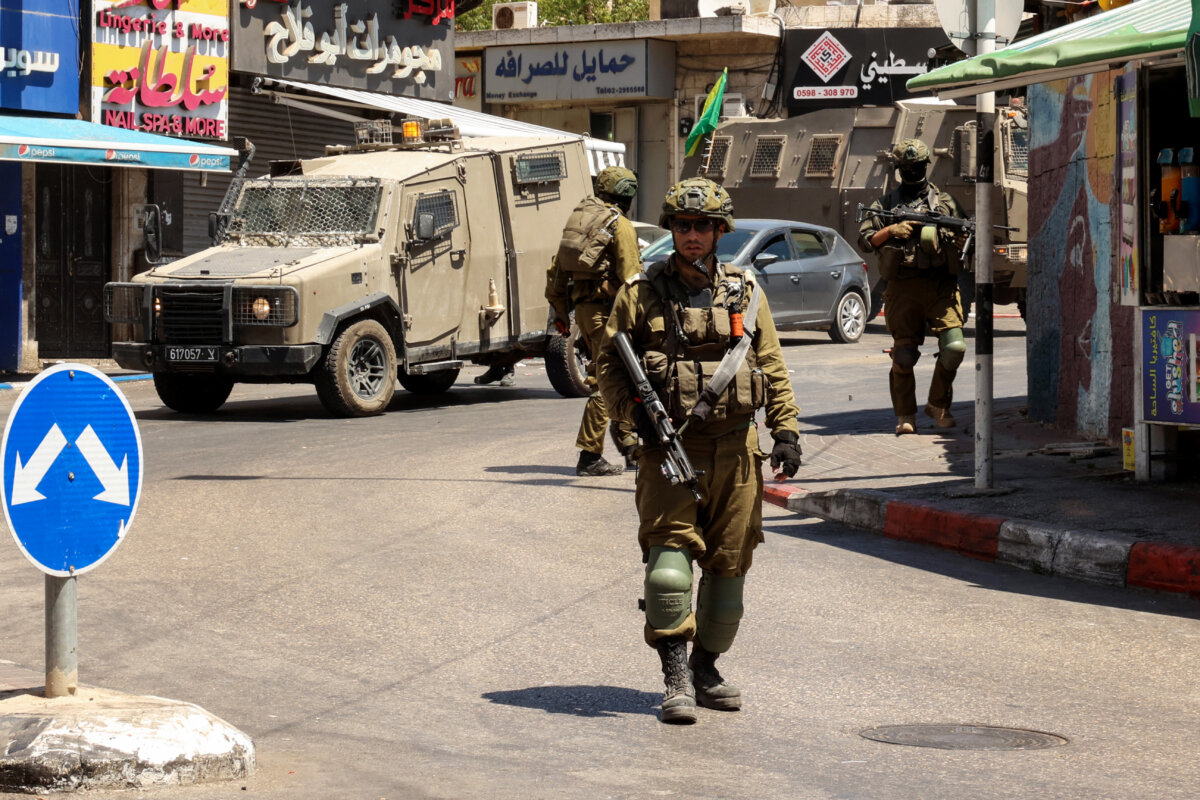

Israeli authorities have approved a series of measures to reform land registration and property acquisition procedures in the West Bank.
Israeli Finance Minister Bezalel Smotrich said in a Feb. 9 post on X that measures approved by the government’s Security Cabinet, formulated with Defense Minister Israel Katz, aim to “remove old barriers and strengthen settlement in Judea and Samaria in an orderly and responsible manner,” using Israel’s term for the West Bank.
Smotrich said that land registries in the territory have remained confidential for years and that opening them will “increase certainty and allow for more proper and clear conduct in the land market.”
The Security Cabinet repealed what Smotrich described as outdated Jordanian provisions that prohibited the sale of land to Jews and required cumbersome “transaction permit” mechanisms.
“From now on, it will be possible to purchase land in Judea and Samaria through a simpler and more transparent procedure, similar to what is done in the Green Line areas, subject to reasonable professional conditions,” Smotrich said.
The West Bank was captured by Israel from Jordan during the 1967 Six-Day War. Since then, Israel has maintained military control over much of the territory.
Under the 1995 Oslo II Accord signed by Israel and the Palestinian Authority, the West Bank was divided into Areas A, B, and C. Area C remains under full Israeli control, Area B is under Palestinian civil control and Israeli security control, and Area A is under full Palestinian control.
The new measures appear aimed primarily at Area C, where most Israeli settlements are located, but Smotrich said enforcement activities would also be expanded in Areas A and B.
“We expanded the supervision and enforcement activities on issues of water, archaeology, and environmental hazards—also in Areas A and B—in order to protect the natural resources and heritage of the entire region,” he said.
The Cabinet also decided to transfer building licensing authorities in the Jewish settlement in Hebron and at holy sites from Palestinian jurisdiction to the planning institutions of Israel’s Civil Administration, he said.
According to Smotrich, the move would enable “more efficient and stable planning.” He said the Hebron administration’s authority was strengthened to address residents’ municipal needs directly.
Regarding Rachel’s Tomb complex, Smotrich said that the Security Cabinet had approved establishing a dedicated municipal administration to manage basic services and maintenance “out of responsibility for public order and the respect of the place.”
“We are acting responsibly, with discretion, and within a clear legal framework—to strengthen the settlement, create certainty, and establish a stable reality for years to come,” he said.
“We are strengthening our grip on the territory and killing the idea of establishing an Arab terrorist state in the heart of the country.”
Palestinian Response
The Palestinian presidency condemned the measures in a Feb. 8 statement carried by the official WAFA news agency and cited in a Feb. 9 post on X.
The presidency warned of “the grave implications of these decisions, which represent the practical implementation of annexation and displacement plans,” and said they violated international law and agreements signed between the Palestine Liberation Organization and Israel.
It said the measures constituted “a blatant violation of the Oslo Accords and the Hebron Agreement.”
It also warned against “any infringement upon Islamic and Christian holy sites,” emphasizing that “any violation of the Ibrahimi Mosque and the transfer of authority over it are unacceptable.”
The presidency said that the decisions were “null and void” and called on the international community, particularly the U.N. Security Council and the United States, to intervene.
Asked whether he is “concerned that Israeli settler violence” could undermine his 20-point peace plan in Gaza, U.S. President Donald Trump said on Dec. 29, 2025, that he has held a discussion on the West Bank with Israeli Prime Minister Benjamin Netanyahu.
“I wouldn’t say we agree on the West Bank 100 percent,” Trump said. “But we’ll come to a conclusion on the West Bank.”
Trump said that more will be revealed “at an appropriate time.”
Netanyahu is expected to meet with Trump on Feb. 11 in Washington, according to a Feb. 8 statement by Netanyahu’s office.
Regional Reaction
Regional governments have voiced opposition to the Israeli measures.
In a joint statement posted on Feb. 9 by Saudi Arabia’s foreign ministry, the foreign ministers of Saudi Arabia, Jordan, the United Arab Emirates, Qatar, Indonesia, Pakistan, Egypt, and Turkey condemned what they described as illegal actions.
The ministers said the measures were aimed at “imposing unlawful Israeli sovereignty, entrenching settlement activity, and enforcing a new legal and administrative reality in the occupied West Bank.” They reaffirmed that Israel “has no sovereignty over the occupied Palestinian territory.”
The joint statement warned that the policies “fuel violence and conflict in the region” and said the actions “constitute a blatant violation of international law” and undermine the two-state solution.
They called on the international community to compel Israel to halt what they described as an escalation in the West Bank and reiterated that a two-state solution based on the June 4, 1967, lines remained “the only path to achieving just and comprehensive peace.”
Correction: A previous version of this article misspelled the name of Israeli Defense Minister Israel Katz. The Epoch Times regrets the error.
 Friends Read Free
Copy
Facebook
Tweet
Friends Read Free
Copy
Facebook
Tweet