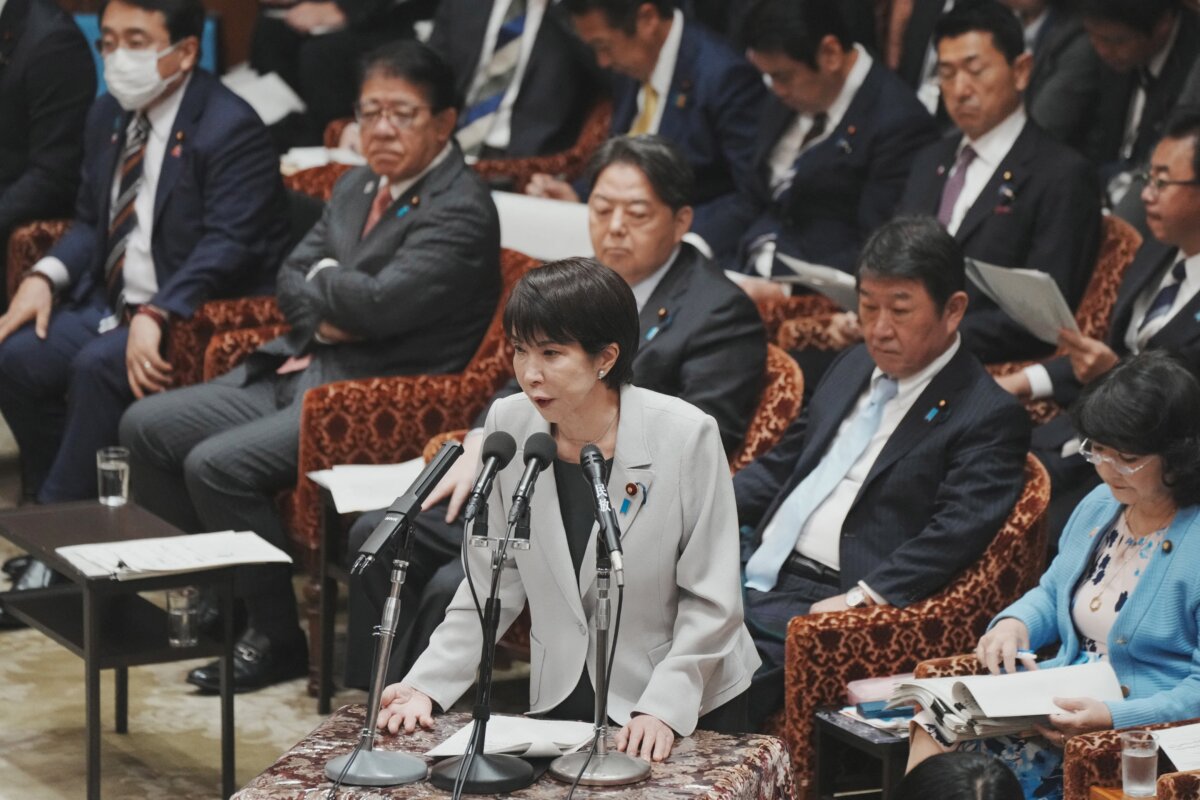

The Japanese government warned its citizens in China on Nov. 18 to take enhanced safety precautions and avoid crowds, amid a deepening dispute between the neighboring Asian countries over Japanese Prime Minister Sanae Takaichi’s comments on Taiwan.
The diplomatic crisis began when Takaichi told Japanese lawmakers this month that a Chinese attack on Taiwan could be seen as a “survival-threatening situation” to Japan and could trigger a military response.
Senior officials from the two countries met in Beijing on Nov. 18 to try to ease the growing tensions. China’s foreign ministry said that it used the meeting to call for Takaichi to retract her remarks.
Japan’s top government spokesperson, Minoru Kihara, suggested that Tokyo was unlikely to yield to this demand, saying the meeting did “not alter the government’s existing position,” but he said the hope remained that the dispute could be resolved peacefully.
Taiwan Dispute
Beijing claims democratically governed Taiwan as its own territory and has not ruled out using force to take control of the island. Taiwan’s government firmly rejects Beijing’s claims, and polls have shown that a clear majority of the island’s people favor the status quo.
The crisis escalated when a Chinese diplomat in Japan responded to Takaichi’s remarks by posting a threatening comment aimed at her on social media, drawing a strong rebuke from Tokyo. Japan’s new prime minister has been the target of vitriolic media commentary in China, and some Japanese officials have demanded that China apologize for the threat, which has been deleted online.
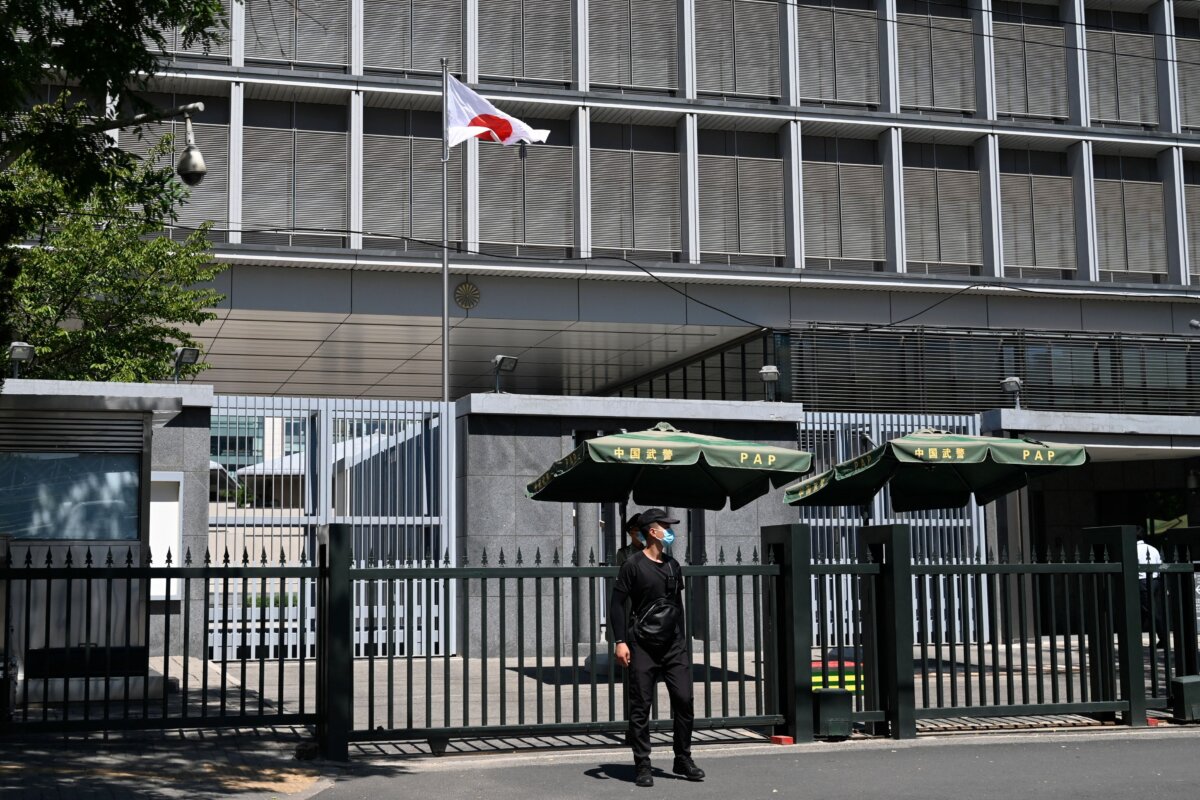
Japan’s embassy in Beijing reminded its citizens on Nov. 17 to respect local customs and to take care in their interactions with Chinese people.
It urged citizens not to travel alone, to pay attention to their surroundings when outside, and to exercise particular caution when accompanying children.
“If you see a person or group that looks even slightly suspicious, do not approach them and leave the area immediately,” the embassy said in its notice.
Economic Shocks
As the crisis grew, the Chinese Communist Party (CCP) advised Chinese citizens not to travel to Japan, which could prove costly to the Japanese economy.
Chinese people make up close to a quarter of all tourists to Japan, recent figures show, and tourism-related stocks in Japan plunged following the advice from Beijing.
More than 10 Chinese airlines, including Air China, China Eastern Airlines, and China Southern Airlines, are offering refunds on Japan-bound routes until Dec. 31, and Sichuan Airlines has canceled plans for a Chengdu–Sapporo route until at least March, according to Chinese state media.
Film distributors have suspended screening at least two Japanese films in China, state broadcaster CCTV stated on Nov. 17. This included the manga adaptation “Cells at Work!”
Japan also relies heavily on China to supply critical minerals used in items from electronics to cars.
In response to a question about China’s urging its citizens not to travel to its neighbor, Japan’s economic security minister, Kimi Onoda, said at a press conference on Nov. 18, “We need to recognize that it’s dangerous to be economically dependent on somewhere that poses such risks.”
Representatives of Japan’s three business federations met Takaichi on Nov. 17 to urge dialogue to resolve the diplomatic tension.
Dispute Over Islands
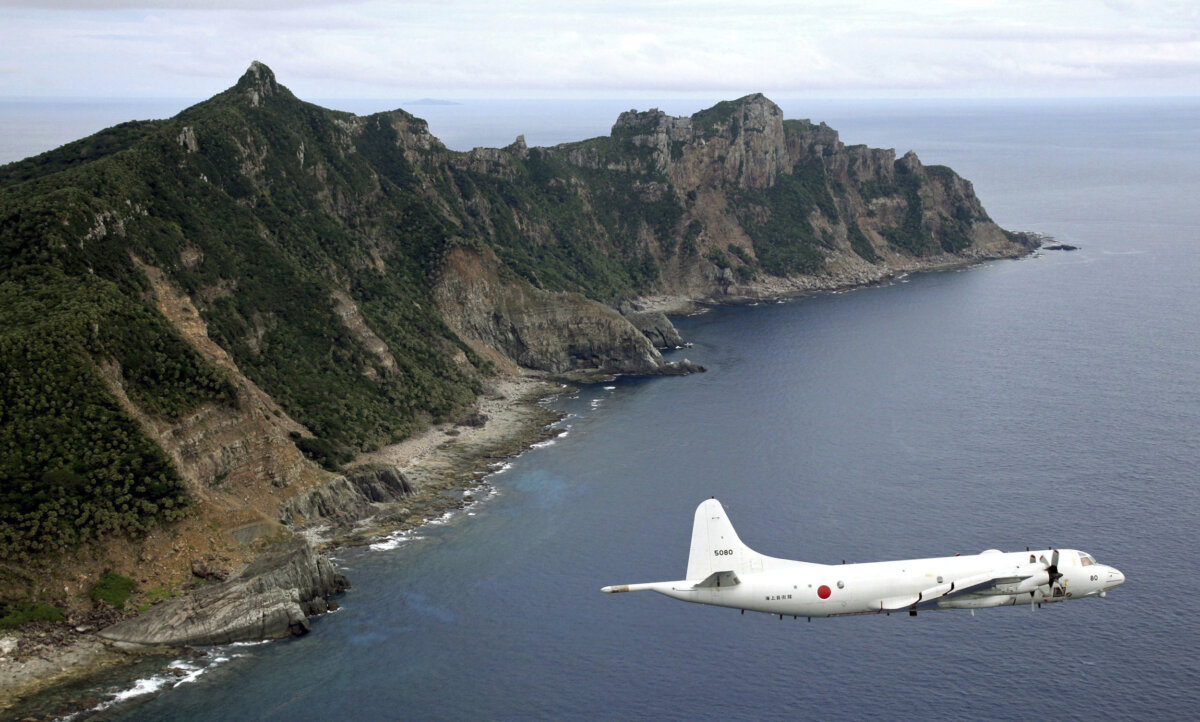
China and Japan have their own territorial dispute regarding a group of East China Sea islands that are controlled by Japan but claimed by China. These islands are known as Senkaku in Tokyo and the Diaoyu in Beijing.
Chinese coast guard ships sailed through waters around the islands on Nov. 16, and Japan’s coast guard said that it drove the Chinese ships away.
Taiwan is located just 68 miles from Japanese territory, and the surrounding water offers a vital sea route for Tokyo’s trade.
Japan also hosts the largest contingent of U.S. military personnel overseas.
The United States does not formally recognize the islands as Japan’s sovereign territory, although since 2014, it has said it would be obliged by the U.S.–Japan security treaty to defend the islands if they were attacked.
“In case anyone was in doubt, the United States is fully committed to the defense of Japan, which includes the Senkaku Islands,” the U.S. ambassador to Japan, George Glass, said on X. “And formations of Chinese coast guard ships won’t change that.”
In response, Chinese foreign ministry spokesperson Mao Ning said at a press conference on Nov. 18 that Glass’s remarks were a “political show with ulterior motives.”
China said its prime minister, Li Qiang, has no plans to meet Takaichi at this week’s G20 summit in South Africa.
Kihara said nothing has been finalized regarding two-way meetings during the summit but that Japan remains open to “various dialogues” with China.
Reuters contributed to this report.
 Friends Read Free
Copy
Facebook
Tweet
Friends Read Free
Copy
Facebook
Tweet