
Japan and the Philippines deepened security ties during President Ferdinand Marcos Jr.’s state visit to Tokyo, calling for peace and stability across the Taiwan Strait, placing cross-strait stability inside a broader statement on maritime security, defense cooperation, and regional order.
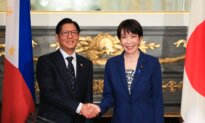
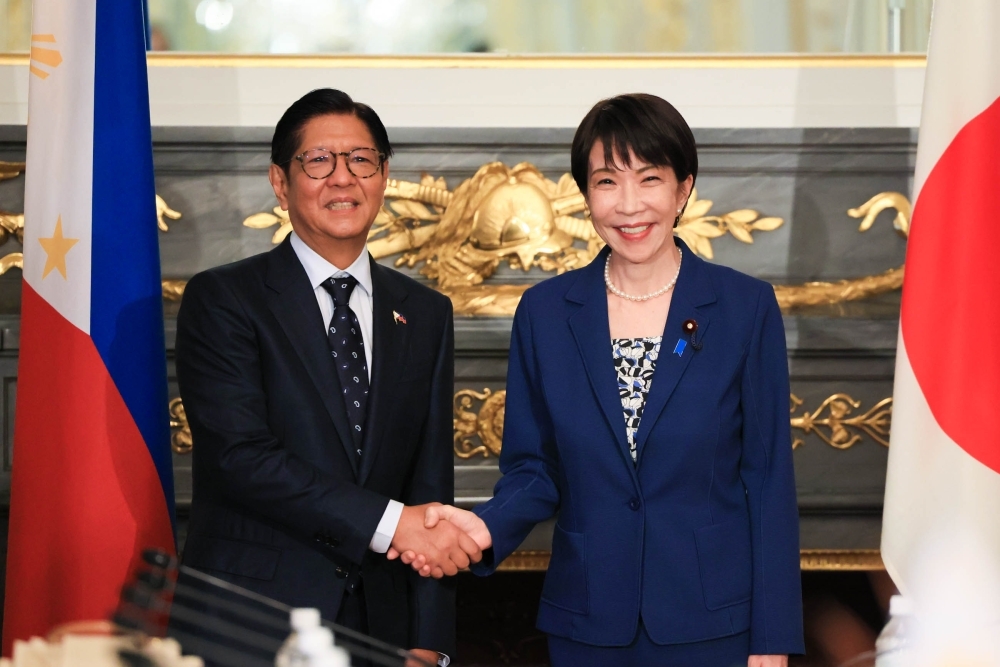
The joint statement followed a May 28 summit between Japanese Prime Minister Sanae Takaichi and Marcos, who visited Japan as the two countries marked 70 years of diplomatic relations. The leaders decided to elevate bilateral relations to a Comprehensive Strategic Partnership, according to Japan’s Ministry of Foreign Affairs.
“The two leaders also emphasized the importance of peace and stability across the Taiwan Strait and encouraged a peaceful resolution of cross-Strait issues through dialogue,” the joint statement said.
Taiwan’s Ministry of Foreign Affairs welcomed the statement, saying it was the first time Japanese and Philippine leaders had jointly expressed high concern over Taiwan Strait issues in a formal statement. Taiwan’s Foreign Minister Lin Chia-lung said peace and stability across the strait are a common concern of the international community, according to Taiwan’s Foreign Ministry.
The Taiwan Strait language appeared in the same section of the joint statement that addressed the East China Sea, South China Sea, freedom of navigation and overflight, the United Nations Convention on the Law of the Sea (UNCLOS), and the 2016 South China Sea Arbitral Award.
Security Cooperation Expands
Japan and the Philippines described themselves in the joint statement as “like-minded maritime democracies” and said they had entered what they called a “platinum era” of relations.
The statement welcomed the launch of the Japan-Philippines Reciprocal Access Agreement on Sept. 11, 2025. The agreement makes it easier for Japan’s Self-Defense Forces and the Armed Forces of the Philippines to conduct joint training and exchanges.
The leaders also welcomed the Jan. 15 signing of the Japan-Philippines Acquisition and Cross-Servicing Agreement and said the two sides were coordinating for its early activation. The agreement would support logistics cooperation between the two militaries.
Takaichi and Marcos also decided to begin negotiations on an agreement to protect classified military information—a framework the statement said would deepen security cooperation and promote interoperability between the two countries and with other partners.
The Philippine Presidential Communications Office described the planned talks as negotiations for a General Security of Military Information Agreement. Marcos said the initiative would support shared goals of security, economic growth, and resilience, according to the Philippine Presidential Communications Office.
The two leaders also agreed to continue defense equipment cooperation, including discussions on destroyers, TC-90 aircraft, and radar systems, using Japan’s defense equipment transfer framework and Official Security Assistance.
Japan said it would continue helping build the capacity of the Philippine Coast Guard through patrol vessels and joint training, from the standpoint of ensuring maritime safety and upholding the rule of law in the Indo-Pacific.
Taiwan Strait, South China Sea
The joint statement did not name China in the paragraph on the Taiwan Strait or in its statement on the East and South China Seas. It said the two leaders expressed “serious concern” over the situation in the East China Sea and South China Sea and opposed unilateral attempts to change the status quo by force or coercion.
The statement also emphasized freedom of navigation and overflight, lawful uses of the sea, unimpeded commerce, and peaceful resolution of maritime disputes under international law, particularly UNCLOS.
Japan and the Philippines reiterated support for the 2016 South China Sea Arbitral Award, which rejected Beijing’s sweeping claims in the South China Sea and upheld key Philippine positions under UNCLOS. The statement described the award as final and legally binding on the parties to the dispute.
The two leaders also reaffirmed the importance of Japan–Philippines–U.S. cooperation for regional stability and said they intended to enhance coordination with like-minded partners, including Australia and India, to uphold a free and open international order based on the rule of law.
Marcos Calls Visit Productive
Marcos called the state visit productive before returning to Manila, according to the Philippine Presidential Communications Office.
“It has been a very constructive and highly productive visit, considering that we are actually in Japan for just about three days,” Marcos said. “And yet in that little time, we were able to do a great deal.”
Marcos said the elevated partnership reflected how cooperation between Japan and the Philippines had grown “not only stronger but deeper and broader.”
Beyond security and maritime cooperation, the two governments also agreed to deepen cooperation in energy security, supply-chain resilience, decarbonization, artificial intelligence, and space cooperation.
The Philippine government said the visit produced about $3.4 billion in investment pledges, pipeline opportunities, financial support facilities, and tourism-related flagship investment prospects. Marcos also met with Japanese business leaders from sectors including banking, infrastructure, aviation, manufacturing, telecommunications, mobility, renewable energy, health care, artificial intelligence, financial technology, digital technology, tourism, and retail.
The Philippine release said separate meetings with Furukawa Electric Corp., Sumitomo Electric Industries, MinebeaMitsumi Inc., and Tsuneishi Group Corp. involved expansion plans in the Philippines totaling about 56.3 billion pesos, or about $956 million, across semiconductor, advanced electronics, precision manufacturing, and shipbuilding industries.
Regional Network Widens
The Japan–Philippines statement placed the upgraded partnership inside a wider regional framework.
The leaders reaffirmed support for a Free and Open Indo-Pacific and the ASEAN Outlook on the Indo-Pacific. They said both frameworks share principles of openness, transparency, resilience, inclusiveness, rules-based order, freedom of navigation and overflight, peaceful settlement of disputes, and respect for sovereignty and territorial integrity.
They also expressed concern over economic coercion and nonmarket policies and said Japan and the Philippines would cooperate on supply-chain resilience, including critical minerals, semiconductors and electronics, renewable energy, and automobiles.
The statement said the two governments would convene the next Japan–Philippines “2+2” foreign and defense ministerial meeting at an early date and begin negotiations on an agreement to protect classified military information.
 Friends Read Free
Copy
Facebook
Tweet
Friends Read Free
Copy
Facebook
Tweet