

GENEVA—The United States and Iran signed a preliminary agreement on June 14 to reopen the Strait of Hormuz and begin 60 days of negotiations aimed at ending the conflict in the Middle East.
While the memorandum of understanding (MOU) had not been made public as of June 15, senior U.S. officials outlined key details of the agreement during a call with reporters that day.
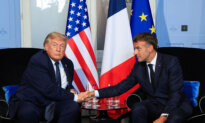
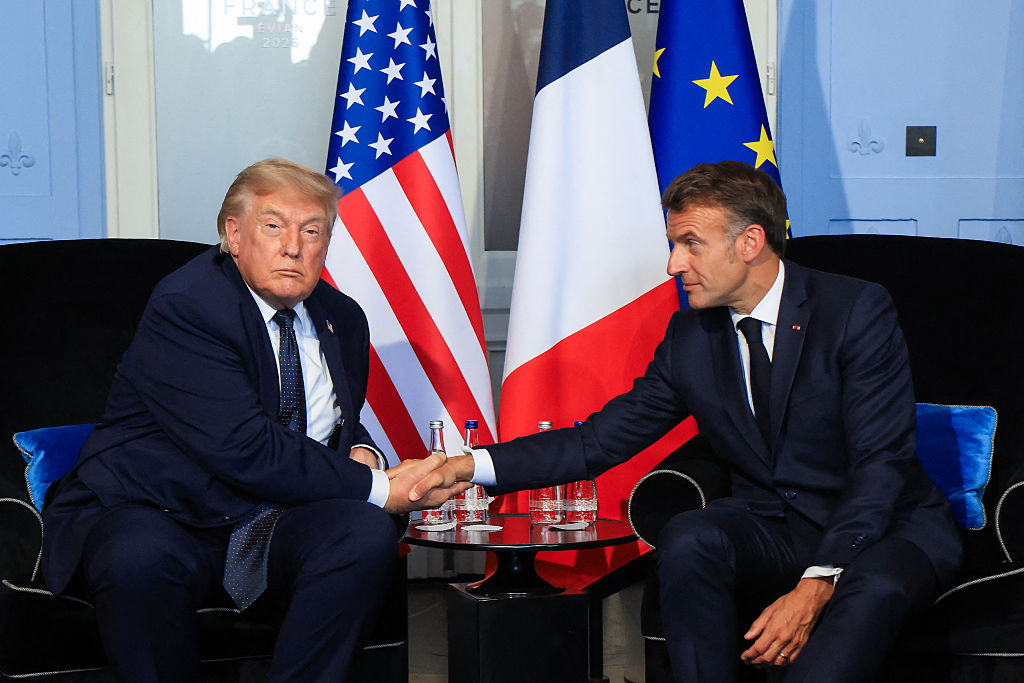
U.S. President Donald Trump also briefly discussed the scope of the agreement during remarks following a meeting with French President Emmanuel Macron in Évian-les-Bains, France, during the G7 summit on June 15.
Here are five takeaways from the initial deal.
Signing of the Deal
Trump and Vice President JD Vance have digitally signed the MOU with Mohammad Bagher Ghalibaf, speaker of the Iranian Parliament.
The official signing ceremony is expected to take place in Geneva on June 19.
After a bilateral meeting with Macron on June 15, Trump told reporters that Iran agreed to “strong policing powers” to ensure that it “will not have a nuclear weapon.”
Trump said he thinks that the full document and its text will be released “probably pretty soon.”
The United States will launch a 60-day period of continued negotiations with Tehran, in which Vance will lead the talks to hammer out the technical details, a senior U.S. official said.
The plan is to keep the current U.S. military force posture in the region around Iran while the negotiations proceed.
Another U.S. official said the choices that the Iranian leadership makes in the coming weeks of negotiations will determine whether the deal is ultimately successful for both sides.
Reopening Strait of Hormuz
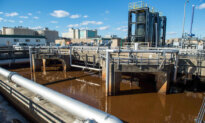
Trump told reporters on June 15 that although the Strait of Hormuz is “already partially opened,” it will be “completely opened” in five days.
While Iranian mines are currently being hunted for and removed from the water, “essentially ships are starting to go out now,” he said.
The Strait of Hormuz will remain toll-free during the 60-day negotiation period, and a prohibition on tolls may become permanent, the U.S. officials told reporters.
Soon, at least 40 to 50 ships should be able to pass through the strait every day, and within 30 days of mines being cleared, traffic in the strait should return to normal, according to the U.S. officials.
Other countries may also get involved in the demining operation.
In April, the United Kingdom and France announced that they had established an international coalition to “conduct mine clearance operations as soon as conditions permit following a sustainable ceasefire agreement.”
Iran Sanctions Relief
There are still many questions about what will happen with the current sanctions on Iran, such as whether they will be lifted and when any relief could begin.
“It’s really a behavioral thing,” Trump said during his meeting with Macron when asked about sanctions relief for Tehran.
“If they do what they’re supposed to do, that starts taking effect.”
U.S. officials said Washington is ready to offer major economic incentives, but it will depend on whether Iran meets its commitments.
“We’re going to be willing to be extraordinarily generous in opening up their economy and opening up the sanctions relief that the deal contemplates,” one U.S. official said.
Both sides also discussed potentially creating a $300 billion fund to help rebuild Iran, but another U.S. official said all of this would depend on Iran’s performance.
Frozen Iranian Assets
Another key issue is the question of frozen Iranian assets.
U.S. officials confirmed that no funds have been released under the MOU. An estimated $24 billion in Iranian assets remains frozen.
U.S. officials emphasized that the administration would consider releasing funds only in phases, and that any sanctions relief or asset unfreezing would be tied to Iran’s performance in delivering on its commitments.
“We are going to be willing to release some of the frozen funds in phases, but it’s all going to be tied to verifiable milestones,” the official said.
The United States will begin with “some small gestures” if Iran takes the first step to show that it’s prepared to uphold its commitments, the official said.
Separately, the Treasury Department has explored using frozen Iranian assets to compensate Gulf countries for losses suffered during the conflict with Iran. However, it remains unclear whether that plan is still being pursued.
Possible Future Military Action
The Trump administration is waiting to see whether Iran follows through on its commitments under the MOU.
For that reason, U.S. officials said Washington will maintain its current military posture in the region during the 60-day negotiation period.
While the United States hopes to draw its forces down, any force reduction is contingent on the successful conclusion of the negotiations and ratification of a final deal with the Iranian regime, according to U.S. officials.
Trump had repeatedly warned that the United States could resume military operations if negotiations fail to produce a deal.
U.S. officials indicated that any final agreement would require Iran to make binding commitments to abandon its nuclear ambitions and halt support for radicalism and terrorism across the region.
 Friends Read Free
Copy
Facebook
Tweet
Friends Read Free
Copy
Facebook
Tweet