Russia is feigning interest in peace talks over Ukraine and still sees the United States as its “foremost global adversary,” Estonia’s foreign intelligence service, Valisluureamet, said in its annual report on Tuesday.
The report states the Kremlin has been trying to frame European states as more hostile to it than Washington and has instructed Russian state institutions “to project openness and willingness to cooperate” with the United States.
“However, Russia’s policy towards the United States remains fundamentally unchanged,” it said in the report, “Moscow still regards Washington as its foremost global adversary, believing that their interests clash in several regions, including the Middle East, Latin America and the South Caucasus.”
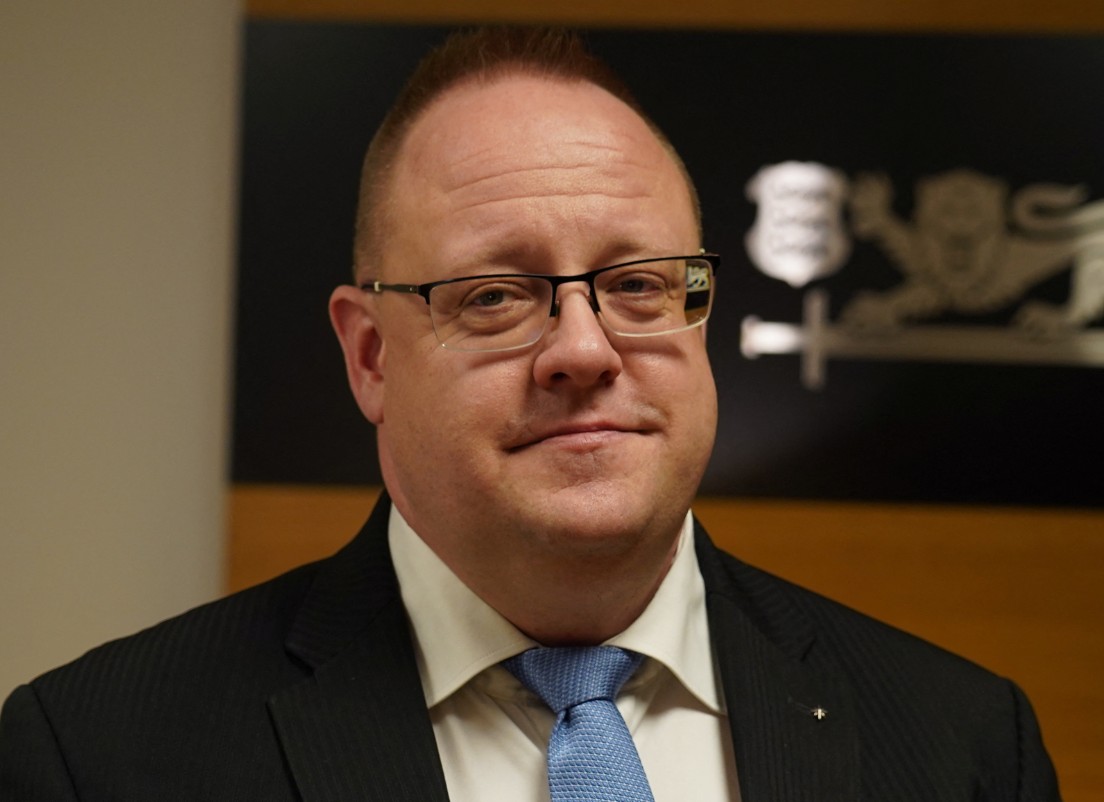
“In his head [Russian President Vladimir Putin] still thinks that he can actually militarily win in [Ukraine] at some point,” the intelligence service’s director general, Kaupo Rosin, said in the Estonian capital, Tallinn, on Tuesday.
Estonia is a former Soviet republic—with a large ethnic Russian minority—that joined NATO in 2004, and has strongly supported Kyiv during the conflict that broke out in February 2022.
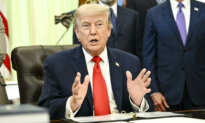
It has been among the enthusiastic supporters of rearmament to counter the Russian threat, and in January 2025, Estonian Prime Minister Kristen Michal was one of the first countries to pledge to meet U.S. President Donald Trump’s request for NATO countries to devote 5 percent of GDP to defense spending.
“We know that Russia is very concerned about the so-called European rearmament, which they perceive as a future challenge,” said Rosin.
He said the Kremlin was working with “other groups which are willing to promote Russian interests and narratives with the goal to slow down Europe in this regard or to stop it.”
Rosin said Europe must invest in defense and internal security, so that Russia is forced to draw the conclusion that it would have no chance in a conflict with NATO.
Ever since Estonia joined NATO in 2004, defense strategists have posed the question of whether the United States would go to war, or fire nuclear missiles, to defend the town of Narva, which has a large ethnic Russian community.
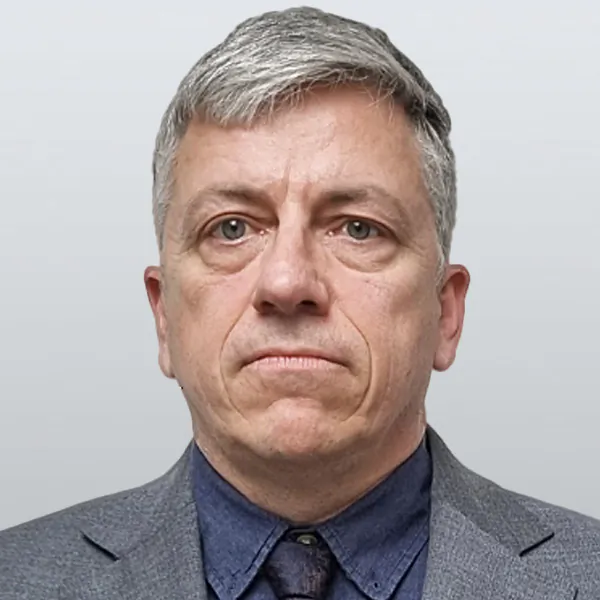
Last year, when France was offering to replace the U.S. nuclear umbrella over Europe with its own, Attila Demko, a security policy expert from Hungary, told The Epoch Times, “We can ask the same question, ‘Would the United Kingdom and France risk nuclear war for Narva?’”
Russia to ‘Increase Military Posture’
Rosin said, “We know that Russia is planning to increase its military capabilities in the future, which will increase military posture and disposition along Baltic, Finnish and Norwegian borders.”
But he admitted there was no sign Russia currently has any intention to attack any NATO member state.
Rosin claimed Russia was willing to let the negotiations over the Ukraine conflict drag on endlessly, because Russian President Vladimir Putin and his senior leadership “still thinks that time is on their side.”
He said the Kremlin was also keen on improving relations with the United States in the hope of relieving the economic sanctions on Moscow and “getting additional oxygen to their economy.”
Referring to the Russia economy, he said, “When would be the breaking point? It’s difficult to assess or predict. But I see the trajectory in a very good direction currently.”
The report says the Kremlin’s ambition is to restore bilateral relations with Washington and pursue a settlement that would “formalize Ukraine’s defeat.”
Fearing Drone Attack
While the Estonians do not believe they are under imminent threat from Russia, they say, “In the event of conflict, the state must be prepared to fight an adversary using a large number of unmanned systems [drones] at strategic, operational and tactical levels on land, in the air and at sea, simultaneously across Estonia’s entire territory.”
In March 2025, Estonia along with Poland, Lithuania, and Latvia, announced plans to withdraw from the international convention banning landmines because of the “significantly increased” threat from Russia, with whom all four share a border.
The Valisluureamet report also says China sees Russia as a potential source of energy in the event of a conflict in Taiwan leading to a maritime blockade.
“It is worth acknowledging that straying from the principles of a values-based foreign policy serves the interests of both China and Russia equally: any concessions made to Russia would, in effect, also fuel China’s global ambitions,” says the report.
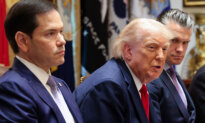
A U.S. State Department spokesperson told The Epoch Times by email that Trump has made it clear he wants the war to end.
“We remain committed to continuing to encourage Russia and Ukraine to negotiate and end this war through diplomacy—the only path to durable peace,” the spokesperson said.
“The United States is engaged in tireless diplomacy to bridge the divide between Moscow and Kyiv and move the parties towards a negotiated set of terms for peace. These discussions are complex and difficult, but, thankfully, ongoing.”
The Epoch Times reached out to the Russian Ministry of Foreign Affairs but did not receive a response by publication time.
The Associated Press and Reuters contributed to this report.
 Friends Read Free
Copy
Facebook
Tweet
Friends Read Free
Copy
Facebook
Tweet